
BNB Casino Comparison UK 2026 — Offshore Sites, Real Speeds, Zero UK Licenses
 Available in US
Binance Coin moves fast and costs little, which is why plenty of casino cashiers now list it. The catch for UK players is simpler than most affiliates admit: not one operator holding a UK Gambling Commission licence accepts BNB, and the regulatory reason is clear. The UKGC does not permit cryptocurrency deposits or withdrawals at licensed sites. Every BNB casino accessible from Britain operates under an offshore licence — Curaçao, Anjouan, or another non-UK jurisdiction.
That creates a specific decision: do you value the speed and privacy of crypto gambling enough to step outside the UKGC framework, and if so, which offshore platform handles BNB transparently? This comparison maps five casinos where BNB deposits work, breaks down the network confusion that loses people money, and states plainly what UK players lose and keep when they go offshore.
BNB Casinos for UK Players — The Offshore Reality
The UK Gambling Commission regulates 139 active remote casino licence holders as of September 2026. Their public register lists every brand authorised to serve British players legally, and you can search it at gamblingcommission.gov.uk. Zero entries accept BNB. Zero accept Bitcoin, Ethereum, or any cryptocurrency. The UKGC’s payment rules restrict licensed operators to traditional methods: debit cards, e-wallets like PayPal or Skrill, and bank transfers.
The Financial Conduct Authority rolled out its Cryptoassets Regulations in February 2026, bringing exchanges and custodians under FCA oversight. That regime covers trading platforms but does not touch gambling payments. The UKGC stated it is «considering» crypto options for licensed casinos, yet no rule change has been enacted and no timeline published. Until that shifts, BNB gambling for UK players means offshore licences only.
Offshore here is not a euphemism for unregulated. Curaçao’s Gaming Control Board, Anjouan’s gaming authority, and other jurisdictions issue verifiable licences with public registers. The difference is the protection framework. A UKGC-licensed casino links to GAMSTOP, follows UK client-money segregation rules, and settles disputes through UK Alternative Dispute Resolution schemes. An offshore BNB casino does none of those. Your funds sit under that jurisdiction’s rules, disputes go to that licence’s ADR, and self-exclusion through GAMSTOP does not carry over.
The Gambling Act 2005 makes it illegal for an operator to target UK consumers without a UKGC licence. That offense sits with the casino, not the player. Using an offshore crypto site from Britain breaks no UK law on the player side. The Advertising Standards Authority enforces against offshore operators marketing here, but accessing the site yourself, depositing BNB, and playing is legal in the same way VPNing into an international streaming catalogue is legal — the platform may have terms against it, the regulator may disapprove of it, but no statute criminalises your use.
Are BNB casinos legal for UK players to use?
Yes. UK law prohibits unlicensed operators from advertising to British audiences, but it does not criminalise individual players who choose to use offshore casinos. The liability rests with the operator, not the user. That said, playing at an offshore BNB casino means stepping outside UKGC protections: no GAMSTOP link, no UK dispute resolution, and funds held under the offshore jurisdiction’s rules. Legal to use, but not protected the same way a UK-licensed site would be.
BNB Casino Comparison — Sites That Accept Binance Coin
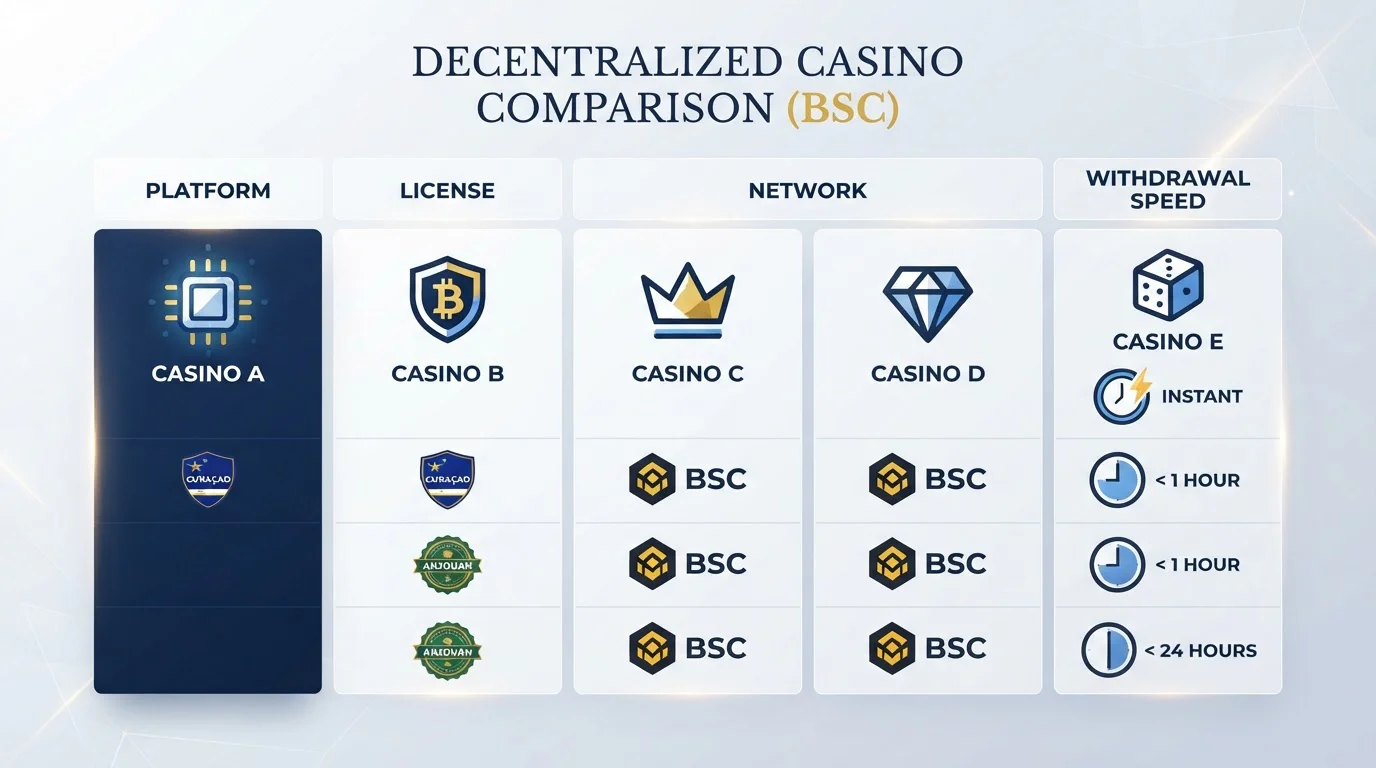
Five offshore casinos accept BNB with enough operational history and transparent terms to warrant a breakdown. All five run on BNB Smart Chain (the BEP-20 network). None hold UK licences. Each handles deposits differently — some keep your BNB as BNB in a multi-currency wallet, one explicitly states it, another buries a 100-percent playthrough rule in the terms that stops casual players withdrawing until they have wagered every penny deposited.
| Casino | License | BNB Network | Withdrawal Speed | Min Deposit | Distinguishing Feature |
|---|---|---|---|---|---|
| BC.Game | Anjouan (BlockDance B.V.) | BEP-20 (BSC) | Instant to 10 min | ~£0.70 (0.001 BNB) | 60+ cryptocurrencies, multi-currency wallet |
| FortuneJack | Anjouan | BEP-20 (BSC) | 8–15 min typical | ~£0.70 (0.001 BNB) | Since 2014, BNB stays BNB, Trustpilot removed (fake reviews) |
| Cloudbet | Curaçao CGA | BEP-20 (BSC) | Within 24 hours | ~£0.70 (0.001 BNB) | No withdrawal ceiling, independent adjudicator |
| MyStake | Curaçao CGA (GTW B.V.) | BEP-20 (BSC) | ~1 hour | £7 (€10 via Binance Pay) | Requires 100% deposit wagering before withdrawal |
| Stake | Curaçao CGA (Medium Rare N.V.) | BEP-20 (BSC) likely | Instant to 1 hour | Variable | 6,000+ games, 100M+ players/month claimed |
The table uses current BNB price estimates (~£700 per coin) for minimum deposits stated in BNB. Actual pound equivalents fluctuate with the market.
BC.Game
BlockDance B.V. runs BC.Game under an Anjouan gaming licence, and the platform has built its reputation on breadth: 60-plus cryptocurrencies accepted, a sportsbook sitting next to the casino, and a welcome package scaling to £20,000 or its BTC equivalent. BNB deposits land on BNB Smart Chain in seconds. The multi-currency wallet keeps your Binance Coin as Binance Coin unless you manually convert it, which matters if you are holding BNB for price exposure rather than treating it as a payment rail.
The Anjouan licence is verifiable but less transparent than Curaçao’s Gaming Control Board. Anjouan does not publish as detailed a public register, dispute resolution channels are less formalised, and UK players should understand that recourse is limited. BC.Game launched around 2017, weathered multiple crypto market cycles, and remains accessible to British players without VPN or geo-blocking. KYC is email-only at signup, triggered at withdrawal if the platform flags your account.
What distinguishes BC.Game is the sheer coin count. If you hold assets beyond BNB and want one casino cashier to accept them all, this is the widest net. The downside is complexity: a platform juggling 60 coins and a native BCD token has more moving parts than a simpler five-coin competitor, and more moving parts mean more points where something can go wrong.
FortuneJack
FortuneJack is the oldest name here, operational since 2014 under an Anjouan licence. It explicitly states on its BNB landing page that deposits stay as BNB — the coin itself, not converted to site credit or a stablecoin the moment it arrives. That transparency is rarer than it should be. Deposits confirm in roughly three seconds with network fees of a few cents, and the platform has a 5,400-game library tilted toward slots. The welcome package reaches 6 BTC plus 250 free spins spread across four deposits.
The long track record is the main draw. A casino that survived from 2014 to 2026 has seen every crypto crash, regulatory shift, and market panic in between. It stayed solvent, kept paying out, and did not rug-pull when the opportunity was ripe. However, Trustpilot removed FortuneJack’s rating in 2026 after detecting fabricated reviews. Of the 182 organic reviews that remain, 61 percent are one-star. The operator replied to complaints until March 2026, then went silent. That does not mean the casino is unsafe to use, but it does mean trusting recent user sentiment is harder when the review platform itself flagged manipulation.
If your priority is keeping BNB as BNB and you want a decade-old operator, FortuneJack fits. If reputation signals matter more than operational history, the Trustpilot removal is a red flag worth weighing.
Cloudbet
Cloudbet launched in 2013, holds a Curaçao Gaming Authority licence confirmed on the CGA public register, and distinguishes itself with two features uncommon in offshore gambling: no withdrawal ceiling once you are fully verified, and an independent adjudicator named in the terms whose decisions bind the casino. That second point matters. Most offshore operators reserve the right to refuse a payout and force you into their own internal dispute process. Cloudbet’s terms name MADRE Limited as the final arbiter. If a dispute escalates and MADRE rules in your favor, the casino must pay. That is rare enough to call out.
BNB deposits run on BNB Smart Chain, confirm in seconds, and land in your account after one on-chain confirmation. Withdrawals process within 24 hours, which is slower than BC.Game or FortuneJack but faster than fiat casino bank wires. The fee schedule is published on the site rather than hidden behind «processing charges,» and you know the cost before you withdraw. Minimum deposit is 0.001 BNB, the same as most competitors.
The catch is that one review site claims Cloudbet «might not be available to UK players,» while other sources say it is accessible. The most likely explanation: Cloudbet does not market to the UK (ASA enforcement), but the site itself does not geo-block British IP addresses. You can register, deposit, and play, but the operator does not officially «serve» the UK market in a regulated sense. Confirm accessibility before depositing if in doubt.
MyStake
GTW B.V. operates MyStake under a Curaçao Gaming Authority licence, and the platform launched in 2020. It lists 4,500 games, a sportsbook, and crypto withdrawals processed within an hour. MyStake is transparent about network support: BNB here runs on BSC (BEP-20) and no other. That clarity prevents the most common deposit error. The minimum via Binance Pay is £7 (€10), slightly higher than the typical 0.001 BNB floor but still accessible. The welcome bonus is 150 percent on your first deposit.
The problem is in clauses 8.5 and 8.10 of the terms: MyStake requires 100 percent of each deposit to be wagered before you can withdraw. Most casinos have no such rule, or cap it at 1x turnover to prevent money laundering without penalising casual play. MyStake’s version means if you deposit £100, play £50, and decide to stop, you cannot withdraw the remaining £50 until you have wagered another £50. That structure punishes light players and benefits only those grinding through high volumes.
If you plan to wager well past your deposit anyway, the rule is invisible. If you value the flexibility to deposit, play a bit, and cash out the rest, MyStake’s playthrough requirement is one of the harshest in the BNB casino space. Crypto withdrawals are fast (one hour), the game library is deep, and the Curaçao licence is verifiable. The 100-percent wagering clause is the dealbreaker.
Stake
Medium Rare N.V. runs Stake under Curaçao Gaming Authority licence OGL/2024/1451/0918, and the platform claims more than 100 million players per month. That figure is self-reported and unaudited, but Stake is unquestionably one of the largest crypto casinos in operation. It carries 6,000-plus games from 73 studios, a full sportsbook, and a multi-currency wallet where BNB (if accepted) stays as BNB unless you convert it manually. The site lists 14 cryptocurrencies in total. BNB is not explicitly named on the cashier at research time, but given the breadth of coin support, it likely accepts BNB on BNB Smart Chain. Confirm on the live cashier before depositing.
Withdrawals process instantly to within an hour depending on your verification status. There is no stated ceiling once you are verified. KYC is risk-based: small deposits and withdrawals often clear with email-only signup, while larger sums trigger document requests. Stake does not hold a UK Gambling Commission licence. Some affiliate sites claim a separate «Stake UK» with UKGC authorisation, but those are marketing properties. The main stake.com operates under Curaçao only.
The scale is the draw. If you want the deepest game library, the largest player base, and one wallet that settles in whichever crypto you already hold, Stake delivers. The trade-off is regulatory opacity: Stake’s Curaçao licence is legitimate, but its sheer size and marketing reach have attracted regulatory scrutiny in multiple jurisdictions. UK players can access it, but understand you are using a platform that operates at the edge of multiple regulators’ patience.
Which BNB casinos offer the best combination of withdrawal speed, game selection, and transparent BNB handling for UK players?
FortuneJack if you want explicit «BNB stays BNB» handling and a long track record (since 2014), though Trustpilot’s fake-review removal is a red flag. Cloudbet if transparent terms and an independent adjudicator matter more than speed (24-hour withdrawals vs instant). BC.Game if you hold multiple cryptocurrencies and want one wallet for all. Avoid MyStake unless you plan to wager well past your deposit — its 100-percent playthrough rule before withdrawal is punishing. Stake offers the largest game library (6,000+) but BNB support is likely, not confirmed.
How BNB Deposits and Withdrawals Work — The Technical Breakdown
Binance Coin exists on two networks: BEP-2 (Beacon Chain, the older one used for Binance DEX trading) and BEP-20 (Smart Chain, the newer EVM-compatible one used for DeFi and casinos). Every BNB casino cashier in 2026 accepts BEP-20 only. Sending BNB on BEP-2 to a BEP-20 address lands your funds at a destination the casino cannot access, and most operators will not attempt recovery. Understanding which network you are sending on is the difference between a deposit that clears in seconds and money that is gone.
Choosing the Correct Network (BEP-20 vs BEP-2)
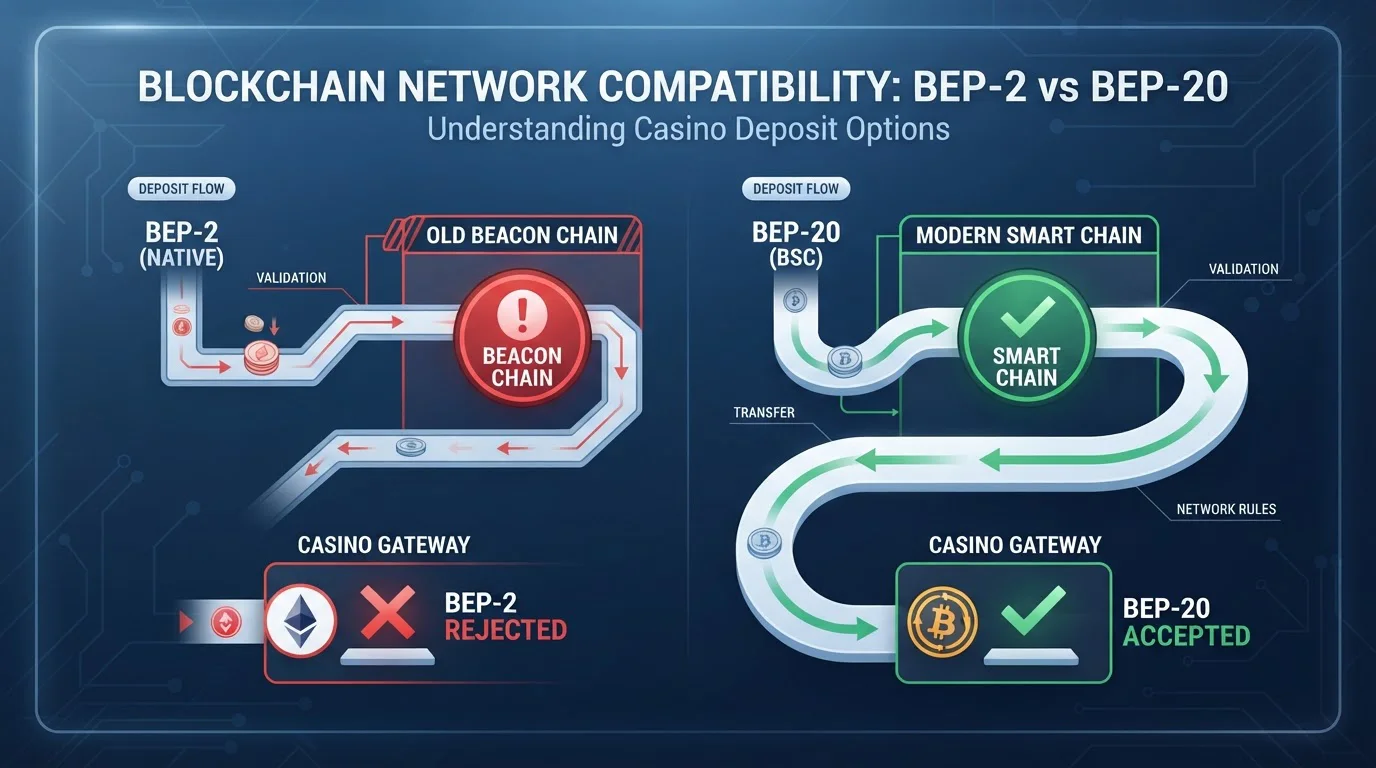
Native BNB is the coin itself, the one that pays transaction fees on BNB Smart Chain. BEP-20 is the token standard on that chain, the set of rules every fungible token follows. When a casino says it accepts BNB on BEP-20, it means the deposit address is on BNB Smart Chain, and the format is BEP-20 compliant. Native BNB on Smart Chain is a BEP-20 token by definition. The confusion arises because older Binance Chain (BEP-2, Beacon Chain) also has native BNB, and the two chains are separate.
Here is the rule: casinos accept BNB Smart Chain (BSC) only. When you withdraw BNB from Binance.com or another exchange, the platform will ask you to select a network. The options usually read «BEP-2 (Beacon Chain)» or «BEP-20 (BSC / Smart Chain).» Choose BEP-20 every time. MetaMask and Trust Wallet default to BSC for BNB, so non-custodial wallet users are less likely to make the error.
BEP-2 and BEP-20 addresses look identical: both start with 0x and run 42 characters. The address format does not tell you which network it belongs to. The casino cashier will state «BEP-20» or «BSC» next to the deposit address. If it does not, ask support before sending. One character of ambiguity can cost you the deposit.
Step-by-Step Deposit Guide
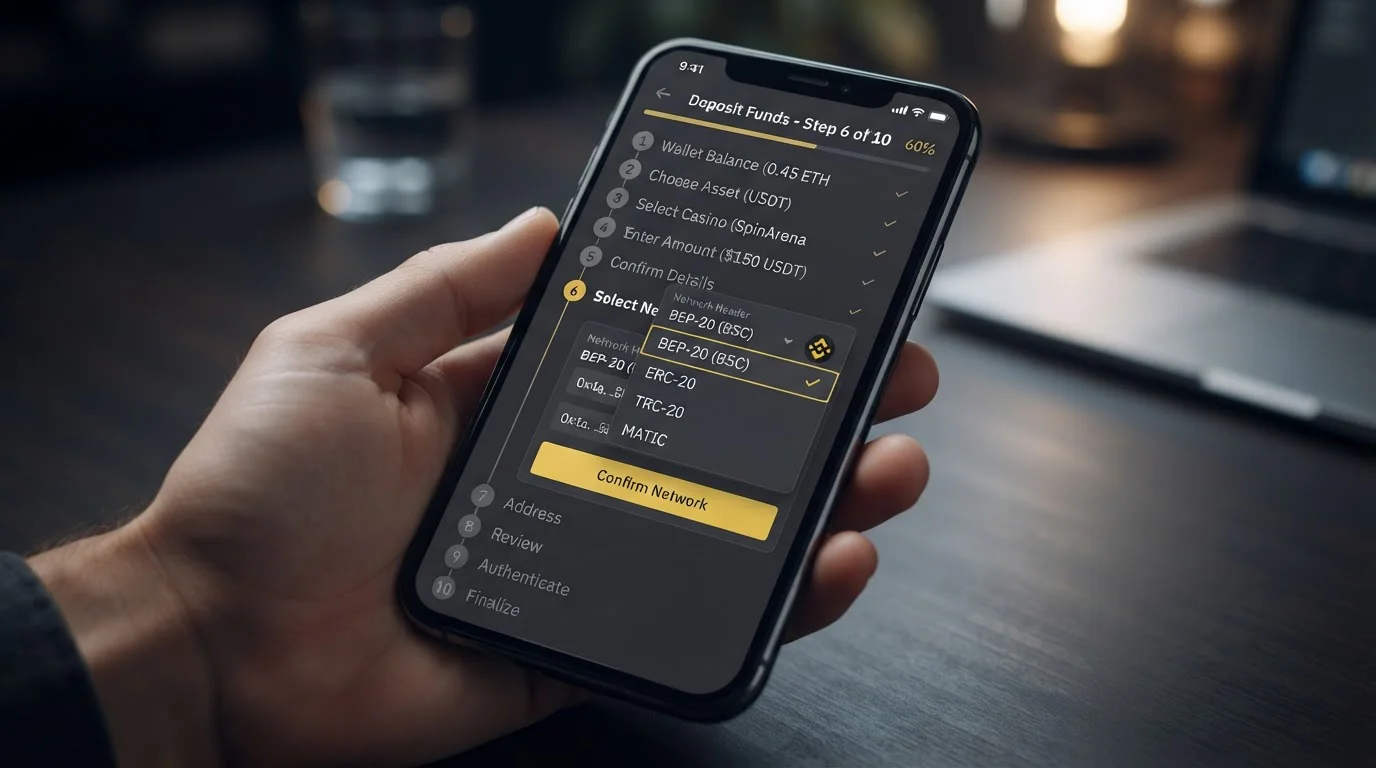
Log into the BNB casino and open the cashier or deposit page, then select Binance Coin (BNB) from the list of accepted cryptocurrencies. The platform displays a deposit address (starts with 0x, 42 characters long) and confirms the network — BEP-20, BSC, or BNB Smart Chain, all three labels meaning the same thing. Copy the address, or scan the QR code if you are depositing from a mobile wallet. Now open your exchange account (Binance, Coinbase, Kraken) or non-custodial wallet (MetaMask, Trust Wallet) and start a BNB withdrawal, pasting the casino’s deposit address into the recipient field. Select BNB Smart Chain (BEP-20 / BSC) as the network — do not select BEP-2, Ethereum, or any other option. Enter the amount you want to deposit (most casinos set a minimum of 0.001 BNB) and confirm the transaction; the exchange or wallet deducts a small network fee, typically $0.02 to $0.10. The transfer confirms on BNB Smart Chain in roughly 3 to 6 seconds, and the casino credits your balance instantly or after one confirmation — under 10 seconds in total.
If the deposit does not appear within one minute, check the transaction hash on BscScan.com. If the transaction succeeded on-chain but the casino has not credited your balance, contact support with the transaction hash. Most operators resolve this within an hour.
Withdrawal Process and Timing
Withdrawals reverse the flow. You request a payout from the casino cashier, the platform processes it internally (anywhere from instant to 24 hours depending on the operator), and then broadcasts the transaction to BNB Smart Chain. Once on-chain, confirmation takes 3 to 6 seconds. The bottleneck is the casino’s internal processing, not the blockchain.
BC.Game and FortuneJack process most withdrawals within 10 to 15 minutes. Stake processes them instantly to within an hour depending on your account history. Cloudbet takes up to 24 hours. MyStake aims for one hour. All five are faster than fiat casino bank wires, which take one to five business days in the UK.
Withdrawal fees vary by operator. Some charge nothing (the casino absorbs the network fee), others deduct a flat 0.001 to 0.005 BNB. Check the cashier or terms before withdrawing. Network fees are negligible (a few cents), but some casinos add a processing fee on top. If a platform charges more than 0.01 BNB (~£7) to withdraw, that is above market rate.
How long do BNB deposits and withdrawals take at crypto casinos?
Deposits confirm on BNB Smart Chain in 3 to 6 seconds and credit instantly or within one confirmation (under 10 seconds total). Withdrawals depend on the casino’s internal processing: BC.Game and FortuneJack clear in 10 to 15 minutes, Stake instantly to 1 hour, MyStake within 1 hour, Cloudbet within 24 hours. Once the casino broadcasts the transaction, on-chain confirmation adds another 3 to 6 seconds. Total time: minutes to hours, far faster than fiat methods.
What is the difference between native BNB and BEP-20, and which one do casinos accept?
Native BNB is Binance Coin itself, the coin that pays transaction fees on BNB Smart Chain. BEP-20 is the token standard (the technical ruleset) that all tokens on BSC follow, including native BNB. Casinos accept BNB on BNB Smart Chain (BSC), which uses the BEP-20 format. The confusion arises because older Binance Chain (BEP-2, Beacon Chain) also has native BNB, and the two chains are separate. Always select BEP-20 / BSC / BNB Smart Chain when depositing — never BEP-2.
What are the fees for depositing and withdrawing BNB at online casinos?
Network fees (gas) on BNB Smart Chain run $0.02 to $0.10 per transaction, paid by the sender. Casinos typically charge zero deposit fees. Withdrawal fees vary: some operators absorb the cost (zero fee), others charge a flat 0.001 to 0.005 BNB (~£0.70 to £3.50). Check the cashier or terms before withdrawing. Avoid platforms charging more than 0.01 BNB (~£7) to cash out — that is above market rate.
Network Confusion and Conversion Traps — What Can Go Wrong
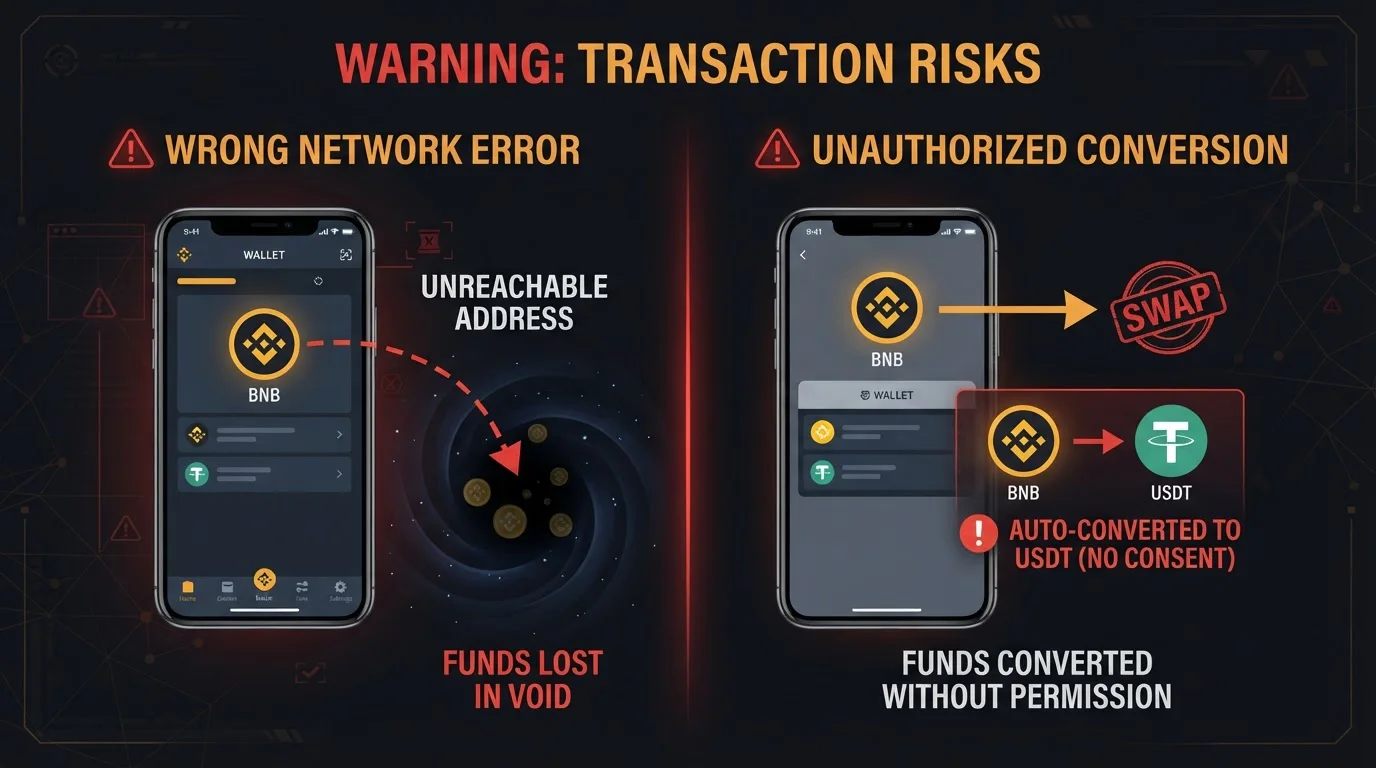
Two errors cost BNB casino users more money than scams or rigged games: sending Binance Coin on the wrong network, and discovering after deposit that the casino converted your BNB to a stablecoin without asking. Both are preventable, but only if you know what to look for before you send.
Sending BNB on the Wrong Network
BNB Smart Chain (BEP-20) and Binance Chain (BEP-2) are separate blockchains. They share a coin ticker (BNB) and address format (0x, 42 characters), but a transaction sent to a BEP-20 address on the BEP-2 network does not arrive. The funds land at an address on Beacon Chain that the casino does not control, and retrieval is either impossible or requires a recovery process the operator may refuse or charge for.
The error happens most often when withdrawing BNB from Binance.com. The exchange dropdown lists «BEP-2 (Binance Chain)» and «BEP-20 (BNB Smart Chain)» as separate options. New users see «Binance Chain» and assume that is correct because they are withdrawing Binance Coin. It is not. Casinos operate on Smart Chain (BEP-20), not Beacon Chain (BEP-2). Select BEP-20 every time.
If you send BNB on BEP-2 to a BEP-20 casino address, contact the casino’s support immediately with the transaction hash. Some operators can recover funds by accessing the corresponding address on Beacon Chain, but many refuse because the technical lift is high and the error is user-side. Those that do attempt recovery often charge a flat fee (10 to 50 USDT equivalent) or a percentage (5 to 10 percent of the recovered amount). Recovery is not guaranteed. The safest path is to triple-check the network before you hit send.
Automatic Conversion to Stablecoins
Some BNB casinos convert your Binance Coin to Tether (USDT) or site credit the moment your deposit confirms. You think you are holding BNB in your casino wallet, exposed to its price movements, but the platform has closed your position without consent. When you withdraw, you receive USDT or the BNB-equivalent of whatever stablecoin the casino settled into. If BNB rallied 20 percent while you were playing, you gained nothing. If it dropped 20 percent, you lost nothing. The casino absorbed the volatility, and you were playing with a dollar-pegged balance the whole time.
FortuneJack explicitly states BNB deposits stay as BNB. MyStake’s terms confirm BNB on BEP-20, but do not clarify whether the balance is held as BNB or converted. BC.Game and Stake offer multi-currency wallets where your deposit stays in the coin you sent unless you manually convert it. Cloudbet’s policy is not detailed in public terms — ask support if preserving your BNB position matters.
The conversion is not dishonest if disclosed, but many platforms bury it in the terms or omit it entirely. If you are depositing BNB because you want exposure to its price, not because you want a payment method, check the cashier or ask support: «Does my BNB balance stay as BNB, or is it converted to USDT on arrival?» The answer shapes whether BNB is the right deposit method for you.
Recovery Options When Funds Go Missing
If your BNB deposit does not appear within one minute, first check the transaction on BscScan.com. Paste your transaction hash into the search bar. The block explorer will show whether the transaction succeeded, how many confirmations it has, and which address received it. If the transaction failed or is still pending, the issue is on-chain (network congestion, insufficient gas, wrong address). If the transaction succeeded and the recipient address matches the casino’s deposit address, the issue is casino-side.
Contact the casino’s live chat or support email with your transaction hash, deposit address, amount sent, and timestamp. Most operators resolve crediting issues within an hour if the transaction is valid. If support claims they did not receive it despite BscScan showing success, escalate to a senior agent or the operator’s ADR (dispute resolution) channel listed in the terms.
If you sent BNB on BEP-2 instead of BEP-20, state that clearly in your support ticket. Some operators can recover BEP-2 deposits by accessing the same address on Beacon Chain, but expect a fee or a refusal. If the platform refuses and the amount is significant, consider consulting a blockchain recovery service, though those are expensive and success is not guaranteed.
What happens if I send BNB on the wrong network to a casino?
If you send BNB on BEP-2 (Beacon Chain) instead of BEP-20 (Smart Chain), the funds land at an address the casino does not monitor. Most operators cannot or will not recover BEP-2 deposits. Those that do often charge a recovery fee (10 to 50 USDT or 5 to 10 percent of the amount). Contact support immediately with your transaction hash. Recovery is not guaranteed. Always select BEP-20 / BSC / BNB Smart Chain when withdrawing from an exchange.
Do BNB casinos convert my Binance Coin to stablecoins automatically?
Some do, some do not. FortuneJack explicitly keeps BNB as BNB. BC.Game and Stake offer multi-currency wallets where your deposit stays in the coin you sent unless you manually convert. MyStake and Cloudbet do not clarify in public terms. If preserving your BNB position (exposure to price movements) matters, ask support before depositing: «Does my BNB balance stay as BNB, or is it converted to USDT on arrival?» The answer tells you whether the casino is treating BNB as a currency or a payment rail.
BNB vs Other Cryptos at UK Casinos — When to Choose Binance Coin
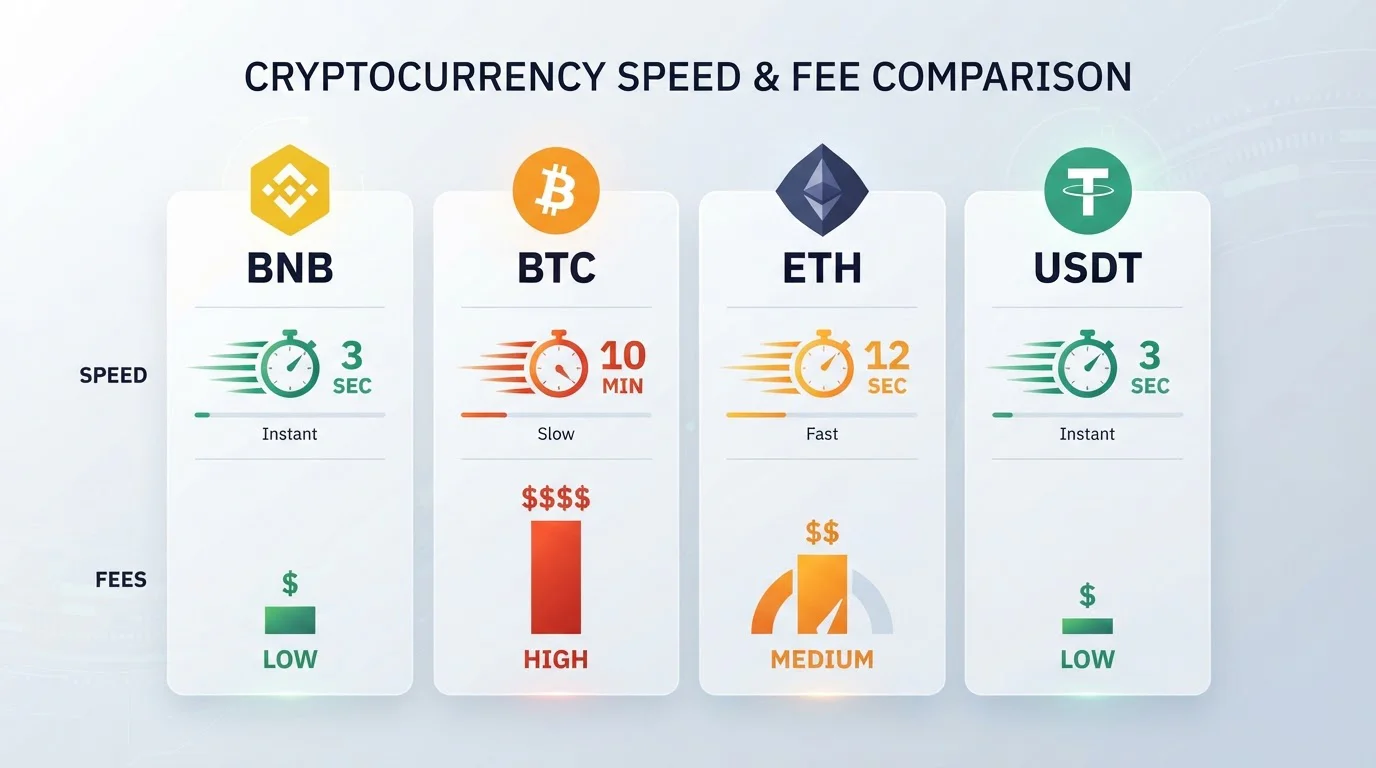
Bitcoin is the most widely accepted cryptocurrency at offshore casinos, Ethereum offers smart-contract integration and broader DeFi compatibility, and Tether is the stablecoin default. BNB sits between them: faster than Bitcoin, cheaper than Ethereum, and volatile enough that holding it in your casino wallet carries price exposure stablecoins do not.
| Coin | Confirmation speed | Typical fee | Price stability | Best for |
|---|---|---|---|---|
| BNB (BEP-20) | ~3 seconds | $0.02–$0.10 | Volatile | Speed and low cost, with price exposure |
| Bitcoin (BTC) | ~10 min (often 3 confirmations ≈ 30 min) | $1–$5 | Volatile | Ubiquity — accepted nearly everywhere |
| Ethereum (ETH) | ~12 seconds | $0.50–$2 (spikes to $10+) | Volatile | DeFi/programmability, irrelevant for deposits |
| Tether (USDT on BSC) | ~3 seconds | Under $0.10 | Stable (USD peg) | Stability — no price swings |
Bitcoin transactions confirm in approximately 10 minutes. Network fees fluctuate between $1 and $5 depending on mempool congestion. If you deposit £100 worth of BTC, you pay up to £4 in fees and wait 10 minutes for one confirmation. Most casinos require three confirmations for Bitcoin (30 minutes total) before crediting your balance. Withdrawals follow the same timeline. Bitcoin’s strength is ubiquity: nearly every crypto casino accepts it. Its weakness is speed and cost.
Ethereum transactions confirm in roughly 12 seconds, faster than Bitcoin. Gas fees on Ethereum range from $0.50 to $2 in normal conditions, spiking to $10-plus during network congestion. Ethereum’s advantage is programmability: smart contracts, DeFi integration, and token standards like ERC-20 make it the backbone of decentralised applications. For casino deposits, that programmability is irrelevant. You are moving value, not executing a contract. Ethereum is faster than Bitcoin but more expensive than BNB.
Tether (USDT) is the dominant stablecoin, pegged to the US dollar. A deposit of 100 USDT is worth $100 today and $100 tomorrow, removing volatility. Tether runs on multiple networks: Ethereum (ERC-20), Tron (TRC-20), and BNB Smart Chain (BEP-20). USDT on BSC confirms in 3 seconds with fees under $0.10, identical to BNB. The trade-off is exposure: holding USDT means you gain nothing if crypto rallies and lose nothing if it crashes. BNB gives you the same speed and cost as USDT on BSC, but with price exposure.
BNB Smart Chain closes a block every 3 seconds. Network fees run $0.02 to $0.10 regardless of transaction size. A £10 deposit costs the same to send as a £10,000 deposit. If speed and cost are your priority, BNB matches USDT on BSC and beats Bitcoin and Ethereum decisively. If you want exposure to Binance Coin’s price while you play, BNB is the only option that gives you that. If you want stability, USDT is the safer choice.
The final variable is casino acceptance. Bitcoin is universal. Ethereum is near-universal. BNB is common but not everywhere. Tether is slightly less common than Bitcoin. Check the cashier before you commit to a coin. If the casino accepts all four, choose based on what you value: stability (USDT), ubiquity (BTC), speed and cost (BNB or USDT on BSC), or programmability you will not actually use at a casino (ETH).
Game Selection at BNB Casinos
Every BNB casino listed here runs a slots-heavy library, because slots dominate online gambling volume and offshore operators skew heavily toward them. BC.Game, Stake, and Sportsbet.io each carry more than 6,000 titles. FortuneJack lists 5,400. MyStake and Cloudbet sit in the 3,000 to 4,500 range. That spread is wide enough that if you want variety, you have it. If you want curation, you are on your own — these platforms optimise for depth, not tastemaking.
The slot libraries pull from the same studio roster: Pragmatic Play, NetEnt, Play’n GO, Push Gaming, Hacksaw Gaming, Nolimit City, and several dozen smaller providers. You will find Book of Dead, Gates of Olympus, Sweet Bonanza, and the other high-RTP staples across all five casinos. Megaways titles appear in quantity. Progressive jackpots run on most platforms, though the pools are often smaller than what Microgaming’s network offers at UKGC-licensed sites. The games themselves play identically whether you are betting in BNB, Bitcoin, or pounds — the RTP, volatility, and hit frequency are set by the studio, not the casino or the currency.
Where BNB casinos differ from UKGC-licensed operators is stake flexibility. Offshore platforms typically allow higher maximum bets per spin because they face no UK regulatory caps. A £100-per-spin limit common at licensed sites does not apply offshore. Some BNB casinos let you wager £500 or more on a single slot spin if your balance supports it. That flexibility is dangerous if you are chasing losses, but it is there.
Live dealer tables appear on all five. Evolution Gaming, Pragmatic Play Live, and Ezugi supply most of them. You can play blackjack, roulette, baccarat, and game-show variants like Crazy Time or Monopoly Live with BNB balances. The experience is identical to playing at a fiat casino except settlement happens in crypto. Dealers do not see your currency — they see your bet in the studio’s default denomination, and the platform converts it on your screen. Table limits vary by operator and by game, but offshore casinos generally set higher ceilings than UKGC-licensed sites because they face fewer regulatory caps.
Live blackjack at offshore BNB casinos often offers side bets and rulesets not common in the UK: Perfect Pairs, 21+3, and Bet Behind appear frequently. Evolution’s Lightning Blackjack, with multipliers up to 25x, is standard. Roulette coverage includes European, American, and French variants plus Evolution’s speed variants and immersive multi-camera tables. Baccarat gets less love outside Asia-focused platforms, but you will find standard and speed versions on all five casinos listed here.
Provably fair games are the one category where crypto casinos diverge from traditional operators. BC.Game, Stake, and FortuneJack all run in-house «Originals» — dice, crash, plinko, mines — where the outcome is verifiable on-chain or through a cryptographic hash. You can independently confirm the result was not manipulated after you placed your bet. Provably fair is a niche interest, but if you care about transparency at the RNG level, offshore BNB casinos offer it and UKGC-licensed sites do not.
The mechanism works like this: before you place a bet, the game generates a server seed (kept secret), a client seed (you can change it), and a nonce (increments with each bet). The outcome is derived from hashing these three inputs together. After the bet settles, the platform reveals the server seed, and you can independently verify the hash matches the outcome shown. The casino cannot manipulate the result after you bet because changing the server seed would produce a different hash. It is transparency through cryptography, not through regulatory audit.
Sports betting sits alongside the casino at BC.Game, Stake, Sportsbet.io, FortuneJack, and MyStake. Coverage is deep: football, tennis, basketball, cricket, esports. In-play betting works, odds are competitive with mainstream sportsbooks, and settlement happens in your deposited crypto. If you want one wallet for casino and sports, all five deliver. Cloudbet also runs a sportsbook but its reputation leans more casino-focused.
Stake and Sportsbet.io particularly lean into sports. Stake sponsors high-profile teams and events, and its in-play interface updates odds rapidly enough for serious live betting. Esports coverage on both platforms includes CS2, Dota 2, League of Legends, and Valorant with match-winner, map-winner, and handicap markets. The odds format switches between decimal, fractional, and American depending on your account settings. If you are used to UK fractional odds, all five platforms support them.
The game library is not why you choose one BNB casino over another. They all have thousands of slots, live tables, and sports markets. What differentiates them is withdrawal speed, transparent BNB handling, licence transparency, and whether the terms bury punishing rules like MyStake’s 100-percent deposit playthrough. The games play the same. The operational specifics — how fast you get paid, whether your BNB stays BNB, and what the terms actually say when you read them — matter more.
UK Player Protections and Dispute Resolution
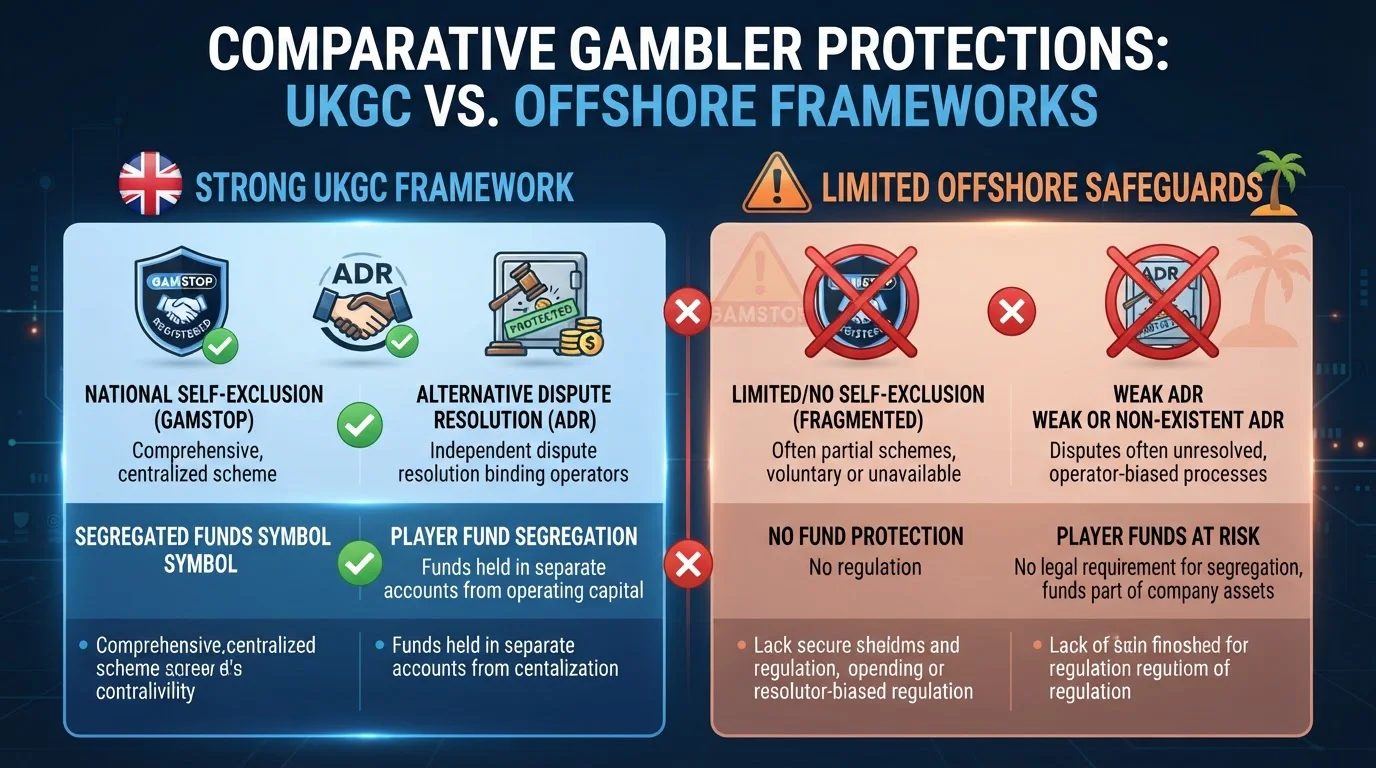
UKGC-licensed casinos segregate player funds in separate accounts, link to GAMSTOP for self-exclusion, and settle disputes through UK-approved Alternative Dispute Resolution schemes like IBAS or eCOGRA UK. If a licensed operator refuses a legitimate withdrawal, you escalate to the ADR, and if the ADR rules in your favor, the casino must pay or risk losing its licence. That protection framework does not follow you offshore.
BNB casinos operate under Curaçao, Anjouan, or other non-UK licences. Player funds sit in the operator’s corporate accounts under that jurisdiction’s banking rules, which vary widely. Curaçao does not mandate client-money segregation the way the UKGC does. If the casino collapses or absconds, your balance is an unsecured claim in whatever insolvency process that jurisdiction runs, and offshore insolvencies rarely recover player funds in full.
The Curaçao Gaming Control Board restructured its licensing in 2024, moving from four legacy master licences to a new single-licence OGL system. Operators now hold individual licences directly from the CGA, and the public register at curacaogaminglicense.com lists them. That register is more transparent than the old system, where sub-licensees operated under master licence holders with minimal visibility. You can verify a Curaçao licence number, check its status (active, suspended, revoked), and confirm the legal entity matches the casino’s terms. Anjouan’s register is less detailed and harder to access, which is why Curaçao-licensed BNB casinos are generally preferable from a transparency standpoint.
GAMSTOP is the UK’s centralised self-exclusion register. If you exclude yourself via GAMSTOP, every UKGC-licensed casino blocks your access. Offshore casinos are not part of that system. You can self-exclude directly with an offshore operator, but it applies only to that site. If you move to a competitor, your exclusion does not carry over. Some offshore platforms participate in multi-operator exclusion schemes like Gameban, but participation is voluntary and coverage is patchy.
The practical consequence is this: if you have a gambling problem and you use GAMSTOP, offshore BNB casinos are a way to bypass your own protection. That is not a judgment, it is a mechanical fact. GAMSTOP works only within the UKGC licensing perimeter. Outside it, you are relying on willpower and self-imposed limits that you can override whenever you choose. If that structure does not work for you, offshore casinos are the wrong choice no matter how fast the withdrawals are.
Disputes at offshore casinos go through the licence’s ADR. Curaçao operators name Antillephone N.V. or other CGA-approved dispute agents. Anjouan operators list their own ADR contacts, which are often less responsive than Curaçao’s. If the ADR rules against you or ignores your complaint, you have limited recourse. UK courts will not enforce a judgment against an offshore casino over a £500 withdrawal dispute. The cost of legal action exceeds any realistic recovery.
Cloudbet names MADRE Limited as its independent adjudicator, and the terms state that MADRE’s decisions are binding on the casino. That arrangement is uncommon. Most offshore operators reserve the right to have the final word, which means if the ADR sides with you and the casino disagrees, your remedy is to stop playing there and warn others. You cannot force payment through a UK court, and the offshore jurisdiction’s courts are impractical for small claims.
The Advertising Standards Authority enforces against offshore operators marketing to UK players without a UKGC licence. If an offshore BNB casino runs ads targeting British audiences, the ASA can force removal and impose fines. That enforcement protects the UKGC’s licensing framework but does nothing for players already using offshore sites. The ASA’s power stops at advertising. It does not regulate the casinos themselves.
UK banks and payment processors increasingly block transactions to known offshore gambling sites. Card deposits to BNB casinos are rare because Visa and Mastercard restrict gambling transactions to licensed operators in many jurisdictions. That is why these platforms lean on cryptocurrency: it bypasses the banking system entirely. You send BNB from your Binance account or MetaMask wallet, and no UK bank sees the transaction or has the power to block it. That independence from traditional finance is part of crypto’s appeal, but it also means you cannot reverse a payment the way you can dispute a card transaction.
The flip side is what you keep. Offshore casinos process withdrawals faster (minutes to hours vs days), impose fewer identity checks before you can play (email-only signup is common), and allow cryptocurrency deposits UKGC sites ban. The trade-off is explicit: speed and privacy in exchange for reduced protection. Whether that trade makes sense depends on how much you deposit, how often you play, and how much you trust the operator’s track record.
A small deposit at a Curaçao-licensed casino with a ten-year operating history carries less risk than a large deposit at a newly launched Anjouan-licensed site with no public reviews. The question is not «Are offshore BNB casinos safe?» — it is «Which specific operator has the track record, transparency, and terms that justify the risk I am taking?» That answer varies by casino, and it is why this comparison focuses on verifiable licence numbers, operational history, and term specifics rather than generic claims of safety.
Do any UK-licensed casinos accept Binance Coin (BNB) deposits?
No. Zero UKGC-licensed casinos accept BNB or any cryptocurrency as of 2026. The UK Gambling Commission’s payment rules restrict licensed operators to traditional methods: cards, e-wallets like PayPal or Skrill, and bank transfers. The FCA’s Cryptoassets Regulations (effective October 2027) cover exchanges and custodians but do not change UKGC gambling payment rules. Until the UKGC explicitly permits crypto at licensed sites, BNB gambling for UK players means offshore casinos only.
Responsible Gambling with BNB
Binance Coin’s price moves, sometimes violently. A deposit worth £100 today might be worth £80 or £120 by the time you withdraw, depending on how long you hold it in your casino wallet and whether the platform converts it to a stablecoin on arrival. That volatility sits on top of the money you win or lose through gameplay, and it can mask how much you have actually spent.
If you deposit 0.1 BNB at £700 per coin (£70), play for a week, and withdraw 0.12 BNB when the price has risen to £750 (£90), your casino balance shows a £20 gain. But 0.02 BNB of that gain came from price appreciation, not winning bets. Tracking profit and loss in crypto requires accounting for both the gambling outcome and the exchange rate. Most players do not bother, which makes it easy to spend more than intended without noticing.
Set deposit limits in GBP equivalent, not in BNB. If your budget is £200 per month, convert that to BNB at the current rate before you deposit, and stop when you hit the limit regardless of what your BNB balance says. Offshore casinos offer deposit-limit tools, but they are voluntary and not enforced the way UKGC-licensed sites enforce them. You set the limit yourself, and you override it yourself if you choose.
GAMSTOP does not cover offshore casinos. If you have excluded yourself through GAMSTOP and then access an offshore BNB site, you are bypassing your own exclusion. Offshore operators offer self-exclusion directly through their account settings, but it applies only to that site and is not centrally enforced. If gambling is becoming a problem, GAMSTOP-linked UKGC-licensed casinos are the only operators that enforce exclusion across the whole UK market. BNB casinos do not participate.
Reality checks — popups reminding you how long you have been playing or how much you have deposited — are common on offshore platforms but not mandatory. Some operators offer them, others do not. Session time limits, loss limits, and cool-off periods exist where the platform has built them, but there is no regulatory requirement forcing offshore BNB casinos to offer them.
If you find yourself chasing losses, depositing more than you planned, or gambling with money earmarked for rent or bills, stop. Offshore crypto casinos make it easy to deposit fast and play instantly, which is a feature until it becomes a trap. BeGambleAware.org and GamCare.org.uk both offer free support for UK residents, and neither judges you for using offshore sites. The support is confidential, and the advice is practical.
Crypto Casinos and UK Players 2026 — Coins, Risks & Licensing
Content created by the «casinopay» team
