
UK Casinos That Accept Diners Club: What Actually Works in 2026
 Available in US
Diners Club doesn’t work at UK online casinos. Not at UKGC-licensed operators, where credit cards have been banned since April 2020. Not at the offshore sites that can legally sidestep that ban but have deprioritised a payment method with negligible market share. The search for «casinos that accept Diners Club UK» in 2026 leads to a dead end, and pretending otherwise wastes your time.
This guide explains why Diners Club vanished from the UK online gambling landscape, what the April 2020 regulatory shift actually changed, whether any offshore workaround exists, and which payment methods now do the job Diners Club used to. No padding, no outdated aggregator lists claiming «117 casinos accept Diners Club» without a single named example that works for UK players today. Just the regulatory reality, the processor economics, and the alternatives that clear deposits in seconds.
Diners Club at UK Online Casinos: The 2026 Reality
Can you use Diners Club at UK online casinos in 2026? No. Zero UKGC-licensed casinos accept it, and offshore casinos that theoretically could have effectively discontinued support.
The UK Gambling Commission banned all credit card deposits at licensed gambling operators on 14 April 2020 under Licence Conditions and Codes of Practice provision LCCP 5.1.1. Diners Club, despite being marketed as a charge card rather than traditional credit, falls squarely within that prohibition. The distinction between «charge card» and «credit card» matters for billing cycles and interest, not for regulatory classification. Both involve borrowing, both are banned.
That ban is absolute. Every operator holding a UKGC licence — every legal casino, sportsbook, bingo room, and poker site in Great Britain — has been prohibited from processing Diners Club transactions for over four years. The rule applies to all credit card brands: Visa Credit, Mastercard Credit, American Express, Diners Club, Discover, JCB. No exceptions, no special carve-outs for premium cards or low-limit accounts.

The rationale was harm reduction. Problem gambling funded by credit cards had become a parliamentary concern, with the Gambling Commission citing evidence that borrowing to gamble increased financial distress and debt-driven play. The ban extended to payments routed through intermediaries: if a casino detects that an e-wallet was funded by a credit card, that transaction can also be blocked, though enforcement varies.
Offshore operators — casinos licensed in Curaçao, Anjouan, or under certain Malta Gaming Authority permits that don’t target the UK specifically — are not bound by UKGC rules. They can legally accept credit cards from UK residents. But «can» and «do» diverge sharply when it comes to Diners Club. Payment processors that serve offshore gambling operators have deprioritised Diners Club due to low transaction volumes and the administrative overhead of maintaining support for a marginal brand. Visa and Mastercard credit products dominate; Diners Club, even where theoretically accepted, has dropped off cashier menus.
Research across current offshore casino listings in 2026 found no specific operator explicitly advertising Diners Club support for UK players. Generic affiliate databases cite outdated global figures — «23 casinos accept Diners Club,» «117 casinos worldwide» — but these counts are not UK-specific, not verified for 2026, and often aggregate licensing data from payment processor APIs rather than live cashier screenshots. When you actually attempt to deposit, Diners Club simply isn’t listed.
The practical reality: Diners Club at UK online casinos is a «no» on licensed sites by law, and a «functionally no» on offshore sites by market economics.
Can I use Diners Club at UK online casinos in 2026?
No. All UKGC-licensed casinos are prohibited from accepting Diners Club under the April 2020 credit card ban, and offshore casinos that could theoretically accept it have effectively discontinued support due to low market share and payment processor deprioritisation.
Why the UKGC Banned Credit Cards (Including Diners Club)
The UK Gambling Commission implemented the credit card ban on 14 April 2020 following a consultation that ran through late 2019. The measure extended an existing prohibition that had applied to non-remote casinos and bingo halls to the entire online gambling sector. Licence Conditions and Codes of Practice provision LCCP 5.1.1 now forbids all UKGC licensees from accepting credit card payments for gambling purposes, with a single narrow exception: face-to-face lottery ticket purchases, where credit cards remain permissible.
The policy goal was straightforward. Credit card gambling allows players to wager borrowed money, increasing the risk of debt-driven problem gambling and financial harm. The Gambling Commission’s consultation cited evidence that credit card users were disproportionately likely to experience gambling-related harm, and that restricting access to borrowed funds could reduce that harm without meaningfully restricting recreational play by solvent players.
An independent evaluation of the ban, published by the National Centre for Social Research in July 2024, found that credit card gambling dropped by 22.7% following implementation and that the policy was associated with measurable reductions in gambling-related financial distress. The Gambling Commission reaffirmed the ban in light of these findings, and as of 2026 there is no indication that the policy will be reversed or softened.
Diners Club specifically is caught by the ban because it is classified as a credit instrument under UK financial services regulation. Although Diners Club markets itself as a charge card — balances must be paid in full each month, no revolving credit, no interest charges — the cardholder is still borrowing from the issuer between the transaction date and the settlement date. That borrowing, however brief, places Diners Club within the scope of LCCP 5.1.1.
UK card-issuing banks enforce the ban upstream through Merchant Category Code blocks. When a transaction is routed to a merchant coded for gambling, credit card authorisations are automatically declined. This applies to all credit products, including Diners Club, American Express, and store cards. Debit cards, which draw directly from the cardholder’s bank account, are explicitly exempt and remain the standard deposit method at UKGC-licensed operators.
The ban also reaches certain e-wallet configurations. If a player funds a PayPal, Skrill, or Neteller account using a credit card, then transfers those funds to a casino, the transaction is technically permissible because the casino sees the e-wallet, not the card. However, some UK banks and card networks have tightened their own merchant restrictions to block credit card funding of e-wallets used for gambling, making this workaround increasingly unreliable.
Why don’t UK casinos accept Diners Club anymore?
UK casinos stopped accepting Diners Club on 14 April 2020 when the UKGC implemented a blanket credit card ban under LCCP 5.1.1. Diners Club is classified as a credit instrument (charge card) under UK regulation, so it falls within the prohibition designed to prevent gambling with borrowed money.
Is Diners Club considered a credit card or debit card for gambling purposes?
Diners Club is classified as a credit card for gambling purposes. Although it functions as a charge card requiring full monthly payment, cardholders are still borrowing between transaction and settlement, making it subject to the UKGC credit card ban.
What Happened to Diners Club in Online Gambling?

Diners Club was already marginal in UK online gambling before the April 2020 ban delivered the final blow. Market share explains most of it. In the UK, Diners Club holds roughly 0.1% of the card payment market, compared to Visa and Mastercard’s combined dominance north of 95%. For an online casino operator, integrating and maintaining Diners Club support meant contracting with payment processors who handled Diners transactions, paying per-transaction fees on a card network with negligible volume, and staffing customer support for a method that a fraction of a percent of players actually used.
Payment processor economics work against niche card brands. Processors charge merchants a percentage of each transaction plus a fixed fee. High-volume methods like Visa Debit spread the fixed costs across millions of transactions; low-volume methods like Diners Club do not. Processors responded by either declining to support Diners Club at all or charging premium rates that made it uneconomical for operators. By the mid-2010s, Diners Club had quietly disappeared from the cashier menus of most UK-facing online casinos, even before the regulatory ban.
The one-way limitation compounded the problem. Diners Club supported deposits but almost never withdrawals. A player could fund an account with Diners Club but had to nominate a different method — typically a bank account or debit card — to receive winnings. That friction added operational complexity for operators and confused players, who expected symmetry. Visa and Mastercard debit cards, by contrast, handle both directions seamlessly.
Discover Financial Services, which operates the Discover Global Network that Diners Club now runs on, has focused its casino partnerships on markets where Diners Club retains cultural or legacy traction: Japan, parts of Latin America, certain high-net-worth segments in North America. The UK is not one of those markets. British cardholders overwhelmingly use Visa or Mastercard; Diners Club is a corporate travel card or a legacy product kept active by inertia, not a go-to payment method for discretionary spending like online gambling.
The April 2020 credit card ban eliminated Diners Club from UKGC-licensed casinos as a matter of law, but the method was already on life support. Offshore casinos that could still legally accept credit cards from UK players have followed the same processor economics. Integrating Diners Club costs money, generates negligible revenue, and creates customer support overhead. Most offshore operators focusing on the UK market support Visa and Mastercard credit cards, skipping Diners Club entirely.
By 2026, Diners Club has effectively exited the UK online casino payment landscape. The search query persists because cardholders who once used the method — or who hold a Diners Club card and assume it works everywhere — are still looking. The supply, however, has dried up.
Offshore Casinos and Diners Club: The Non-GamStop Option
Offshore-licensed casinos — operators holding permits from Curaçao, Anjouan, or non-UK-facing Malta Gaming Authority licences — are not bound by the UKGC credit card ban. These sites legally accept UK players, and their licensing jurisdictions impose no prohibition on credit card deposits. In theory, offshore casinos represent a workaround for credit card users shut out of UKGC-licensed operators.
| Factor | UKGC-licensed casinos | Offshore casinos |
|---|---|---|
| Diners Club accepted? | No — all credit cards banned since April 2020 | Legally allowed, but functionally absent in 2026 |
| Player protections | GamStop, affordability checks, ADR disputes | None of these apply |
| Why it’s still missing | The credit-card ban | Processors rarely support it, near-zero volume, and banks may block the payment |
Practice diverges from theory when it comes to Diners Club. Offshore casinos targeting UK players have adopted the same payment method prioritisation as their UKGC-licensed competitors: Visa and Mastercard credit and debit dominate, e-wallets like Skrill and Neteller provide fast alternatives, and niche card brands like Diners Club are quietly dropped. The processor contracts that offshore operators rely on rarely include Diners Club support, and adding it would require renegotiating terms for a payment method that generates near-zero volume.
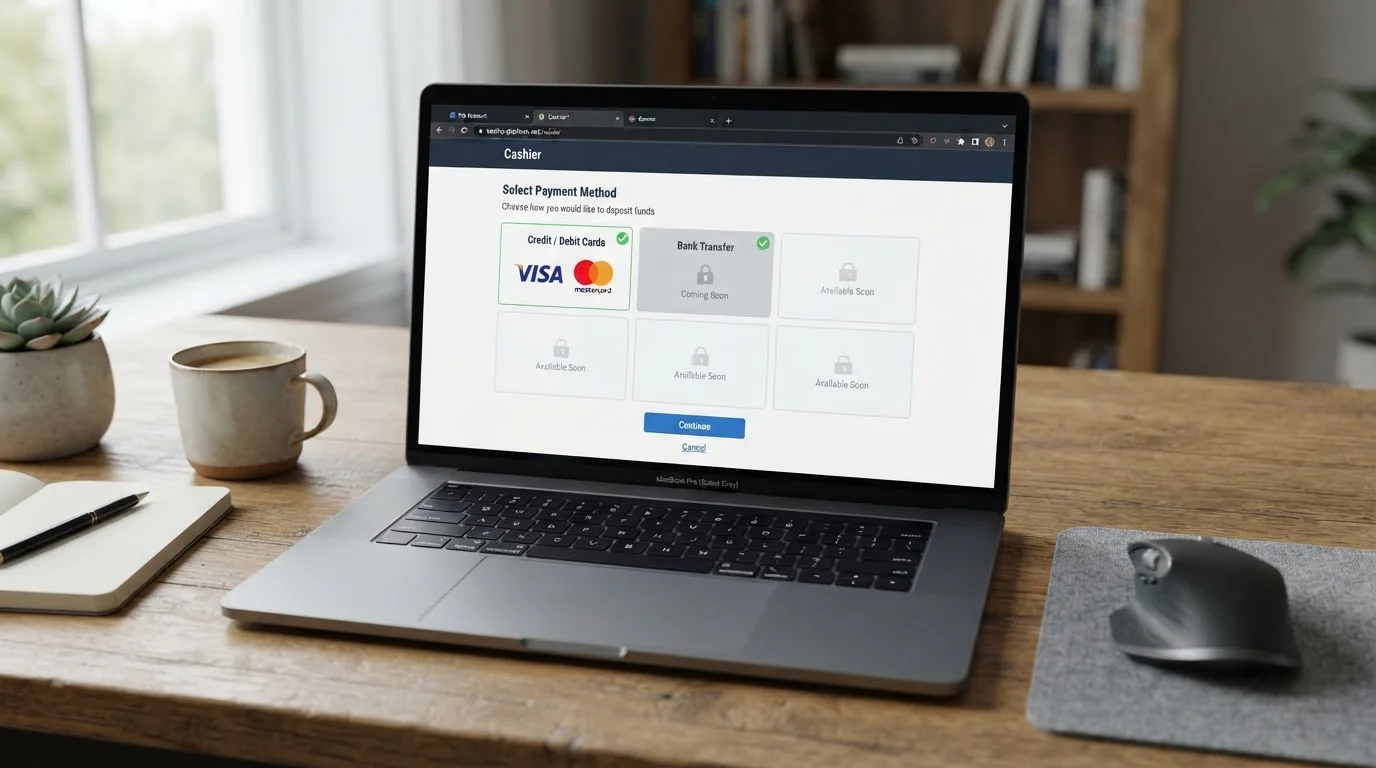
Research conducted for this guide in 2026 surveyed current offshore casino listings, affiliate aggregator databases, and direct cashier inspections. No specific offshore casino accepting Diners Club deposits from UK players was identified. Generic claims persist — affiliate sites referencing «117 casinos that accept Diners Club» or «23 Diners Club casinos» — but these figures are global aggregates, not UK-specific, and typically date from payment processor API snapshots taken years ago. When you navigate to the actual cashier of an offshore casino listed in these databases, Diners Club is absent.
The non-GamStop casino sector has grown significantly since the credit card ban, driven by UK players seeking operators outside the UKGC’s increasingly restrictive regulatory framework: no GamStop self-exclusion tie-in, no affordability checks, higher bonus caps, fewer game restrictions. These offshore sites accept Visa and Mastercard credit cards readily, and some support cryptocurrency deposits for players prioritising anonymity. Diners Club, however, offers no advantage over Visa or Mastercard credit and comes with the processor integration headache. Operators skip it.
A related complication: UK banks have become more aggressive about blocking transactions to unlicensed gambling operators, even though UK law does not prohibit residents from using offshore sites. If a bank suspects a transaction is headed to an offshore casino, it may decline the payment as a fraud prevention measure or under its own responsible gambling policies. Diners Club, as a credit product, is subject to the same scrutiny. Even if an offshore casino hypothetically accepted Diners Club, the issuing bank might block the transaction before it reaches the merchant.
Cryptocurrency casinos — offshore operators accepting Bitcoin, Ethereum, Tether, and other digital assets — represent a different offshore segment. These sites often market themselves as «no-KYC» or «instant-payout» alternatives to traditional casinos. Credit cards, including Diners Club, are antithetical to the crypto casino value proposition: users deposit crypto they already hold, not fiat currency converted at the point of sale. Diners Club has no foothold in this segment.
The bottom line: offshore casinos are theoretically a workaround for the UKGC credit card ban, but Diners Club support at those casinos is functionally nonexistent in 2026.
Are there any offshore casinos that accept Diners Club for UK players?
No verified offshore casinos accepting Diners Club for UK players were identified in 2026 research. While offshore operators can legally accept credit cards, Diners Club’s marginal market share and processor integration costs have led operators to support only Visa and Mastercard credit products.
Best Alternatives to Diners Club at UK Casinos
Diners Club doesn’t work, but deposits still need to clear. Four payment methods dominate UK online casino cashiers in 2026, each with distinct trade-offs in speed, privacy, fees, and bonus eligibility. The right choice depends on what you actually value: universal acceptance and simplicity, fastest withdrawals, keeping the casino out of your bank details, or maximising a welcome bonus without triggering exclusions.
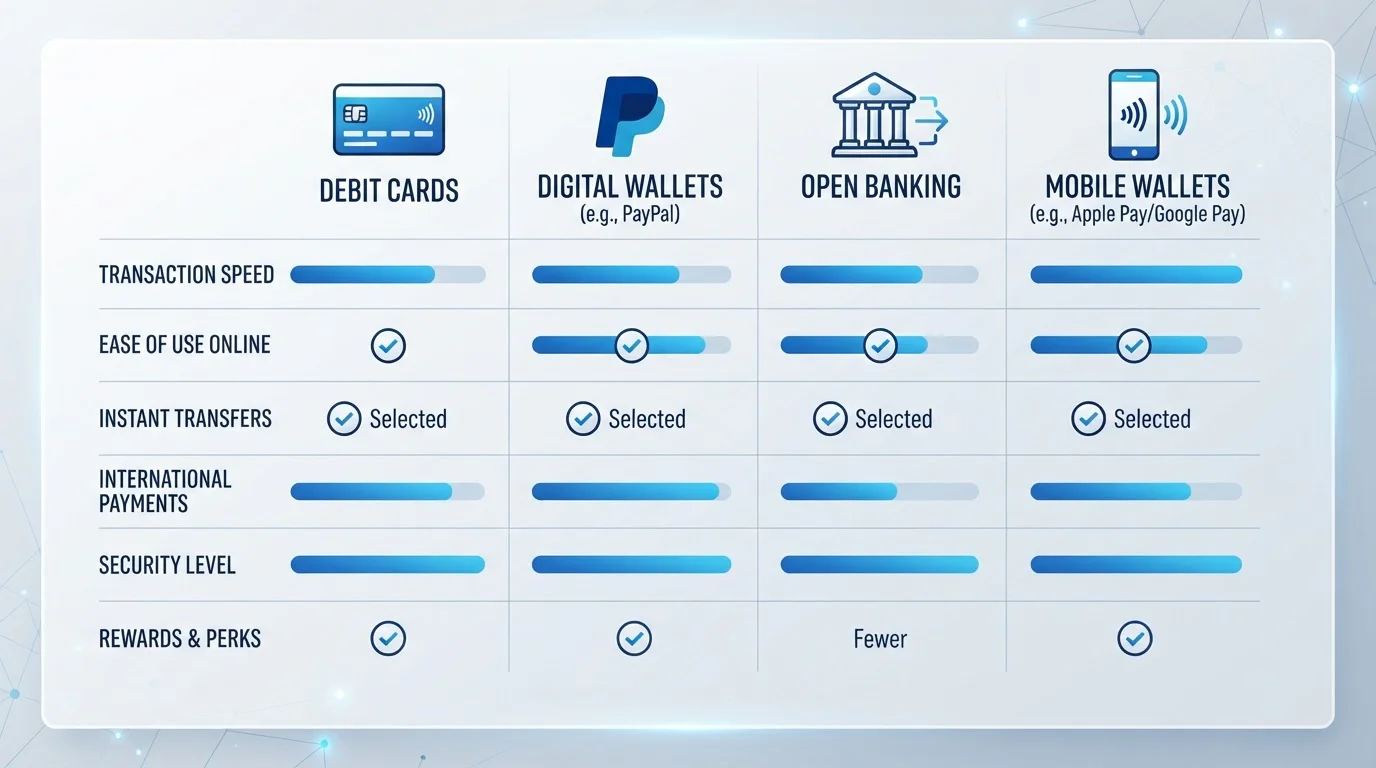
| Method | Deposit Speed | Withdrawal Speed | Fees (Player) | Bonus Eligibility | Best For |
|---|---|---|---|---|---|
| Visa/Mastercard Debit | Instant | 1–5 days | £0 | Yes | Universal acceptance, simplicity |
| PayPal | Instant | Under 24 hours (often 35 min–6 hours) | £0 | Yes (usually) | Speed, trust, privacy |
| Trustly / Open Banking | Instant | Under 1 hour (often same-day) | £0 | Yes | Fastest withdrawals, no middleman |
| Skrill / Neteller | Instant | Under 24 hours | 1.45%–1.50% FX; £1 instant bank withdrawal fee | Often excluded | Regular gamblers, speed (with bonus caveat) |
Every UKGC-licensed casino accepts at least one of these methods. Most accept all four. The following breakdowns explain what distinguishes each option, who it suits, and where the catches lie.
Visa and Mastercard Debit Cards
If you have a UK bank account, you already have a Visa Debit or Mastercard Debit card. That universality is the method’s primary advantage. Every UKGC-licensed casino accepts debit cards; you type the 16-digit number, expiry, and CVV into the cashier, the deposit clears in seconds, and you’re playing. Withdrawals return to the same card, landing in your bank account within one to five business days depending on the operator’s processing speed and your bank’s clearing times.
Fees are zero for UK domestic transactions. Casinos absorb the ~1.5% merchant service charge levied by Visa and Mastercard; players pay nothing. Minimum deposits typically range from £5 to £10, making debit cards accessible for low-stakes recreational play. Maximum deposit limits are casino-specific but commonly reach £5,000 to £10,000 per transaction, more than sufficient for most players. Debit card deposits qualify for welcome bonuses at all UKGC casinos — no exclusions, no fine print disqualifying the method.
The downside is speed on the way out. Debit card withdrawals take longer than e-wallets or open banking solutions, averaging two to three business days once the casino approves the request. Fast-payout casinos can push that below 24 hours, but debit cards remain slower than PayPal or Trustly. For players who value having funds back in their account immediately, this lag is a friction point.
Security is bank-grade. Deposits trigger 3D Secure authentication — Verified by Visa or Mastercard SecureCode — which redirects you to your bank’s login page or sends a one-time SMS code. This two-factor authentication layer prevents unauthorised use even if someone obtains your card number. The casino never stores your CVV, and PCI-DSS compliance standards govern how card data is handled.
Debit cards suit players who want the path of least resistance: no separate account to fund, no app to install, no e-wallet balance to manage. It’s the default method, and for most players the default works fine.
PayPal
PayPal is the most trusted e-wallet brand in the UK, with mainstream adoption that extends well beyond gambling. Casinos that accept PayPal benefit from that trust: players who wouldn’t hand their debit card to an unknown operator will fund a PayPal account and transfer from there, keeping their bank details out of the casino’s database.
Deposits are instant. You authorise the transfer via PayPal’s interface, and the funds appear in your casino account within seconds. Withdrawals are where PayPal separates itself: most UKGC-licensed casinos process PayPal payouts within 24 hours, and top-tier operators clear them in under six hours. Independent testing recorded PayPal withdrawals landing in 35 to 52 minutes at casinos like Casumo — faster than any other non-cryptocurrency method.
Fees are zero for players. PayPal charges the casino a merchant fee of roughly 3% to 4% per transaction, but that cost doesn’t pass through to the player. Funding your PayPal balance from a UK bank account or debit card is free; transferring from PayPal to a casino is free; withdrawing from the casino back to PayPal is free. The only potential cost is currency conversion if you’re holding a non-GBP balance, but GBP-to-GBP transactions within the UK incur no fees.
The catch is casino acceptance. PayPal enforces strict merchant approval policies for gambling operators, requiring a valid UKGC licence and ongoing compliance monitoring. Not every UKGC-licensed casino makes it through PayPal’s vetting process, and some operators choose not to apply due to PayPal’s relatively high merchant fees compared to debit cards. Over 100 UK casinos accept PayPal as of 2026, but that’s still a subset of the total UKGC-licensed market. If your preferred casino doesn’t list PayPal in the cashier, you’ll need a different method.
Bonus eligibility is generally good. Most UKGC casinos that accept PayPal allow PayPal deposits to qualify for welcome bonuses, but always check the specific terms. A small number of operators group PayPal with Skrill and Neteller under blanket e-wallet exclusions; if you see «e-wallet deposits excluded from this bonus,» confirm whether PayPal is lumped in or carved out.
PayPal suits players who prioritise withdrawal speed, trust an established brand over a lesser-known operator, and want to keep casino transactions off their bank statement. The privacy benefit is real: your bank statement shows «PayPal» as the merchant, not the casino’s name. For players who prefer discretion, that abstraction layer matters.
Trustly and Open Banking
Trustly is the brand name most UK players encounter when using open banking for casino deposits, though the underlying technology is the UK’s Open Banking framework established under the Payment Services Regulations 2017. The mechanism is a direct bank transfer authenticated through your own online banking login: you select Trustly in the cashier, pick your bank from a list, log in with your usual credentials (often with biometric authentication or 2FA), authorise the payment, and the deposit clears instantly.
No separate Trustly account is required. You’re not creating an e-wallet, funding a balance, or storing credentials with a third party. The transaction runs bank-to-casino via the Open Banking API, with Trustly acting as the technical intermediary that handles the secure handoff. Your bank details never reach the casino, and Trustly never touches the funds — it simply facilitates the authorisation.
Withdrawal speed is Trustly’s headline advantage. Casinos that support Trustly payouts can settle them within an hour, often on the same day. This is faster than debit cards (1–5 days) and competitive with PayPal’s best times. The speed comes from the direct bank connection: there’s no card network clearing process, no e-wallet intermediary holding the funds in a balance before you withdraw them to your bank. The casino sends the payout instruction via Trustly, your bank receives it, and the money lands in your account.
Fees are zero for players. Trustly charges casinos a merchant fee of roughly 0.8% per transaction, lower than PayPal’s 3–4% and even lower than card network fees. The player pays nothing for deposits or withdrawals, regardless of transaction size. Currency conversion, if applicable, happens at your bank’s standard FX rate with no Trustly markup.
Trustly acceptance at UKGC-licensed casinos is growing but not yet universal. SpinYoo and DAZN Bet are among the UK operators that supported Trustly as of October 2026 testing, with more casinos adopting the method as open banking infrastructure matures. The method is particularly popular at «Pay N Play» casinos — operators that use Trustly’s identity verification layer to enable instant registration without a separate KYC process. You make your first deposit via Trustly, the bank connection confirms your identity and age, and you start playing immediately.
Bonus eligibility is generally solid. Trustly deposits qualify for welcome bonuses at most casinos that support the method, with fewer exclusions than Skrill or Neteller. The method’s relative novelty means it hasn’t yet been targeted by the anti-bonus-abuse restrictions that hit older e-wallets.
Trustly suits players who want the fastest possible withdrawals without the hassle of managing an e-wallet balance, who trust their bank’s security infrastructure more than a card transaction, and who value the zero-fee structure. The main limitation is acceptance: not every UK casino supports Trustly yet, so check the cashier before assuming it’s available.
Skrill and Neteller
Skrill and Neteller are sibling e-wallets owned by Paysafe Group, designed specifically for online gambling and forex trading. They’ve been entrenched in the UK online casino market since the mid-2000s, and most UKGC-licensed operators accept both. The core value proposition is speed: deposits are instant, withdrawals typically clear within 24 hours, and the e-wallet layer insulates your bank details from the casino.
Both methods work identically in practice. You create a Skrill or Neteller account, fund it from your UK bank account or debit card (usually free), transfer funds to the casino, and reverse the process for withdrawals. The casino never sees your bank or card details; all transactions show the e-wallet as the merchant.
Fees exist but are manageable. Skrill charges 1.45% for currency conversion if you’re depositing in a currency different from your Skrill account’s base currency; Neteller’s equivalent fee is 1.50%. If you hold GBP in your e-wallet and deposit at a UK casino in GBP, no conversion fee applies. Withdrawing from your e-wallet to your UK bank account incurs a £1 fee for instant transfers (arriving within 30 minutes) or no fee for standard transfers (1–3 business days). Funding your e-wallet from a UK bank account via bank transfer is free; funding it from a debit card may incur a small percentage fee depending on the card issuer.
The deal-breaker for many players is bonus eligibility. A significant proportion of UKGC-licensed casinos exclude Skrill and Neteller deposits from welcome bonus qualification. The reason is historical: bonus abusers in the 2010s exploited e-wallets to claim bonuses, withdraw via the e-wallet, then initiate chargebacks on the original casino deposit through their card issuer. Casinos lost money, processors flagged the pattern, and operators responded by disqualifying Skrill and Neteller from promotional offers.
Not every casino imposes this exclusion — some still allow Skrill and Neteller deposits to qualify for bonuses — but it’s common enough that you must check the specific terms before depositing. If the welcome bonus is a priority, confirm that your chosen e-wallet isn’t on the exclusion list. Depositing with Skrill or Neteller when they’re excluded forfeits the bonus, and customer support rarely reverses that mistake retroactively.
Acceptance is near-universal. Skrill and Neteller appear in the cashier of the vast majority of UKGC-licensed casinos, more widely than PayPal or Trustly. For players who don’t care about welcome bonuses — either because they’ve already claimed one or because they’re focused on long-term play rather than promotional hunting — Skrill and Neteller offer fast, reliable, widely accepted deposit and withdrawal options.
Skrill and Neteller suit regular gamblers who value e-wallet speed and privacy over bonus maximisation, who already hold balances in these accounts from sports betting or poker, and who prefer a single e-wallet login across multiple gambling sites rather than juggling separate bank or card transactions per operator.
What’s the best alternative to Diners Club for online casino deposits?
For most UK players, Visa or Mastercard Debit is the best Diners Club alternative: universally accepted, zero fees, qualifies for all bonuses, and you already own one. PayPal is the better choice if withdrawal speed matters and your casino supports it. Trustly beats both if sub-1-hour withdrawals are the priority. Skrill or Neteller suit regular gamblers who don’t need welcome bonuses and want one e-wallet across multiple sites.
Can I deposit at a casino with PayPal if my PayPal is funded by a credit card?
Yes, technically. The casino sees PayPal, not the underlying funding source. However, some UK banks block credit card transactions to PayPal if they detect gambling-related use, and UKGC guidance discourages casinos from accepting payments funded by credit. The safer approach is funding PayPal from a UK bank account or debit card.
Which payment method has the fastest withdrawal times at UK casinos?
Trustly has the fastest withdrawal times at UK casinos, often clearing in under 1 hour. PayPal is a close second, with verified payout times of 35 minutes to 6 hours at top operators. Skrill and Neteller typically clear within 24 hours. Debit cards are slowest, taking 1–5 business days.
Do Skrill and Neteller work at all UK online casinos?
Skrill and Neteller are accepted at the vast majority of UKGC-licensed casinos — wider acceptance than PayPal or Trustly. However, many casinos exclude Skrill and Neteller deposits from welcome bonus eligibility due to historical bonus abuse. Always check bonus terms before depositing if a promotional offer matters to you.
How Payment Methods Work at UK Casinos
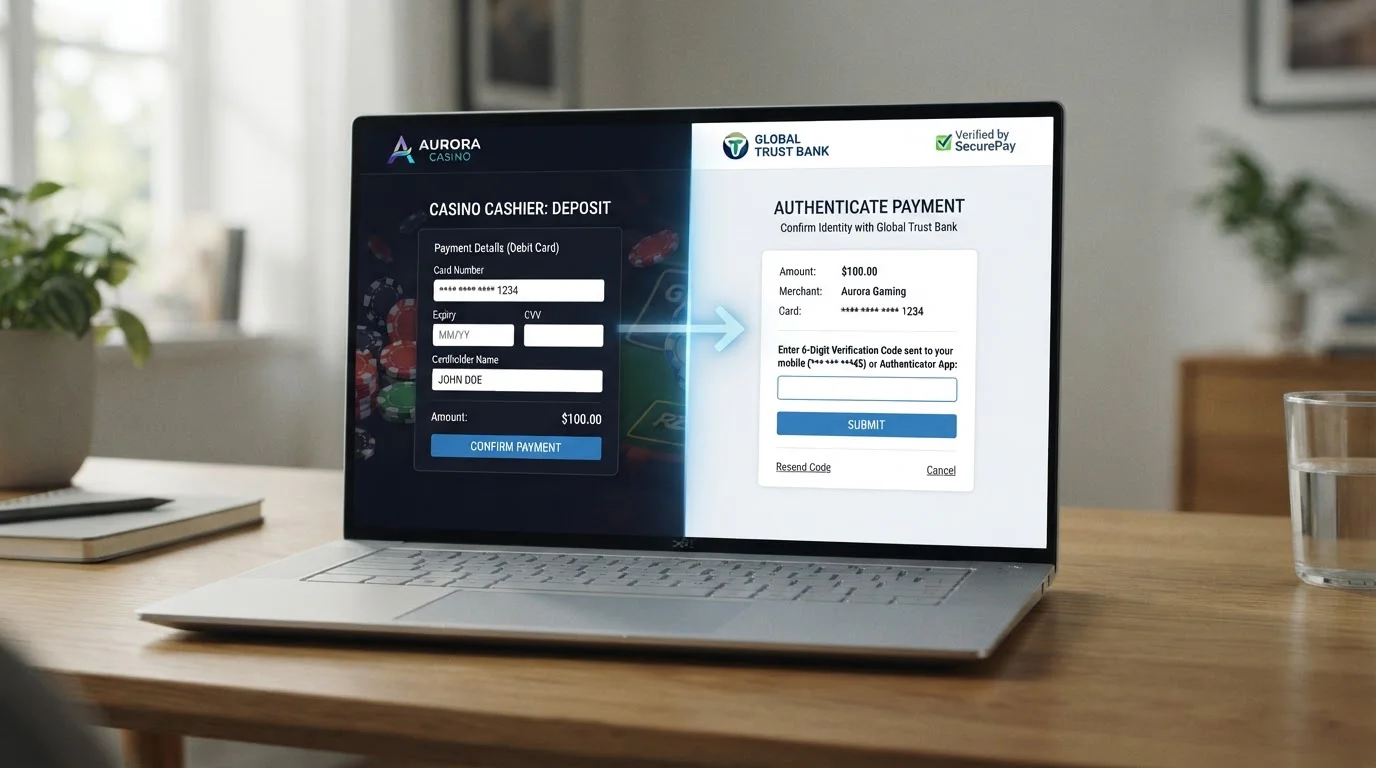
Depositing at a UK online casino follows a standard flow regardless of the method. You log into your casino account, navigate to the cashier or banking section, select your payment method from the list, enter the amount you want to deposit, and authenticate the transaction. Debit cards require your 16-digit number, expiry, CVV, and a 3D Secure authentication step. E-wallets redirect you to their login page for approval. Trustly presents a list of UK banks; you pick yours, log in, and authorise the transfer.
Deposits are instant for all four methods. The funds appear in your casino account within seconds, and you can place bets or spin slots immediately. The casino credits your account before the transaction fully settles on the backend, accepting the payment processor’s authorisation as confirmation.
Withdrawals reverse the process but introduce a delay. Casinos verify the withdrawal request, sometimes triggering a KYC check if you haven’t uploaded identity documents previously. Once approved, the casino sends the payout instruction to the payment processor. Debit card withdrawals take the longest because they travel through the card network clearing system: the casino initiates the refund, the card network processes it, and your bank credits your account one to five business days later. E-wallet and open banking withdrawals are faster because they bypass card networks entirely, settling peer-to-peer or via direct bank APIs.
Limits vary by casino and method. Minimum deposits are typically £5 to £10 across all methods. Maximum deposits range from £5,000 to £100,000 per transaction depending on the operator’s risk appetite and the player’s account status. VIP players often negotiate higher limits. Withdrawal limits are more restrictive: many UKGC casinos cap withdrawals at £5,000 to £10,000 per day or £20,000 to £50,000 per month, with higher limits available for verified accounts or VIP tiers.
Fees depend on the method. Debit cards, PayPal, and Trustly are free for UK players. Skrill and Neteller charge currency conversion fees (1.45%–1.50%) if you’re transacting across currencies, and a £1 fee for instant bank withdrawals from the e-wallet to your account. Casinos occasionally impose withdrawal fees for certain methods, but this is rare at UKGC-licensed operators and typically disclosed in the terms.
Verification requirements are universal. The UK Gambling Commission mandates that operators verify the identity and age of all players before processing a withdrawal. First-time cashouts trigger a KYC request: you upload a photo ID (passport or driving licence), proof of address (utility bill or bank statement), and sometimes a photo of the payment method used. Trustly-integrated casinos can skip some of this by verifying identity through the bank connection during the first deposit, but a document upload is still common.
Bonus eligibility hinges on the method. Debit cards, PayPal, and Trustly almost always qualify for welcome bonuses. Skrill and Neteller are frequently excluded. If you’re chasing a promotional offer, read the terms and conditions before depositing. Disqualifying yourself by using an excluded method forfeits the bonus, and casinos rarely reverse that decision.
Payment method changes during a session are allowed but constrained by anti-money-laundering rules. If you deposit with a debit card, most casinos require you to withdraw at least the deposited amount back to that card before you can nominate a different method for additional withdrawals. This prevents players from depositing with one method, winning, and cashing out to an untraceable account.
Choosing the Right Payment Method for Your Needs
Payment method selection at UK online casinos in 2026 comes down to four priority axes: speed, acceptance, privacy, and bonus compatibility. No single method wins on all four. Debit cards sacrifice withdrawal speed for universal acceptance. PayPal trades processor fees (borne by the casino, not you) for trust and velocity. Trustly delivers the fastest payouts but isn’t yet ubiquitous. Skrill and Neteller are everywhere but often disqualify you from promotions.
Start with the bottleneck that matters most to you. If you play at multiple casinos and want one method that works everywhere, debit cards are the default. If you’re committing to a single operator with a large deposit and want your winnings back fast, check whether they support Trustly or PayPal and optimise for that. If you value keeping casino transactions off your bank statement — whether for privacy, household budgeting, or simply avoiding the visual reminder that you’re gambling — an e-wallet creates that buffer.
Bonus hunters should audit terms before depositing. A £500 welcome package funded by a Skrill deposit that disqualifies you from the offer is worth exactly £0. Check the cashier for accepted methods, then cross-reference the bonus terms for exclusions. If Skrill and Neteller are blacklisted but PayPal and Trustly aren’t, deposit with the latter. If all e-wallets are excluded, use a debit card. Missing this step costs real money.
Regular players who don’t chase bonuses can ignore eligibility restrictions and optimise purely for convenience. Skrill and Neteller become viable at that point: fast, widely accepted, and secure. The 1.45%–1.50% currency conversion fee only applies if you’re transacting across currencies; GBP-to-GBP deposits and withdrawals within the UK are free beyond the £1 instant bank withdrawal charge, which you can avoid by choosing standard transfer timing.
Low-stakes recreational players should stick with debit cards. The £5 to £10 minimum deposits match casual budgets, every UKGC casino accepts them, and the zero-fee structure means every pound deposited reaches your balance. E-wallets add a layer of complexity — funding the wallet, managing a balance, remembering another login — that delivers minimal benefit if you’re depositing £20 once a month for an evening’s entertainment.
High-stakes players face different constraints. Many UKGC casinos cap debit card deposits at £5,000 to £10,000 per transaction, requiring multiple deposits for larger sums. E-wallets and open banking often support higher limits, and VIP account managers will negotiate custom arrangements for six-figure players. At that tier, withdrawal speed becomes critical: a £50,000 payout taking five days to clear via debit card ties up capital; PayPal or Trustly settling the same amount in hours preserves liquidity.
Security-conscious players should prioritise methods with strong two-factor authentication. Debit cards use 3D Secure, redirecting you to your bank’s authentication page. PayPal, Skrill, and Neteller offer app-based 2FA or SMS codes. Trustly authenticates through your bank’s own login, often with biometric verification. All four are materially more secure than older casino payment methods like wire transfers or cheques, which have largely disappeared from the UK market.
Mobile-first players benefit from biometric authentication on e-wallets and open banking. Unlocking PayPal with a fingerprint or Face ID is faster than typing a 16-digit card number on a phone screen. Trustly’s bank selection interface is mobile-optimised, as are the banking apps it redirects to. Debit card entry on mobile works but is slower and more error-prone due to manual input. If you play exclusively on mobile, lean toward methods designed for app-based authentication.
Problem gambling considerations warrant mention. E-wallets create a psychological buffer between your bank account and the casino, which can make it easier to lose track of spending. Debit cards, by contrast, show each casino transaction on your bank statement as a discrete line item, providing a concrete record. If you’re using gambling as entertainment within a strict budget, the visibility of debit card transactions can help enforce that limit. If you’re struggling with control, the buffer an e-wallet creates may obscure the problem.
GamStop-enrolled players are restricted to UKGC-licensed operators, which accept debit cards, PayPal, Trustly, Skrill, and Neteller equally. The payment method doesn’t bypass GamStop — that self-exclusion is enforced at the operator level through the UKGC licence. Players looking to evade GamStop by using offshore casinos will find that those sites accept the same methods (except often PayPal, which requires UKGC licensing for UK customers). Diners Club offers no workaround here; it’s unavailable at both UKGC and offshore operators.
Tax implications are nil. UK residents don’t pay tax on gambling winnings, and the choice of payment method doesn’t change that. Your bank statement will reflect deposits and withdrawals, but HMRC does not treat casino payouts as taxable income. Professional gamblers who derive their primary income from gambling face different rules, but for recreational players the method is irrelevant to tax reporting.
Slots, Live Casino, and Game Types
Diners Club was never a gate to specific game types; it was simply a funding method. The same applies to its replacements. Debit cards, PayPal, Trustly, Skrill, and Neteller all fund the same casino account balance, which you then wager on slots, live dealer tables, virtual sports, or any other game type the operator offers. Your choice of payment method does not restrict access to particular games.
Slots remain the most popular category at UK online casinos, accounting for roughly 70% of gameplay by volume. Payment method choice has no bearing on which slots you can play, but it affects bonus eligibility. Free spins bonuses — «100 free spins on Starburst» or «50 spins on Book of Dead» — are the most common slot-focused promotions, and these often exclude Skrill and Neteller deposits. Debit card and PayPal deposits typically qualify. Check the specific offer terms; the exclusion is at the casino’s discretion, not the slot provider’s.
Live dealer games — blackjack, roulette, baccarat, poker variants, game shows — have identical payment method accessibility. You deposit with any accepted method, the funds appear in your balance, and you sit at a live table. Some UKGC casinos offer live-casino-specific bonuses (cashback on live play, matched deposits for table games) that exclude certain payment methods, but this is promotional fine print, not a technical restriction.
Table game wagering contributions matter for bonus clearing. If you deposit £100 with a 100% match bonus (£200 total) and 35x wagering requirements (£7,000 to wager before you can withdraw), slot play contributes 100% per pound wagered. Table games and live casino typically contribute 10% to 20%, meaning you need to wager five to ten times as much to clear the same requirement. This doesn’t change based on your deposit method, but it’s worth understanding if you primarily play blackjack or roulette: a bonus that looks generous becomes a grind when table games barely move the wagering counter.
Mobile play is method-agnostic. Depositing via a debit card, e-wallet, or open banking works identically on mobile browsers and casino apps as it does on desktop. The cashier interface adjusts for screen size, but the backend flow is the same. Biometric authentication — fingerprint or face unlock — often replaces manual password entry for e-wallets and banking apps, making mobile deposits faster and more secure than desktop in practice. Mobile-exclusive bonuses (offers pushed via app notifications) have the same payment method eligibility rules as desktop promotions.
New casinos adopt the same payment methods as established operators. A UKGC-licensed site launching in 2026 will support Visa and Mastercard debit, likely PayPal, possibly Trustly, and almost certainly Skrill and Neteller. Diners Club won’t appear, nor will most niche card brands. The payment infrastructure UK casinos use is standardised around high-volume, low-cost processors that handle the methods players actually use. Brand-new operators occasionally experiment with cryptocurrency or niche e-wallets, but these are add-ons, not replacements for the core four methods.
Game variety across casinos depends on software provider agreements, not payment methods. One casino might offer 3,000 slots from 50 providers; another might have 800 from 20 providers. Your ability to access those games hinges on funding your account with an accepted method, and since all UKGC casinos accept debit cards at minimum, no legitimate game is locked behind a payment method you can’t access. Offshore casinos that accept only cryptocurrency are a different animal, but that’s a business model choice, not a payment-method-dependent game restriction.
Responsible gambling tools — deposit limits, loss limits, session timers, self-exclusion — are operator-level features that apply regardless of payment method. Setting a £50 weekly deposit limit restricts all deposit methods equally. Debit cards don’t let you bypass a limit you set with an e-wallet. The UKGC mandates that licensed operators enforce these tools uniformly, and the payment processor has no visibility into your self-imposed restrictions.
Trust and verification apply to the operator, not the payment method. A debit card deposit at a rogue offshore casino is no safer than a Skrill deposit at the same casino. The method gets your money into the account; the casino’s licensing, reputation, and dispute resolution determine whether you get it back. Stick to UKGC-licensed operators if consumer protection matters. Check offshore casinos for verifiable licences (Curaçao eGaming with a visible sublicence number, MGA for specific jurisdictions) and player reviews before depositing, regardless of method.
Casino Deposit Methods UK 2026 — Cards, E-Wallets & Bank
Content created by the «casinopay» team
