
Casinos That Accept Dogecoin UK: The Offshore Reality British Players Face in 2026
 Available in US
Dogecoin casinos for UK players exist in exactly one regulatory category: offshore. No operator holding a UK Gambling Commission license can touch cryptocurrency deposits in 2026, which means every casino accepting DOGE from British residents operates under Curaçao or Anjouan licensing, outside GamStop coverage, and beyond domestic consumer protections. That binary shapes everything that follows.
This breakdown covers nine offshore casinos accessible to UK players that process Dogecoin deposits, with tested withdrawal times where available, licensing specifics per operator, and the practical tradeoffs that come with leaving the UKGC framework. Stake departed the UK market in March 2025 and will not appear in this ranking despite still featuring in competitor lists written before that exit was finalized.
The regulatory split matters more than the coin mechanics. Dogecoin confirms transactions in roughly one minute and costs under a penny per send, but those technical advantages mean nothing if the casino freezes your account during a withdrawal dispute and you discover there’s no Financial Ombudsman to escalate to. We’ll address both the upsides and the gaps.
The UK Regulatory Reality: Why UKGC Casinos Don’t Accept Dogecoin

The UK Gambling Commission prohibits licensed operators from accepting cryptocurrency payments. Not «discourages» or «advises against» – prohibits outright. The reasoning centers on source-of-funds verification: UKGC rules require casinos to trace where deposits originate, check affordability, and flag transactions that might indicate problem gambling or money laundering. Cryptocurrency’s pseudonymous structure breaks that chain.
A Bitcoin or Dogecoin transaction shows two wallet addresses and an amount. The casino sees your deposit arrive from a string of letters and numbers. There’s no name, no bank statement, no way to verify that the DOGE came from legitimate earnings rather than a credit card cash advance cycled through an exchange. UKGC’s 2026 stance remains that integrating crypto would require fundamentally altering how blockchain assets function – which isn’t happening.
The Commission opened preliminary discussions in 2026 about whether a future pathway might exist for regulated crypto gambling, described internally as a «tentative first step.» Tim Miller, the UKGC’s chief executive, confirmed the regulator is «looking at what the potential path forward would be» but stopped well short of announcing a timeline or policy shift. Financial Services and Markets Act regulations expected in October 2027 will expand crypto oversight across UK financial services, and that framework might eventually feed into gambling licensing – but nothing has changed as of now.
Why don’t UKGC-licensed casinos accept Dogecoin?
UKGC licensing conditions require operators to conduct source-of-funds checks and maintain financial transparency for consumer protection and anti-money laundering compliance. Cryptocurrency transactions are pseudonymous – only wallet addresses are visible, with no link to identity or fund origin. This conflicts directly with UKGC requirements, making crypto acceptance incompatible with a UK license. The regulator has stated that permitting crypto would require «significantly altering how digital assets function,» which remains technically and politically unresolved in 2026.
The practical upshot: if a casino serves UK players and holds a UKGC license, it does not accept Dogecoin. If it accepts Dogecoin, it’s offshore. There are no exceptions, no hybrids, and no UKGC-licensed operators experimenting with crypto in a sandbox. That binary is the foundation of everything covered below.
Best Dogecoin Casinos for UK Players in 2026

The offshore Dogecoin casino landscape for UK players breaks into three licensing tiers: established Curaçao operators with multi-year track records, newer Curaçao entrants launched since 2024, and Anjouan-licensed platforms operating under the Union of Comoros framework. All nine casinos below accept UK registrations, process Dogecoin deposits and withdrawals, and operate outside UKGC jurisdiction.
Can UK players legally use Dogecoin casinos in 2026?
Yes. No UK law prohibits residents from using offshore gambling sites, including those accepting cryptocurrency. These casinos operate under non-UK licenses (typically Curaçao or Anjouan), which means they’re legal to access but exist outside the UK Gambling Commission’s regulatory framework. The tradeoff: you forfeit UKGC consumer protections, GamStop self-exclusion coverage, and UK complaint routes. Offshore gambling is legal for UK players, but regulatory safeguards don’t follow you outside domestic licensing.
| Casino Name | License | Withdrawal Speed | Min Deposit | Distinguishing Feature |
|---|---|---|---|---|
| BC.Game | Curaçao | 15–35 minutes | Varies by crypto | 150+ cryptocurrency support, native token rewards |
| Rollbit | UKGC 57869 (fiat) / Offshore (crypto) | Instant (automated) | £10 | Multi-product platform, strict VPN enforcement |
| FortuneJack | Anjouan | 8 minutes (claim) | Low (DOGE-friendly) | Operating since 2014, no-KYC below thresholds |
| MyStake | Curaçao 8048/JAZ | Standard crypto (under 24h) | £10 | Casino + sportsbook, 7,000+ games, 50+ sports |
| Lukki Casino | Curaçao (Dama N.V.) | Fast crypto | Varies | Launched 2024, €4,000 + 300 spins welcome package |
| Wreckbet | Anjouan | 0–24 hours | Varies | Brand-new 2026 launch, very limited track record |
| Liraspin | Curaçao 8048/JAZ | 1–3 hours | Varies | 6,000+ games, 25% weekly VIP cashback (zero wagering) |
| Chanze | Anjouan / Curaçao | Standard crypto | Varies | Modern payment rails, mid-tier offshore option |
| KatanaSpin | Curaçao 8048/JAZ2022-050 | Standard crypto | Varies | Samurai theme, operated by Rabidi N.V. since 2022 |
The table supplements the breakdowns below. Each casino receives a full profile covering ownership, tested or claimed payout speeds, game libraries, and red flags where relevant. Ordering reflects a balance of track record, withdrawal reliability, and game depth rather than a single scoring axis.
BC.Game: 150+ Cryptos and Token Rewards
BC.Game operates under a Curaçao gaming license and has built a reputation as one of the broadest crypto casino platforms available. The site supports over 150 cryptocurrencies including Dogecoin, making it a natural landing point for players holding altcoins beyond Bitcoin and Ethereum. Parent entities BlockDance B.V. and Small House B.V. filed bankruptcy in 2024, but the casino continues to operate and process withdrawals without visible interruption.
The standout feature is the native BCD token economy. Players earn token rewards based on wagering volume, which can be staked in a yield vault or used within the platform’s ecosystem. The game library draws from 73+ studios and includes proprietary «Originals» – provably fair titles developed in-house. A full sportsbook shares the same wallet as the casino, so deposits move seamlessly between products. Tested withdrawal times from a verified Covers.com review showed four separate payouts (BTC and LTC) landing in 15 to 35 minutes each with basic profile verification completed.
The trust profile is mixed. Over 4,000 Trustpilot reviews exist, and nine independent reviewer assessments place BC.Game in the upper tier for game selection and coin support. Bitcoin.com called it «the best game selection and the broadest coin support of anything we rate,» then added that «winning is most likely to become complicated» – a reference to stricter KYC requirements that kick in on larger cashouts. Casino Guru logged 31 complaints, and multiple sources note that big wins trigger enhanced verification that can delay payouts by days. For modest, compliant play the platform pays quickly; for four-figure or five-figure wins, expect document requests and manual review queues.
Rollbit: Instant Withdrawals with Strict VPN Enforcement
Rollbit operates two distinct platforms: a UKGC-licensed casino (license 57869) that accepts fiat payments only, and a separate offshore crypto operation combining casino, sportsbook, esports betting, NFT marketplace, and crypto futures trading under one wallet. The offshore side is where Dogecoin deposits land, and instant automated withdrawals are its signature feature. Flush.com described them as «best-in-class,» and the automation works – until it doesn’t.
The catch is VPN enforcement. Rollbit explicitly bans VPN use in its terms and actively detects it during gameplay and withdrawals. Documented cases exist where players deposited five-figure sums, played for months through a VPN, then had accounts frozen and funds confiscated the moment they attempted a withdrawal. One cited example: $15,000 deposited, months of play, account locked at cashout for terms violation, funds kept by the operator. The site’s own terms give it wide latitude to void balances for VPN breaches, and the enforcement is real, not theoretical.
Casino.guru rates Rollbit UK with a «Very low Safety Index of 3.2.» The product itself – game selection, withdrawal speed when approved, multi-product wallet – is competitive. The risk lies in the operator’s documented willingness to lock accounts and retain funds for terms violations that many offshore casinos tolerate. If you’re accessing from the UK without a VPN (which isn’t needed – Rollbit accepts UK players), payouts are instant. If you’re masking your location for any reason, this is the wrong casino to test it at. RLB token burns have passed the two-thirds mark as of 2026, a detail that matters to holders of the native token but changes nothing about the core product for casual players.
FortuneJack: Veteran Operator Since 2014
FortuneJack has operated under an Anjouan license since 2014, making it one of the oldest names in crypto gambling still serving UK players. The game library exceeds 5,400 titles from multiple providers, and the welcome package scales up to 6 BTC plus 250 free spins across four deposits. An exclusive code «CRYPTOSLATE» adds 100 no-wager spins on deposits of €20 or more, and the site maintains an active Discord community with regular rewards for participants.
Withdrawal speeds are advertised at 8 minutes for routine crypto cashouts, a claim that aligns with the site’s broader no-KYC positioning below certain thresholds. The Gamble.io affiliate network offers a «GambleJack» code that also delivers 100 no-wager free spins on $20 deposits, reinforcing the operator’s preference for frictionless onboarding. Dogecoin-specific messaging on the site emphasizes the coin’s sub-penny network fees and one-minute block times, positioning DOGE as ideal for smaller bankroll play where Bitcoin gas would eat into margins.
The trust concern is visible and recent. Trustpilot removed FortuneJack’s aggregated rating in 2026 after identifying fake reviews in the submission queue. Of the 182 reviews that survived the purge, 61% are one-star ratings. The operator replied to complaints through March 2026 but has gone silent since. Bitcoin.com’s review flags the Trustpilot issues as a «significant trust concern.» The casino still pays out – there’s no systemic non-payment pattern – but player satisfaction is polarized. Those who experience smooth cashouts rate it highly; those who hit verification friction or dispute denials leave scathing reviews. Ten years of operation without a collapse suggests baseline solvency, but recent review patterns point to customer service degradation or uneven enforcement of terms.
MyStake: Casino and Sportsbook Combined
MyStake launched in 2020 under Curaçao license 8048/JAZ, operated by Santeda International B.V. The platform balances casino and sportsbook more evenly than most crypto casinos, with 7,000+ games on the slots and table side and over 50 sports disciplines covered on the betting side. Thousands of events run weekly, prematch and in-play, and every market can be settled in cryptocurrency or pounds with equal friction.
The welcome package structure varies by source – some cite 150% up to £200 on the first deposit, others reference a cumulative package reaching £1,200 to £1,800 across multiple deposits. The baseline first-deposit offer is 150% up to £200 with a £10 minimum, carrying 50× wagering on matched funds and a 30-day validity window. Crypto and fiat options coexist in the cashier, so UK players preferring to fund in pounds can do so, then convert balances internally or withdraw via the same route.
Track record is the selling point. MyStake has operated continuously since 2020 with no major interruptions, exit scams, or license suspensions. For UK players wary of newer offshore brands with thin operational histories, that five-year span provides some reassurance. The sportsbook depth sets it apart from casino-first competitors – if you’re splitting bankroll between slots and football markets, MyStake consolidates both under one login rather than forcing you to juggle separate platforms. The mobile browser experience works smoothly, and customer support operates 24/7 though response quality varies by queue depth.
The VIP and cashback programs run on a tiered structure, but specifics aren’t surfaced prominently in public-facing materials. Reload offers and slot races appear in the promotions calendar, and the operator maintains social media giveaways, though those skew toward engagement farming more than substantive value. For players prioritizing operational stability and dual casino/sportsbook access over cutting-edge features, MyStake sits comfortably in the mid-tier.
Lukki Casino: New Entrant with Large Welcome Package
Lukki Casino entered the market in early 2024 under a Curaçao license issued via Antillephone N.V., with Dama N.V. as the operating entity. Dama runs multiple casino brands across the Curaçao licensing landscape, so Lukki is a known operator’s new skin rather than a startup gambling on its first license. The game library runs 5,000 to 6,000 titles depending on which affiliate review you reference, and the published payout rate is 96%.
The welcome package is the headline: up to €4,000 plus 300 free spins spread across the first four deposits. That’s one of the larger «welcome» structures in the offshore Curaçao segment, though the word belongs in quotes – four-deposit packages aren’t gifts, they’re retention funnels designed to lock players into a platform before they’ve tested withdrawal speeds or support quality. Wagering requirements weren’t uniformly disclosed across reviewed sources, which is itself a red flag. When bonus terms sit several screens below the banner offer, assume they’re punitive until you’ve read them yourself.
Casino.guru assigned Lukki a «Below average Safety Index of 6.2,» citing unspecified fairness and safety shortfalls. An Australian reviewer at Inside1031.com noted efficient verification and fast crypto withdrawals in a hands-on test, but single positive reviews don’t override aggregate safety scores. The platform accepts Dogecoin alongside Bitcoin, Ethereum, USDT, and traditional methods (Visa, Skrill). Crypto withdrawals are described as «fast» without specific time windows provided, which usually means manual review queues rather than automated instant payouts.
Lukki’s positioning targets players who want a large welcome package and don’t mind trading into a newer brand’s unproven track record. For players prioritizing withdrawal reliability and operator longevity, the 2024 launch date and mid-tier safety rating argue for caution. Dama N.V.’s portfolio includes older, more established brands – if you’re drawn to this operator’s structure, consider checking whether one of their longer-running casinos offers similar terms with a deeper operational history.
Wreckbet: Brand-New 2026 Launch
Wreckbet launched in 2026 under an Anjouan license issued by the Union of Comoros, operated by Igloo Ventures SRL. Some affiliate sites incorrectly cite a Curaçao license (OGL/2024/4932/2393), but the primary official licensing claim is Anjouan. The platform accepts six cryptocurrencies including Dogecoin and processes crypto withdrawals within 24 hours according to published terms, though with a daily withdrawal cap of £3,400 (€4,000).
The game library is powered by Evolution Gaming and Pragmatic Play, two of the largest providers in the live dealer and slots categories respectively. That’s a narrower studio roster than competitors offering dozens of providers, but Evolution and Pragmatic cover the mainstream demand. The welcome package ranges from £250 to £300 plus 50 to 80 free spins depending on which affiliate source you land on, another signal that terms aren’t uniformly controlled across marketing channels.
The core problem is the launch date. Wreckbet has no operational history, no withdrawal track record beyond the claims in its own terms, and no independent reviews from players who’ve tested five-figure cashouts or disputed a frozen account. The site explicitly targets «experienced players who understand international licensing frameworks,» which reads as marketing-speak for «we’re offshore, you know what that means, proceed accordingly.»
Anjouan licensing is the cheapest and fastest gambling license available in 2026. The jurisdiction charges 0% gross gaming revenue tax, holds roughly 1,400 active licenses as of June 2026, and has «limited and widely disputed» international recognition according to legal consultancies tracking iGaming jurisdictions. An Anjouan license costs less and imposes fewer compliance burdens than Curaçao, which is already the low bar. That’s not inherently disqualifying – FortuneJack operates under Anjouan and has paid players for a decade – but it removes one layer of external accountability.
For early adopters comfortable with the risks of a zero-track-record operator, Wreckbet offers Evolution live tables and Pragmatic slots with Dogecoin settlement. For everyone else, the absence of any operational history to verify withdrawal claims against makes this a «wait and see» rather than a current recommendation.
Liraspin: Fast Crypto Processing and Strong VIP Program
Liraspin launched in 2024 under Curaçao license 8048/JAZ, operated by Terdersoft BV or Rossobach SRL depending on which corporate structure disclosure you find in the footer. The game library spans 6,000 to 6,900 titles from over 100 providers including Pragmatic Play, Evolution Gaming, NetEnt, and BGaming. The published payout rate is 96%, and crypto withdrawals are processed in one to three hours according to tested timelines.
The six-tier VIP program offers weekly cashback reaching 25% at the top tier, and the cashback carries zero wagering requirements – you can withdraw it immediately. That’s a genuinely player-friendly structure in a niche where most cashback comes with rollover strings attached. The monthly withdrawal ceiling is €10,000, which sits below some competitors but covers the realistic cashout needs of most recreational players. High rollers moving five figures weekly will hit that cap quickly.
The welcome bonus structure is tiered by deposit size: 100% to 255% match depending on how much you fund, up to £450 (or €450) plus 250 free spins. Some sources cite a multi-deposit package reaching €1,500 plus 250 spins across three deposits. Wagering is ×35, valid for seven days, which is tight – weekly validity windows exist to expire uncompleted bonuses before players can clear them, a standard offshore tactic. If you’re taking the bonus, plan to hit wagering within the week or expect it to void.
Liraspin positions itself explicitly as an «alternative to UKGC-regulated sites» for UK players seeking fewer restrictions: no GamStop, no affordability checks, no stake limits. That messaging targets problem gamblers who’ve self-excluded domestically, a welfare concern worth naming plainly. Operators marketing themselves as GamStop workarounds profit from the gap in consumer protections, and Liraspin’s positioning is transparent about that angle. The VIP program and fast crypto processing are genuine upsides; the lack of self-exclusion integration is the cost of offshore gambling, not a feature.
Chanze: Modern Payments with Crypto Focus
Chanze operates under Anjouan or Curaçao licensing depending on which regulatory disclosure you reference, with Bitcoin, Ethereum, and Dogecoin acceptance marketed prominently alongside traditional payment options. The platform targets UK players seeking non-UKGC alternatives and emphasizes «modern payment rails» in its positioning, though specifics about what makes those rails modern beyond crypto acceptance aren’t detailed in public materials.
Limited public information is available compared to larger offshore brands. Game counts, specific bonus structures, tested withdrawal times, and operational track record aren’t consistently documented across reviewed sources. That gap suggests either a very recent launch, minimal affiliate penetration, or a mid-tier brand that hasn’t generated enough player volume to accumulate independent reviews.
What’s known: Chanze accepts Dogecoin, serves UK players, and operates outside UKGC jurisdiction. What’s unclear: how long it’s been operating, who owns the legal entity behind the license, whether withdrawals process in hours or days, and what dispute resolution looks like when something goes wrong. In the offshore casino space, the absence of information is information. Established operators generate paper trails – reviews, complaints, forum discussions, affiliate coverage. Brands without that footprint are either too new to evaluate or too small to matter.
For UK players comfortable with thin operational visibility in exchange for Dogecoin acceptance and non-GamStop status, Chanze represents a second-tier offshore option. For those prioritizing withdrawal reliability and verifiable track records, the lack of documented player experiences argues for sticking with larger brands where you can find tested cashout times and complaint histories.
KatanaSpin: Samurai-Themed Offshore Option
KatanaSpin launched in 2022 under Curaçao license 8048/JAZ2022-050, operated by Rabidi N.V. The operator manages a portfolio of casino brands across the Curaçao licensing framework, so KatanaSpin is one skin in a larger multi-brand operation. The visual theme leans heavily into Japanese samurai aesthetics – dark interface design, thematic game categories, promotional materials carrying the motif throughout.
The platform accepts cryptocurrency including Dogecoin alongside traditional payment methods like cards and e-wallets. Specific game counts, tested withdrawal times, and bonus structures aren’t consistently detailed across reviewed sources, suggesting mid-tier affiliate attention rather than top-tier player volume. The Rabidi N.V. portfolio includes older, more established brands, which provides some operational continuity – the same back-office infrastructure and payment processors likely serve multiple brands under the parent operator.
KatanaSpin’s primary differentiator is aesthetic rather than functional. If you’re drawn to themed casino experiences and the samurai presentation appeals, the 2022 launch date provides two years of operational history to verify against. If you’re indifferent to theming and prioritizing withdrawal speed or game library depth, larger offshore brands with more extensive documentation offer clearer risk profiles. Rabidi N.V.’s track record managing multiple Curaçao casinos without high-profile collapses suggests baseline competence, but KatanaSpin itself hasn’t generated enough independent player feedback to assess whether it’s a strong or weak execution within that portfolio.
Is Stake casino still available for UK players in 2026?
No. Stake voluntarily withdrew its UK Gambling Commission license and ceased UK operations on 11 March 2025. The UKGC announced on 12 February 2025 that TGP Europe Limited, the entity operating stake.uk.com under a white-label arrangement, would stop new registrations and shut down the Great Britain site by the 11 March deadline. Stake’s terms of service were updated by 30 March 2026 to explicitly list UK residents among prohibited jurisdictions. UK players cannot legally access Stake for real-money play as of 2026, despite the site continuing to operate in other markets under its Curaçao license issued to Medium Rare N.V.
Stake’s UK exit is worth flagging because many competitor casino lists written before March 2025 still feature it prominently, often as the top recommendation. Those rankings are outdated. The Guardian confirmed in February 2025 that the Gambling Commission stated Stake «will no longer be a licensed website» by the 11 March deadline, and the operator complied. If you’re reading an offshore Dogecoin casino guide that leads with Stake, you’re looking at stale content that hasn’t been updated since the regulatory exit.
How to Deposit and Withdraw Dogecoin at UK Casinos
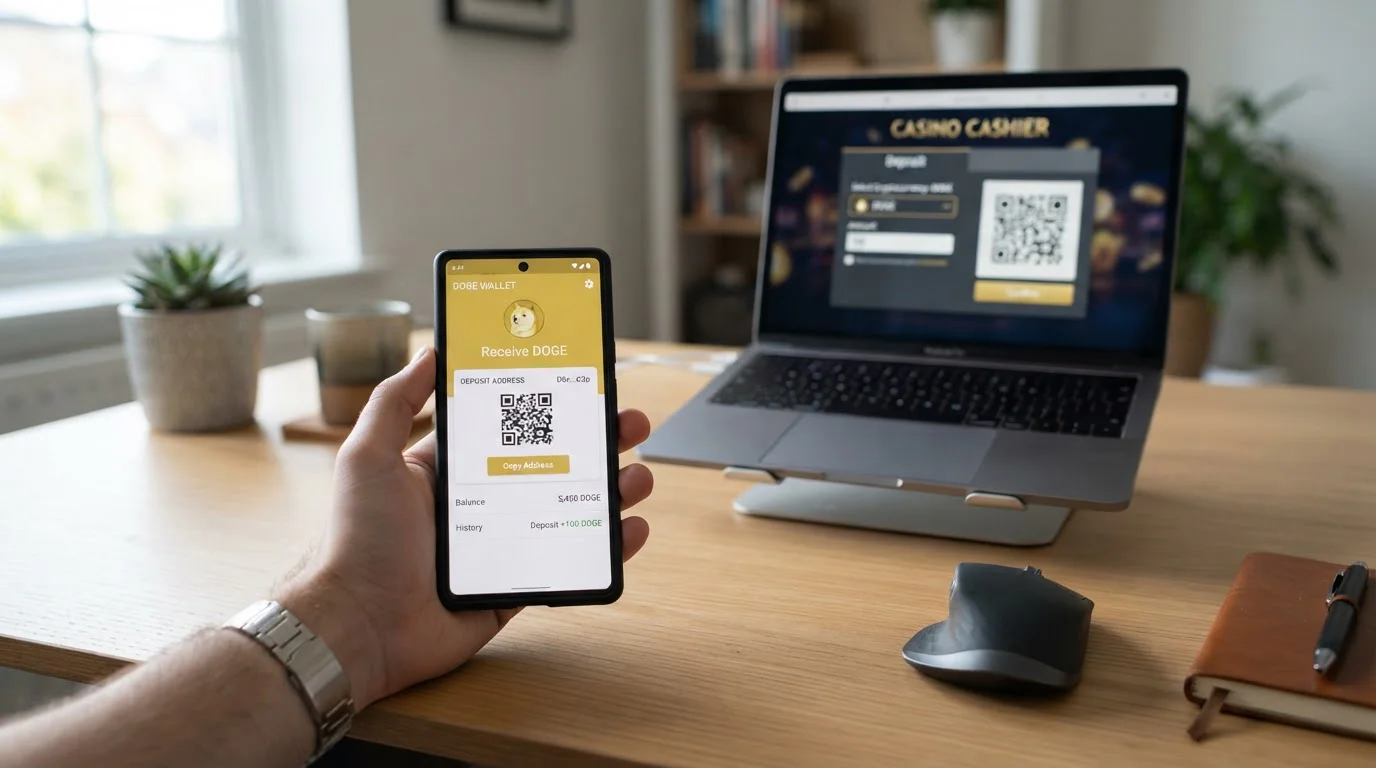
Dogecoin deposits at offshore casinos follow a standard cryptocurrency workflow: acquire DOGE through an exchange, transfer it to a personal wallet, send from that wallet to the casino’s deposit address, and wait for blockchain confirmations before your balance credits. Withdrawals reverse the process. The mechanics are simpler than some other cryptos – no memo fields, no network dropdown menus, no destination tags. Just an address and an amount.
Setting Up a Dogecoin Wallet
UK players new to cryptocurrency need a wallet before they can deposit at a Dogecoin casino. Software wallets like Trust Wallet work on mobile and desktop, providing full control over private keys without requiring account approval or identity verification. Trust Wallet supports Dogecoin natively and generates a receiving address instantly after installation.
Exchange-based wallets like CEX.IO, Uphold, and Crypto.com also serve UK residents and let you buy DOGE directly with a debit card or bank transfer, then hold it in an exchange wallet tied to your account. The tradeoff: you don’t control the private keys, so the exchange could freeze access if you violate terms or if regulatory pressure escalates. For players planning to hold DOGE long-term or move it across multiple casinos, a self-custody wallet like Trust provides more flexibility. For those buying small amounts solely for gambling and withdrawing winnings straight back to the same exchange, the convenience of an all-in-one platform outweighs custody concerns.
Once your wallet is set up and funded, note your Dogecoin receiving address – a string starting with «D» followed by 33 alphanumeric characters. You’ll need this address to receive withdrawals from casinos. Double-check it every time; cryptocurrency transactions are irreversible, and a single wrong character sends funds into the void.
Making Your First Deposit
Log into your chosen offshore casino and navigate to the cashier or deposit section. Select Dogecoin from the list of available cryptocurrencies. The casino will generate a unique deposit address for your account – sometimes static, sometimes rotating per transaction. Copy that address exactly; do not type it manually.
Open your Dogecoin wallet (Trust, Uphold, CEX.IO, or whichever you set up), navigate to the send function, paste the casino’s deposit address into the recipient field, and enter the amount you want to send. Most wallets let you scan a QR code instead of pasting an address, which reduces error risk. Double-check the address matches what the casino provided, then authorize the transaction.
Dogecoin’s blockchain confirms transactions in roughly one minute per block. Most casinos require one to six confirmations before crediting your balance, which translates to one to six minutes in practice. Some operators credit deposits after a single confirmation; others wait for three or six to guard against double-spend attacks. The casino’s deposit page usually states the confirmation requirement. Your balance will update automatically once the threshold is met – no need to contact support or refresh manually.
Network fees are under $0.01 per transaction, negligible compared to bank transfer charges or even card processing fees. The casino itself typically doesn’t charge a deposit fee for crypto, though some operators reserve the right to charge withdrawal fees (covered below).
Withdrawal Process and Timelines
Crypto withdrawals at offshore casinos split into two phases: the casino’s internal processing time, and the blockchain confirmation time. Dogecoin’s blockchain handles its side in minutes; the casino’s side varies from instant automation to 24-hour manual review queues.
Navigate to the cashier, select withdrawal, choose Dogecoin, enter your personal wallet address (the one starting with «D» that you control), and specify the amount. The casino may ask for two-factor authentication or an email confirmation link before processing. Once you authorize, the withdrawal enters the operator’s queue.
Automated systems process withdrawals instantly – the DOGE leaves the casino’s wallet within seconds and hits the blockchain. Rollbit’s offshore platform and some other top-tier operators use instant automation, so your funds land in your personal wallet within five minutes including blockchain confirmations. Manual review queues take longer: one to three hours at Liraspin, eight minutes claimed at FortuneJack, 15 to 35 minutes tested at BC.Game. The «under 24 hours» standard covers most offshore casinos that don’t specify faster timelines.
KYC verification can interrupt the process. Many offshore casinos advertise «no KYC» or «instant withdrawals,» but that usually means no KYC below certain thresholds – $10,000 is a commonly cited ceiling, though it’s not uniform. Win a large amount, attempt a withdrawal, and you’ll likely trigger enhanced verification requiring ID, proof of address, and sometimes source-of-funds documentation. That can delay payouts by days while the casino’s compliance team reviews submissions. Factor in verification risk before celebrating a big win – the funds aren’t truly yours until they’re in your wallet, not while they sit in a pending-withdrawal state subject to document requests.
Withdrawal fees vary by casino. Some charge nothing for crypto; others impose flat fees (e.g., 50 DOGE per withdrawal) or percentage-based fees. Check the casino’s terms or cashier page before requesting your first withdrawal to avoid surprises. Dogecoin’s negligible network fees don’t protect you from casino-imposed charges.
What are the fees for depositing Dogecoin at online casinos?
Dogecoin network fees average $0.01 to $0.03 per transaction, paid to miners for confirming the blockchain transaction. Casinos typically don’t charge deposit fees for cryptocurrency – they want to encourage crypto use because it’s cheaper for them to process than card payments or bank transfers. Withdrawal fees vary by casino: some charge nothing, others impose flat fees (e.g., 50 DOGE per cashout) or small percentage-based charges. Always check the casino’s withdrawal terms before your first deposit to understand the full fee structure. The Dogecoin blockchain itself costs almost nothing; casino-imposed fees are where variance appears.
How long do Dogecoin withdrawals take at UK-accessible casinos?
Dogecoin’s blockchain confirms transactions in roughly one minute per block, so once a casino releases your withdrawal to the blockchain, it lands in your wallet within minutes. The variable is the casino’s internal processing time. Automated systems (Rollbit, some others) pay out instantly. Manual review queues range from 8 minutes (FortuneJack’s claim) to 1–3 hours (Liraspin) to a generic «under 24 hours» at most offshore casinos. Larger withdrawals often trigger KYC verification, which can delay payouts by days while the casino reviews documents. For routine withdrawals below KYC thresholds, expect anywhere from instant to three hours at top-tier operators.
Offshore vs UKGC: Understanding the Tradeoffs
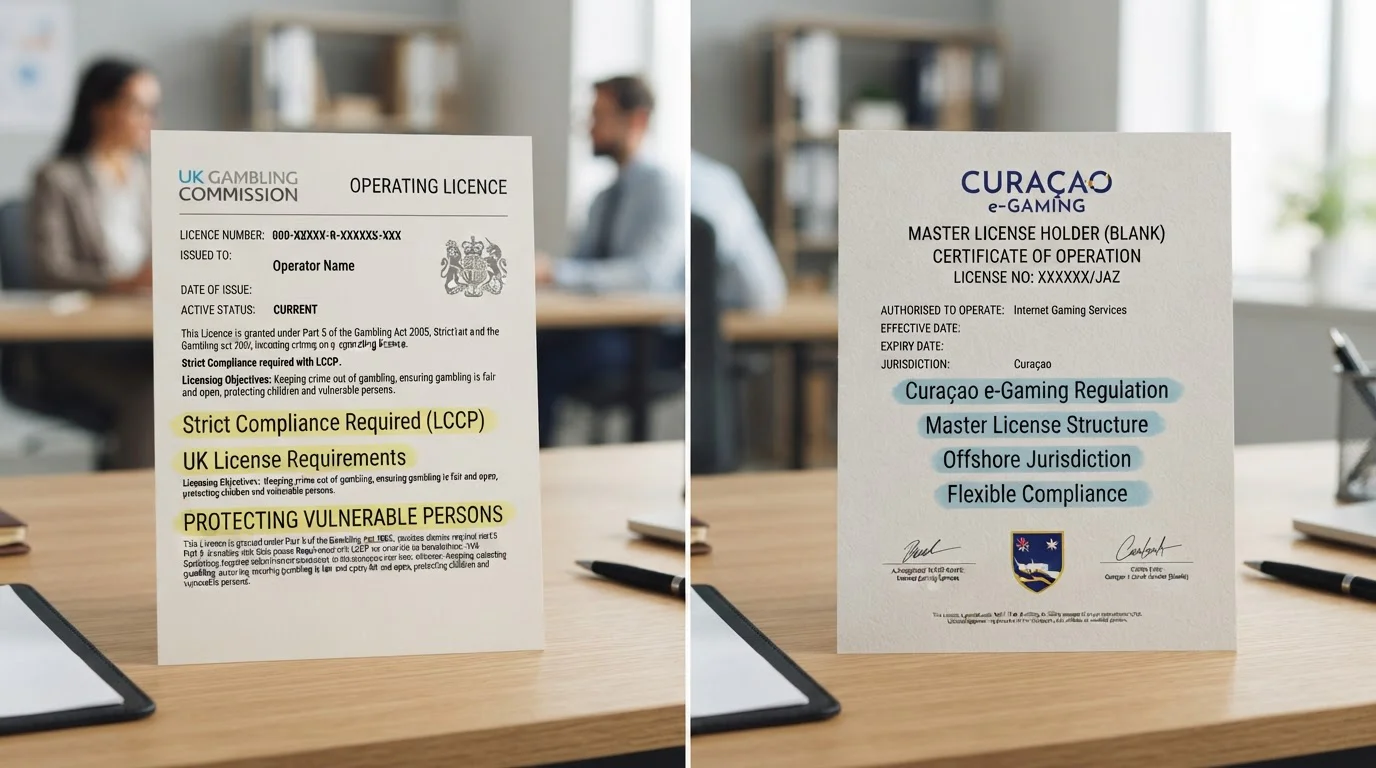
Choosing an offshore Dogecoin casino over a UKGC-licensed operator isn’t a pure gain; it’s a tradeoff with specific upsides and specific costs. The table below maps the features that change when you leave the UK regulatory framework.
| Feature | UKGC-Licensed | Offshore Dogecoin Casino |
|---|---|---|
| Cryptocurrency Acceptance | No – prohibited | Yes – Dogecoin, Bitcoin, ETH, others |
| Withdrawal Speed | 1–5 business days (bank/card) | Minutes to hours (crypto) |
| GamStop Coverage | Yes – self-exclusion enforced | No – outside the scheme |
| Consumer Protections | UKGC complaints process, Financial Ombudsman | None – license terms govern disputes |
| Complaint Routes | Gambling Commission, ADR services | License issuer (Curaçao, Anjouan), no UK escalation |
| Affordability Checks | Yes – required for large deposits/losses | No – deposit what you want |
| Stake Limits | Possible (£5 max on certain slots) | None – offshore operators set own limits |
| License Cost to Operator | High (£130k+ application, annual fees, compliance overhead) | Low (Curaçao ~$10k, Anjouan even cheaper) |
What You Gain (Faster Payouts, No GamStop, Lower Limits)
Crypto withdrawals process in minutes instead of days. UKGC-licensed casinos settle payouts through banks or card networks, which means 1–5 business days from approval to funds in your account. Offshore Dogecoin casinos bypass that infrastructure entirely – once the operator releases your withdrawal, it hits the blockchain and lands in your wallet within an hour at most, often far faster.
No GamStop integration means players who’ve self-excluded from UKGC casinos can still access offshore operators. GamStop is a UK-specific self-exclusion scheme; Curaçao and Anjouan licenses don’t require participation, so offshore casinos aren’t bound by it. That’s marketed as freedom, and for some players it genuinely is. For problem gamblers seeking help, it’s a welfare gap – self-exclusion doesn’t follow you outside UK jurisdiction, so relapse risk escalates.
Lower deposit minimums and no stake limits apply at most offshore casinos. UKGC rules have pushed some operators toward £5 maximum stakes on certain slot categories to reduce harm. Offshore platforms set their own limits, which can mean £0.10 minimums and no caps on bet size. For high rollers or players with larger bankrolls, that flexibility matters. For recreational players gambling within modest budgets, the absence of stake limits changes nothing.
Affordability checks don’t exist offshore. UKGC-licensed operators are required to verify source of funds when deposit or loss patterns suggest financial strain. Offshore casinos have no such obligation – you can deposit five figures in a session and they won’t ask where the money came from unless you trigger an AML flag or attempt a large withdrawal. That feels like less friction, and it is, but the flip side is that nobody’s watching whether you can afford your losses.
Bonus structures at offshore casinos can be more aggressive because operators face lower tax burdens. Curaçao charges standard corporate tax; Anjouan charges 0% gross gaming revenue tax. UKGC operators pay 21% remote gambling duty on gross profits plus application fees, annual fees, and higher compliance overhead. Offshore casinos reinvest that saved cost into larger welcome packages and VIP rewards. The headline numbers look better, but wagering requirements often compensate – ×50 or ×60 rollover isn’t uncommon, and short validity windows (seven days, sometimes less) exist to void bonuses before players can clear them.
What You Lose (Consumer Protections, Complaint Routes, Self-Exclusion Tools)
UKGC consumer protections don’t extend offshore. The Gambling Commission’s licensing conditions require operators to segregate player funds, maintain dispute resolution processes, enforce self-exclusion schemes, and submit to independent audits. Break those rules and the operator risks license suspension or revocation. Curaçao and Anjouan licenses impose lighter oversight – complaints exist, but enforcement is inconsistent, and no UK escalation route applies.
The Financial Ombudsman Service doesn’t cover offshore casinos. If you dispute a frozen account, a voided win, or a terms-of-service violation with a UKGC-licensed casino, you can escalate to the Ombudsman after exhausting the operator’s internal complaints process. The Ombudsman’s decisions are binding, and UK operators comply. Offshore casinos answer only to their license issuer – Curaçao eGaming or Anjouan Gaming – and those bodies have far fewer resources and lower responsiveness than the UKGC. Practically, that means your leverage in a dispute drops sharply once you’re outside UK jurisdiction.
GamStop self-exclusion doesn’t follow you. If you’ve excluded yourself from UK gambling sites due to problem gambling, offshore casinos won’t honor that exclusion because they’re not part of the scheme. Some offshore operators offer their own self-exclusion tools, but they’re not linked to the UK national database, so there’s no cross-referencing. That gap is a documented harm vector – players with gambling problems who self-exclude domestically often migrate to offshore sites marketed as «non-GamStop alternatives,» which defeats the purpose of self-exclusion and exacerbates harm rather than mitigating it.
Dispute resolution reality: when something goes wrong at an offshore casino and you believe the operator violated its own terms or treated you unfairly, your recourse is to file a complaint with the license issuer. Curaçao Gaming Control Board processes complaints but has no public enforcement record comparable to the UKGC’s published sanctions. Anjouan licenses are even less transparent – the jurisdiction is newer to iGaming, and player protections are minimal. In practice, most disputes at offshore casinos are resolved (or not resolved) based on the operator’s willingness to honor your claim, not external enforcement.
What’s the difference between a Curaçao and an Anjouan casino license?
Both are offshore licenses outside UKGC jurisdiction, but Curaçao is more established while Anjouan is newer and cheaper. Curaçao licenses have existed for decades and are issued through various sublicensors like Antillephone N.V.; the most common is 8048/JAZ. Anjouan licenses are issued by the Union of Comoros under the Anjouan Offshore Financial Authority (AOFA). Anjouan charges 0% gross gaming revenue tax, making it the cheapest iGaming license available in 2026, with roughly 1,400 active holders as of June 2026. However, Anjouan’s international recognition is «limited and widely disputed» according to legal consultancies, and enforcement mechanisms are weaker than even Curaçao’s. Both licenses mean no UKGC protections apply, but Curaçao carries slightly more operational scrutiny.
Dogecoin Casino Games: Slots, Live Dealer, and More
Game libraries at offshore Dogecoin casinos mirror the standard online casino mix: slots dominate by volume, live dealer tables provide the next layer, and table games, video poker, and niche categories like crash games fill out the rest. The cryptocurrency you deposit doesn’t change which games are available – a Dogecoin deposit converts to the casino’s internal currency (usually USD or EUR equivalent) and plays the same titles as a Bitcoin or fiat deposit would.
Slots selection at the nine casinos above ranges from 5,000+ titles at the smaller operators to 7,000+ at MyStake and Liraspin. Providers like Pragmatic Play, NetEnt, Evolution Gaming (for live dealer), BGaming, and Nolimit City appear across most platforms. BC.Game adds proprietary «Originals» – in-house provably fair titles where players can verify each game round’s randomness through blockchain hashes. Those Originals skew toward simple mechanics (dice, crash, plinko) rather than cinematic video slots, catering to crypto-native players who prioritize provable fairness over visual polish.
Live dealer games at offshore casinos are typically powered by Evolution Gaming, Pragmatic Play Live, or Ezugi. Evolution’s catalog includes blackjack, roulette, baccarat, game shows like Crazy Time and Monopoly Live, and niche offerings like Lightning Roulette. Tables are streamed from studios in multiple time zones, so UK players gambling at 3am still find active tables. Bet limits on live dealer games range from £1 minimums to £10,000+ maximums depending on the table type and the casino’s VIP tier. Dogecoin deposits settle into the same balance that funds live dealer bets, so there’s no friction moving between slots and live tables.
Table games – RNG-based blackjack, roulette, baccarat, video poker – exist at every casino but receive less promotional focus than slots or live dealer. If you’re primarily a table-game player, verify the specific variants offered before depositing. Some offshore casinos stock dozens of blackjack variants; others offer only single-deck RNG blackjack and nothing else. Provider breadth correlates roughly with table game variety: casinos with 100+ providers usually cover more table-game niches than those with 10–20 providers.
Crash games and mini-games like plinko, dice, and mines have grown in popularity at crypto casinos because they settle fast, require no skill, and work well on mobile. BC.Game’s Originals lean heavily into this category. FortuneJack offers similar provably fair mini-games. For players who find slots too slow or prefer instant results, crash games provide the quickest deposit-to-resolution loop in the catalog.
Bonuses and Promotions at Dogecoin Casinos

Welcome bonuses at offshore casinos range from 100% match offers up to a few hundred pounds or euros, to multi-deposit packages stretching across four deposits and claiming totals of €4,000 or more. Those headline figures are marketing, not value – the actual worth of a bonus depends on wagering requirements, game restrictions, maximum bet limits during rollover, and validity windows.
Wagering requirements at the nine casinos above range from ×35 to ×60 on bonus funds. That means if you deposit £100 and claim a £100 bonus (total £200), you’ll need to wager £7,000 to £12,000 before the bonus converts to withdrawable cash. Slots usually contribute 100% toward wagering; table games often contribute 10% or are excluded entirely. High-RTP games like blackjack and certain slots (Blood Suckers, 1429 Uncharted Seas) are frequently restricted from bonus play because their return-to-player percentages make clearing wagering too easy.
Maximum bet limits during bonus wagering are a common trap. Many offshore casinos cap bets at £5 while bonus funds are active, regardless of your bankroll size. Exceed that limit even once and the casino voids your bonus and any winnings derived from it. The cap isn’t always visible on the promotions page – it lives in the full terms and conditions, often several screens deep. Check before you spin.
Validity windows compress the rollover timeline. Seven-day validity is common at offshore casinos; some stretch to 14 or 30 days, others squeeze down to 72 hours. If you don’t clear wagering before the timer expires, the bonus and associated winnings void automatically. That time pressure is intentional – shorter windows mean fewer players complete rollover, which means the casino keeps more of the «free» money it advertised.
Crypto-specific bonus restrictions exist at many offshore casinos despite marketing themselves as crypto-first. Some operators exclude cryptocurrency deposits from welcome bonuses entirely, limiting them to fiat methods only. Others cap crypto-deposit bonuses lower than fiat bonuses – a £200 max for crypto, £500 max for cards. BC.Game, MyStake, and FortuneJack generally allow crypto deposits to claim full welcome packages, but always verify on the promotions page before depositing. The last thing you want is to fund your account with Dogecoin and discover the bonus requires a Visa deposit.
Free spins bundled with welcome packages are usually restricted to specific slots chosen by the casino – often older titles or lower-RTP games. Winnings from free spins typically carry their own wagering requirement (×35 to ×50) separate from the deposit-match bonus. Maximum win caps apply to free-spin winnings at most casinos, capping potential profit at £100 or less even if you hit a large multiplier during the spins.
Reload bonuses, cashback, and VIP programs provide ongoing value after the welcome package expires. Liraspin’s 25% weekly cashback with zero wagering is genuinely player-friendly – that’s rare in offshore gambling. Most cashback comes with rollover requirements or caps that reduce its effective value. VIP programs tier players by wagering volume and offer escalating perks (higher cashback, faster withdrawals, dedicated account managers), but reaching the top tiers requires five-figure or six-figure monthly wagering, far beyond recreational players’ reach.
Do Dogecoin casinos require KYC verification for UK players?
It varies by casino and withdrawal amount. Some offshore casinos advertise «no KYC» or «instant withdrawals,» but that usually applies only below certain thresholds – often $10,000 in lifetime withdrawals, sometimes lower. Win a significant amount or attempt your first withdrawal, and many casinos will trigger KYC verification requiring ID, proof of address, and occasionally source-of-funds documentation. Larger wins (four figures or higher) almost always trigger enhanced verification, even at casinos that initially allowed small cashouts without documents. Rollbit is described as «KYC-heavy» even at signup. FortuneJack advertises no-KYC below thresholds. Assume KYC will be required eventually, and have documents ready when it’s requested to avoid withdrawal delays.
Mobile Dogecoin Gambling for UK Players
Every offshore casino listed above runs on mobile browsers without requiring a dedicated app download. Progressive web apps (PWAs) and responsive HTML5 sites have replaced native iOS/Android apps at most offshore operators, partly because UK and EU app stores restrict real-money gambling apps from developers without local licenses. You won’t find BC.Game or Rollbit in the Apple App Store or Google Play Store under UK accounts – access them through Safari, Chrome, or Firefox on your phone instead.
Mobile browser performance is generally smooth at top-tier offshore casinos. Game libraries, cashiers, live dealer streams, and account settings all function on phones and tablets. Evolution Gaming’s live dealer streams adapt to mobile screen sizes, and most slots from Pragmatic Play and NetEnt load in HTML5 format without requiring Flash. Deposit and withdrawal workflows on mobile mirror desktop: navigate to cashier, select Dogecoin, copy the address or scan a QR code with your wallet app, authorize the transaction.
The advantage of browser-based access is cross-platform compatibility – the same site URL works on iOS, Android, Windows, Mac, and Linux without separate builds. The downside is no app-store vetting, no native notifications, and slightly higher data usage compared to a native app. For players who primarily gamble on phones, bookmark the casino’s URL on your home screen for one-tap access.
Safety Considerations and Red Flags

Offshore casinos operate outside UKGC oversight, which shifts the safety calculus from regulatory compliance to operator reputation and enforcement patterns. Some red flags to watch: VPN bans with documented account freezes, Trustpilot rating removals for fake reviews, below-average safety scores from aggregator sites, and unexplained withdrawal delays despite advertising instant payouts.
VPN Policies and Enforcement
Most offshore Dogecoin casinos accept UK players without requiring a VPN – you’re accessing from a permitted jurisdiction. However, some operators explicitly ban VPN use in their terms and enforce it aggressively. Rollbit is the documented example: players who used VPNs to mask their location (even if they were actually in the UK, a permitted jurisdiction) had accounts frozen and funds confiscated during withdrawal attempts. One cited case involved $15,000 deposited, months of play, then account lock and fund forfeiture for VPN detection.
The operator’s justification is usually framed around preventing multi-accounting or jurisdiction fraud, but the enforcement often feels arbitrary – VPN use is tolerated during deposits and gameplay, then flagged only when a large withdrawal is requested. That timing suggests the policy is selectively enforced to void payouts rather than consistently applied for security. Competitors like BC.Game and FortuneJack don’t ban VPNs in the same way, though they reserve the right to request verification if suspicious activity is detected.
If you’re accessing from the UK and the casino accepts UK players, you don’t need a VPN. If you’re traveling or living in a restricted jurisdiction and using a VPN to bypass geo-blocks, understand that you’re violating terms and the casino can void your balance without recourse. The risk isn’t theoretical – Rollbit has proven it will freeze accounts and keep funds for VPN violations.
KYC Trigger Thresholds
«No KYC» marketing at offshore casinos usually means no verification below a certain threshold, not no verification ever. MetaWin advertises no KYC under $10,000; other operators use similar ceilings. Win large or attempt your first withdrawal, and the casino’s compliance team may request ID, proof of address, a selfie holding your ID, and bank statements proving source of funds.
That verification can delay payouts by days or weeks while documents are reviewed. Casinos have wide discretion to reject documents they deem insufficient, request additional evidence, or freeze accounts pending investigation. If you’re depositing with crypto acquired through peer-to-peer trades, mining, or older wallets with unclear provenance, source-of-funds questions become harder to answer convincingly.
BC.Game is noted for strict KYC on larger wins. Casino.guru and multiple independent reviewers flag that winning four-figure or five-figure amounts at BC.Game triggers enhanced verification that can delay payouts significantly. The platform pays out eventually in most cases, but the friction is higher than smaller withdrawals. If you’re planning to gamble with a large bankroll and expect to withdraw large sums, factor in verification delays before choosing a casino.
Dispute Resolution Reality
When something goes wrong at an offshore casino – a voided win, a frozen account, a confiscated balance – your recourse is to file a complaint with the license issuer (Curaçao Gaming Control Board, Anjouan Offshore Financial Authority) or to post publicly on forums and aggregator sites like Casino.guru or AskGamblers in hopes that reputational pressure prompts the operator to reverse its decision.
Curaçao Gaming Control Board accepts complaints through its website, but enforcement is opaque and slow compared to the UKGC’s published sanctions and timelines. Anjouan licenses carry even less player protection – the jurisdiction is newer to iGaming, and enforcement mechanisms are largely untested. Practically, most disputes at offshore casinos are resolved based on whether the operator believes honoring your claim protects its reputation more than keeping your funds. Operators with long track records (FortuneJack since 2014, BC.Game multi-year) have more to lose from scam allegations and are likelier to resolve borderline disputes in the player’s favor. Newer operators (Wreckbet, others launched in 2024–2026) have thin reputational capital and less incentive to bend.
Public complaint forums provide some leverage. Casino.guru mediates disputes between players and operators, and operators often respond to complaints posted there because the site’s visibility drives traffic. A well-documented complaint with screenshots, transaction records, and correspondence can pressure an operator into settling. That’s not a guarantee – some operators ignore complaints entirely – but it’s the best escalation route available outside formal arbitration.
Can I use a VPN to access Dogecoin casinos from the UK?
Most offshore Dogecoin casinos accept UK players directly, so no VPN is needed. However, some casinos explicitly ban VPN use in their terms and will freeze accounts or confiscate funds if VPN activity is detected, even if you’re accessing from a permitted country. Rollbit is a documented example: players using VPNs had accounts frozen during withdrawal attempts, with balances forfeited for terms violations. If a casino accepts UK players, access from your actual UK IP address to avoid triggering VPN detection. Using a VPN to bypass geo-restrictions in a prohibited jurisdiction violates most casinos’ terms and gives them grounds to void your balance with no recourse.
Responsible Gambling and Self-Exclusion
Offshore casinos operating outside UKGC jurisdiction aren’t required to participate in GamStop, the UK’s national self-exclusion scheme. That creates a documented gap for problem gamblers: players who’ve excluded themselves from UKGC-licensed sites can still access offshore operators, undermining the purpose of self-exclusion.
Some offshore casinos offer their own self-exclusion tools – account cool-off periods, deposit limits, or permanent closures requested through customer support. Those tools aren’t linked to any national database, so excluding yourself from one offshore casino doesn’t prevent you from registering at another. The burden falls entirely on the player to avoid sites rather than on operators to enforce cross-platform exclusions.
Offshore casinos marketing themselves as «non-GamStop alternatives» – a phrase that appears in Liraspin’s positioning and similar operators’ messaging – are explicitly targeting players who’ve been excluded from UK-licensed gambling. That’s a welfare concern, not a neutral product feature. Problem gamblers seeking help through self-exclusion are being marketed to by operators outside the scheme’s coverage, which profits from regulatory arbitrage rather than player protection.
If you’re gambling with money you can’t afford to lose, or if gambling is causing harm in your life, self-exclusion at offshore casinos won’t protect you the way GamStop does at UKGC-licensed sites. The National Gambling Helpline (0808 8020 133) provides free confidential support in the UK. GamCare and BeGambleAware offer tools, resources, and counseling for problem gamblers. Offshore casinos’ lack of GamStop integration is a structural harm, not a selling point – treat it as such.
Crypto Casinos and UK Players 2026 — Coins, Risks & Licensing
Content created by the «casinopay» team
