
Casinos That Accept Solana for UK Players — The Offshore Reality 2026
 Available in US
No casino licensed by the UK Gambling Commission accepts Solana. The UKGC’s regulatory framework requires all transactions in GBP through traceable payment methods—cryptocurrency does not fit that picture, so every operator holding a UK remote casino license is barred from taking SOL deposits or paying out in crypto.
That leaves UK players with offshore alternatives. These are casinos licensed in Curaçao or Anjouan, operating outside UKGC jurisdiction, accepting Solana alongside Bitcoin, Ethereum, and a handful of stablecoins. They deliver what the licensed market will not: sub-second blockchain settlement, deposits from a wallet instead of a card, and withdrawals that clear in minutes rather than days.
The trade-off is regulatory. Offshore Solana casinos carry no UK consumer protection, sit outside the GAMSTOP self-exclusion network, and offer no recourse through UKGC Alternative Dispute Resolution if a payout dispute arises. Gambling winnings remain tax-free in the UK, but crypto appreciation between deposit and withdrawal is a Capital Gains Tax disposal event—something most guides skip over entirely.
Below are six offshore casinos that accept Solana for UK players in 2026, compared on withdrawal speed and license transparency, with a walk-through of the GBP-to-SOL deposit journey and what offshore operation costs you in practice.
Best Solana Casinos for UK Players in 2026 — The Shortlist
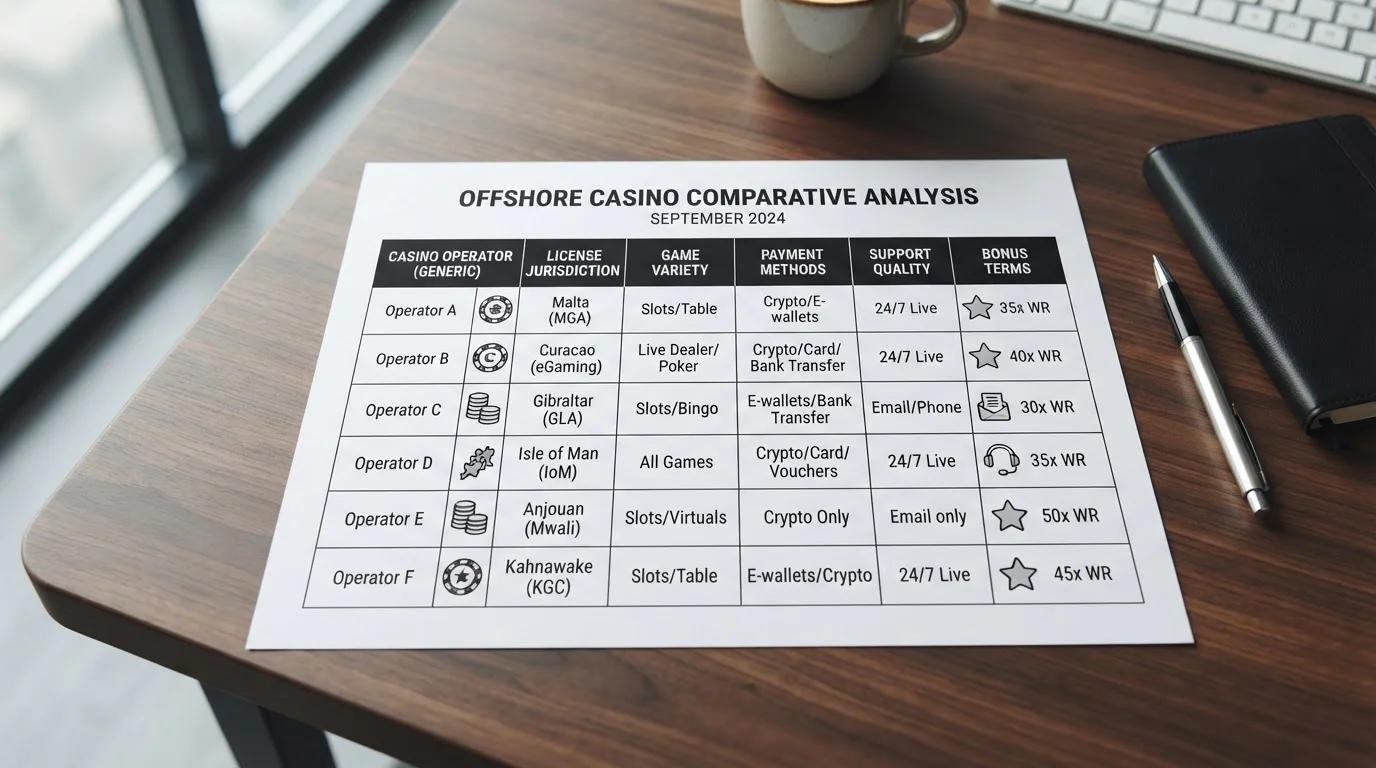
The table below lists six offshore casinos that accept Solana (SOL) deposits and withdrawals, verified by license number and tested payout data where available. Order reflects operational history and third-party reputation scores, not paid placement.
| Operator | License | Withdrawal Speed | Min Deposit | Distinguishing Feature |
|---|---|---|---|---|
| Cloudbet | Curaçao Gaming Authority | Median 30 min (on-chain tracked) | $20 equivalent | Oldest (2013), 32+ cryptos, zero-wager rakeback, Casino Guru 9.2/10 |
| BitStarz | Curaçao OGL/2024/165/0185 | Target 1 hour (variable) | €20 / 0.0005 BTC | Since 2014, 5624 games, €2000 or 5 BTC + 180 FS welcome |
| Wild.io | Anjouan (AOFA), Nonce Gaming B.V. | Median 5.1 min (July 2026 tests) | $20 | Switched Curaçao→Anjouan 2026, 350% up to $5000 + 200 FS |
| TrustDice | Curaçao OGL/2024/664/0280 | 1–10 min typical | $10–20 equivalent | 8000+ games, TXT token staking, free BTC faucet, 225% up to 3 BTC |
| Wildies Casino | Anjouan ALSI-152406026-FI2 | Not yet verified (launched 2026) | Variable | Launched 2026, Leva Limited, €3250 + 150 FS, 9 currencies |
| Rollbit | Curaçao (main site) / UKGC (UK-specific site, fiat-only) | 10–60 min (Curaçao site) | $20 | Hybrid: crypto on .com (Curaçao), fiat-only on .co.uk (UKGC), 10% rakeback |
Stake.com and BC.Game do not appear above. Stake exited the UK offshore market in March 2025 after compliance failures; its main .com site now lists the UK as a restricted territory. BC.Game has been UKGC-flagged since 2023, with ISP blocks active and the UK explicitly restricted in its terms. Neither is a viable UK option in 2026.
Cloudbet
Cloudbet has taken Bitcoin bets since 2013, which makes it the oldest crypto casino still operating at scale. It holds a Curaçao Gaming Authority license, supports 32 cryptocurrencies including Solana, and runs a casino, sportsbook, and esports book on a single wallet.
The welcome structure is unusual: $2500 in cash rewards distributed as a zero-wagering rakeback rather than a traditional deposit-match bonus. You stake $100, you get back a percentage as cash, no turnover requirement. That model suits regular players more than one-time depositors chasing a headline figure.
DappRadar’s on-chain analytics tracked $2.56 million in deposits across 642 wallets in a 24-hour sample (October 2026), with $6.11 million held in monitored treasury wallets across BNB Chain, Ethereum, Solana, and TRON. Casino Guru rates Cloudbet 9.2 out of 10 («Very High») with zero unresolved complaints logged. Withdrawal ceiling sits at 12 BTC per accepted wager. Solana payouts clear in a median 30 minutes based on on-chain settlement data, though casino processing can stretch that to an hour during peak periods.
The platform launched Bet Builder, a Pulse social feed showing live bets, and «Whale Mode» for tracking high-roller activity. The interface is dense—information-rich rather than minimal—so it reads better on desktop than mobile. If you want the longest track record in crypto gambling and a bonus model that does not bury you in wagering maths, Cloudbet is the default.
BitStarz
BitStarz launched in 2014 under Gareton B.V., a Curaçao-registered entity. Its current license (OGL/2024/165/0185) was renewed in October 2024 when Curaçao centralized its licensing regime and killed the old master-license sublicense model. That makes BitStarz one of the longer-established names in this list, though «established» in offshore crypto gambling means a decade, not decades.
The game library sits at 5624 titles from 73 providers: Pragmatic Play, BGaming, NetEnt, Evolution for live dealer, and a handful of smaller studios. The welcome package reaches €2000 or 5 BTC plus 180 free spins across the first four deposits, with 40× wagering on bonus funds. Minimum deposit is €20 or 0.0005 BTC equivalent; Solana deposits convert to a EUR or BTC in-house balance on arrival, so you are not playing in native SOL during a session.
Withdrawal target is one hour, though real-world reports vary. Some users see payouts in 20 minutes; others wait three hours. BitStarz has stated that identity verification can be requested at cashout, which means «no-KYC» is conditional rather than guaranteed. The site was blocked by the Australian Communications and Media Authority (ACMA) in July 2026—twelve domains tied to the brand were restricted—so the compliance picture is patchy outside Curaçao’s own oversight.
For UK players who want a large game selection and are comfortable with a Curaçao license that has held up since 2014, BitStarz works. For anyone prioritising withdrawal predictability or minimal KYC friction, look elsewhere.
Wild.io
Wild.io launched in 2022 under Nonce Gaming B.V. and switched its license from Curaçao to Anjouan (AOFA) in 2026. That migration puts it in the same regulatory basket as Wildies Casino and about 850 other operators who left Curaçao during the 2024–2026 licensing reform. Anjouan is faster and cheaper to license than Curaçao’s new single-tier system, and its gross gaming revenue tax sits at 0%, which is why the migration happened. From a player’s perspective, Anjouan carries the same offshore risk profile as Curaçao: no UK oversight, no GAMSTOP tie-in, no Alternative Dispute Resolution channel.
The welcome bonus is large by crypto casino standards: 350% up to $5000 plus 200 free spins across three deposits. Wagering sits at 40× on bonus funds. The game library spans slots, live dealer, a sportsbook, and Wild.io’s own Provably Fair Originals. Minimum deposit is $20 equivalent in SOL, BTC, ETH, USDT, or one of ten other supported cryptocurrencies.
Third-party testers clocked Wild.io crypto payouts at a median 5.1 minutes in July 2026 samples. That is the fastest verified figure in this list. The platform claims «under 10 minutes» on its own marketing; independent tests broadly confirm it. If payout speed is your primary filter, Wild.io wins on the numbers.
The catch is newness. A 2022 launch means less than four years of operating history, and the 2026 license switch adds a layer of corporate paper-trail complexity. Long-term reliability is harder to gauge than with Cloudbet or BitStarz. For players who weigh speed over track record, Wild.io delivers. For anyone who wants a decade of payout evidence before depositing four figures, it is too early.
TrustDice
TrustDice operates under Satoshi Gaming Group N.V., a Curaçao-registered entity holding license OGL/2024/664/0280 (issued 16 July 2024). The platform launched in 2018, making it mid-table in this group by age. It supports Solana alongside BTC, ETH, TRX, BNB, USDT, and several others, with withdrawals processed on high-throughput blockchains like TRON and BNB Smart Chain for speed.
The game count is the largest in this list: 8000+ titles from top-tier and mid-tier providers. The sportsbook covers 35+ sports, and esports depth is competitive. The welcome package reaches 225% up to 3 BTC plus 100 free spins across three deposits, with standard 40× wagering on bonus funds. TrustDice also runs a free BTC faucet (small amounts, refreshed periodically) and a TXT token staking program that pays rewards to holders.
Registration is no-KYC by default, though identity verification can be requested at withdrawal. Some reviews note VPN permissiveness, meaning the platform does not aggressively geoblock or demand location proof at signup. Withdrawal speed sits at 1–10 minutes typical, with most reports clustering around the faster end. Minimum deposit varies by cryptocurrency; SOL deposits typically start at $10–20 equivalent.
TrustDice suits players who want a large game library, a staking/rewards layer on top of the casino, and relatively light KYC friction. It loses points on bonus clarity—the multi-tier structure and TXT token integration make the reward system harder to parse than a straight deposit match. If you want simplicity, look elsewhere. If you want scale and are comfortable reading the terms twice, TrustDice works.
Wildies Casino
Wildies Casino launched in 2026 under Leva Limited, holding Anjouan license ALSI-152406026-FI2. That makes it the newest brand in this ranking, with zero operating history prior to 2026. The platform combines a casino and sportsbook, accepts nine currencies including Bitcoin, Ethereum, and Solana, and offers a welcome package worth €3250 plus 150 free spins across four deposits.
Game providers include Pragmatic Play, Hacksaw Gaming, and Play’n GO—recognisable names, not white-label unknowns. The site runs on standard third-party software rather than a proprietary stack, which means game fairness is tied to provider certification (eCOGRA, iTech Labs) rather than Wildies’ own internal audits.
Withdrawal speed has not been independently tested yet; the platform is too new for third-party testers to have built a sample. Wildies claims «fast crypto payouts,» which is marketing, not data. Until independent verification emerges, assume the industry median (10–60 minutes) and treat faster times as upside rather than baseline.
The regulatory angle is standard Anjouan: 0% GGR tax, one license covers casino and sportsbook, public register lists ~1400 active license holders as of June 2026. From a UK player’s perspective, Anjouan carries the same offshore risk as Curaçao. No UKGC oversight, no GAMSTOP, no ADR. The only difference is the regulator’s address.
Wildies’ heavy targeting of UK players is visible from its multiple .co.uk and .org.uk affiliate domains. That is not inherently suspicious—most offshore crypto casinos court the UK market—but it does mean the brand is built specifically for a jurisdiction where it holds no license. Proceed cautiously: test a small withdrawal before depositing four figures, verify the license number on Anjouan’s public register (if accessible), and assume you have zero recourse if a payout dispute arises.
Rollbit
Rollbit is the hybrid case. The platform operates two separate entities: the main Rollbit.com site under a Curaçao license (Bull Gaming N.V.) and a UK-specific Rollbit.co.uk site holding a UKGC remote casino license. The UK site is fiat-only—no cryptocurrency deposits or withdrawals—and links into GAMSTOP, applies £10,000 monthly withdrawal caps, and sits under full UKGC oversight. The Curaçao .com site accepts cryptocurrency including Solana but lists the UK as a restricted or conditionally-restricted territory depending on how the terms are read at any given month.
This creates confusion. UK players who access the .com Curaçao site see crypto deposit options, but the terms state UK residency restrictions. UK players who register on the .co.uk UKGC site cannot deposit in Solana at all. Rollbit’s own marketing does not cleanly disambiguate the two.
If you are a UK player looking for Solana casino access, the Curaçao .com site is the relevant one—but check the current terms yourself before depositing, because Rollbit’s UK access policy has shifted over time and may shift again. The .co.uk UKGC site is irrelevant to this guide; it is a standard licensed UK casino with no crypto support.
On the Curaçao side, Rollbit offers 2000+ games, a sportsbook, esports betting, an NFT marketplace, and 1000× crypto futures trading. The 10% rakeback program rewards frequent play. The welcome bonus structure varies by jurisdiction; UK-facing terms have historically offered 100% up to £1000 plus 200 free spins, though this may differ at time of reading.
Crypto withdrawals on the Curaçao site typically clear in 10–60 minutes. Provably-fair titles are available. Minimum deposit is around $20 equivalent. The platform launched in 2020, giving it a mid-length track record in crypto gambling. If you are comfortable navigating the two-entity structure and verifying UK access yourself, Rollbit’s Curaçao site works for Solana deposits. If you want simplicity and regulatory clarity, look elsewhere.
Are Solana casinos legal in the UK?
Using an offshore Solana casino is not illegal for a UK resident. No UK law criminalizes a player gambling at a site licensed in Curaçao or Anjouan. The illegality sits with the operator: running an online casino that targets UK customers without a UKGC license breaches the Gambling Act 2005 from the operator’s side, not the player’s. The UKGC has requested ISP blocks on some offshore casinos (BC.Game in 2023, for example), but enforcement is inconsistent, and accessing such a site through a VPN or mirror domain carries no criminal penalty for the player. The risk is regulatory, not legal: you forfeit UK consumer protections, GAMSTOP coverage, and UKGC Alternative Dispute Resolution. If an offshore casino refuses to pay you, you have no UK recourse.
Why No UKGC-Licensed Casino Accepts Solana
The UK Gambling Commission’s licensing framework requires all remote casino operators to conduct thorough Anti-Money Laundering (AML) and Know Your Customer (KYC) checks. Under current rules, that means tracing the source of funds through traditional financial institutions—banks, card networks, e-wallets with fiat-currency ledgers. Cryptocurrency does not fit that model. A Solana deposit arrives from a wallet address; the UKGC’s current interpretation is that blockchain transactions do not provide sufficient traceability for source-of-funds verification, especially when wallets can be pseudonymous and funds can pass through decentralised exchanges or mixers before reaching a casino.
The UKGC issued guidance in January 2026 reaffirming that cryptocurrency transactions remain incompatible with UK remote gambling licensing. That position has not budged since the Gambling Act 2005 came into force, and there is no indication it will shift in 2026 or beyond. Some licensed UK operators accept fiat deposits and allow limited crypto-related activity (such as crypto-themed slot games), but none permit deposits or withdrawals in Bitcoin, Solana, Ethereum, or any other digital asset.
This creates a bright-line division. UKGC-licensed casinos operate in GBP with traceable fiat payments. Offshore casinos licensed in Curaçao or Anjouan accept cryptocurrency and operate outside UKGC jurisdiction. There is no middle ground.
For UK players, this means every Solana casino is offshore by definition. The licenses they hold—Curaçao Gaming Authority, Anjouan Offshore Financial Authority—are not recognised by the UKGC and carry none of the consumer protections baked into UK licensing. When you deposit SOL at an offshore casino, you step outside the regulated UK gambling market. That is the trade-off for blockchain speed and crypto-native banking.
Can I use Solana at UKGC-licensed casinos?
No. As of 2026, zero UKGC-licensed remote casino operators accept cryptocurrency deposits or withdrawals. The UKGC’s AML/KYC requirements mandate fiat-currency transactions through traceable payment methods. Solana, Bitcoin, Ethereum, and other cryptocurrencies do not meet that standard under current regulatory interpretation. If a casino holds a UKGC license and serves UK players, it operates in GBP only. The only way to gamble with Solana in 2026 is to use an offshore casino licensed in Curaçao, Anjouan, or another non-UKGC jurisdiction—and those operators carry no UK consumer protection.
How Solana Deposits and Withdrawals Work at Offshore Casinos
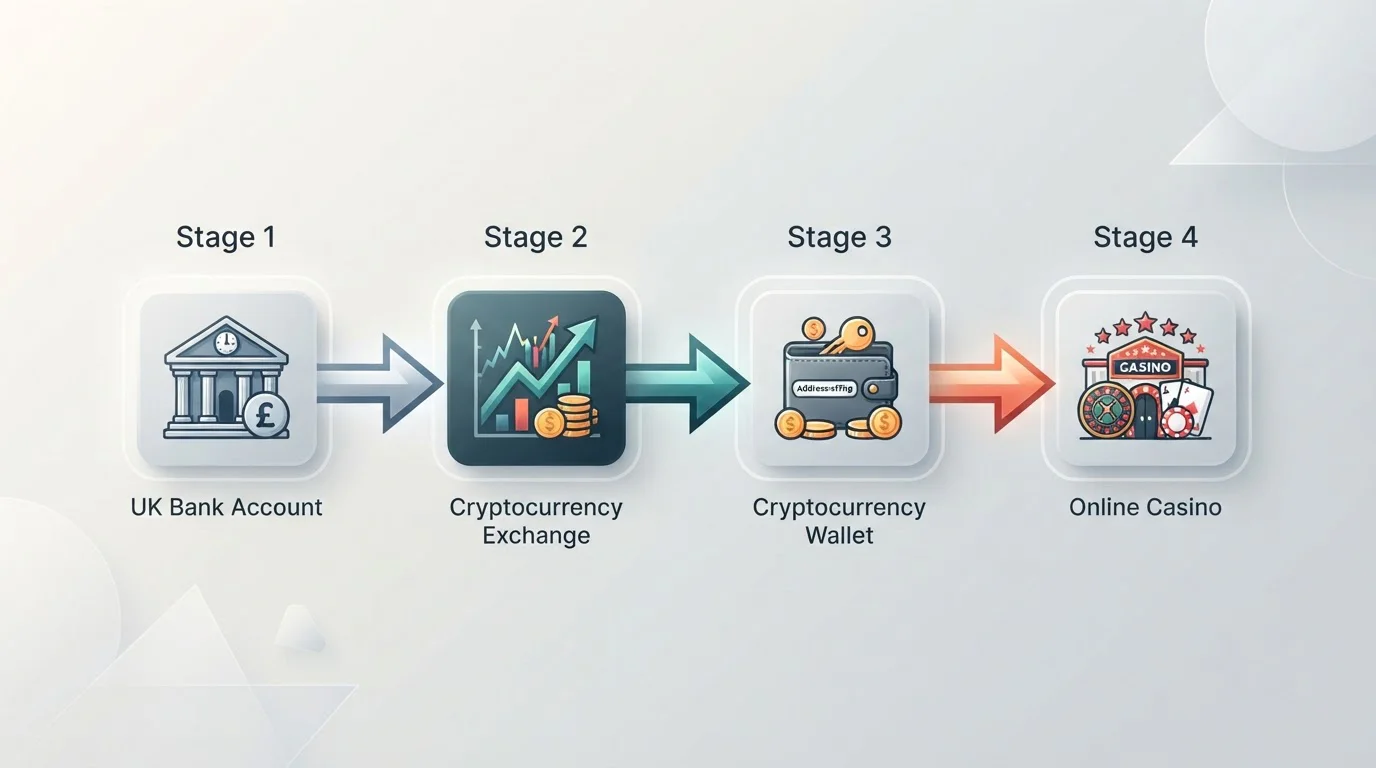
Most Solana casino guides assume you already hold SOL in a wallet. That skips the hardest part for UK players: moving from pounds in a Revolut or bank account to Solana tokens ready to deposit. The full journey has three stages—fiat-to-crypto exchange, wallet transfer, and casino deposit—and each one carries a fee, a delay, or both.
From GBP to SOL — The Full Journey
Step one: buy Solana. UK players have several on-ramps. Revolut offers in-app crypto purchases with a 0.5–1.5% spread over spot price; convenient, but you cannot withdraw crypto from Revolut to an external wallet (the app holds it in a custodial account), so Revolut is useless for casino deposits. Coinbase and Binance are the mainstream alternatives. Both let you deposit GBP via bank transfer (Faster Payments, usually instant), buy SOL with a 0.5–1.5% fee (Coinbase) or 0.1–0.25% (Binance for high-volume traders), and withdraw to an external wallet.
Kraken is another option, with tighter spreads for larger trades. All three (Coinbase, Binance, Kraken) require KYC: passport or driving license, proof of address, sometimes a selfie. That process can take 10 minutes or three days depending on how smoothly document verification goes.
Step two: set up a Solana wallet. Phantom is the most common choice—browser extension or mobile app, non-custodial, supports staking and NFTs as well as plain token transfers. Solflare is the alternative if you want a lighter interface. Ledger hardware wallets support Solana for anyone holding serious amounts. Generate a wallet, write down the 12-word seed phrase on paper (not a screenshot), and note the receiving address. That address is where you will send SOL from Coinbase/Binance.
Step three: withdraw from the exchange to your wallet. On Coinbase, navigate to your SOL balance, click «Send,» paste your Phantom wallet address, enter the amount, and confirm. Solana network fee is around 0.000005 SOL (less than a penny). Coinbase may charge a small withdrawal fee on top (variable, check at time of transfer). Blockchain confirmation takes under a second; Coinbase processing adds a few minutes. Your Phantom wallet balance updates, and you now hold SOL outside an exchange.
Step four: deposit to the casino. Log into the offshore Solana casino, navigate to the cashier, select SOL as your deposit method, and copy the casino’s receiving address. Open Phantom, click «Send,» paste the casino address, enter the amount (check the minimum—usually $10–$20 equivalent), and confirm. Solana blockchain settles in under a second. Casino credit appears within 1–5 minutes in most cases, though some platforms batch deposits and process them every 10 minutes.
Total cost: 0.5–1.5% on the GBP-to-SOL exchange, plus Solana network fee (negligible), plus potential exchange withdrawal fee (Coinbase: ~0.5%, Binance: often waived for crypto withdrawals). Round-trip (deposit and later withdrawal back to GBP) doubles those fees. If you deposit £100, expect £98–99 to reach your casino balance after fees. That is tighter than card deposits at UKGC casinos (which carry no user-facing fee) but wider than stablecoin deposits (USDT/USDC have near-zero volatility and no exchange-rate exposure).
What You Actually Play With (SOL or Fiat Balance)
Most offshore Solana casinos do not let you gamble in native SOL. When your deposit arrives, the platform converts it to a USD or EUR in-house balance at the prevailing exchange rate. You see «$100.00» or «€100.00» in your casino wallet, not «0.7 SOL.» During gameplay, you are staking fiat-equivalent amounts on slots and tables. The casino’s RTP calculations, bonus terms, and wagering requirements are denominated in dollars or euros, not Solana tokens.
When you withdraw, the casino reconverts your fiat balance back to SOL at the current rate and sends the tokens to your wallet. That introduces exchange-rate risk. If SOL appreciates 10% between deposit and withdrawal, you get back fewer tokens than you deposited but the same GBP-equivalent value (minus any gambling losses). If SOL drops 10%, you get back more tokens but the same GBP value. For short sessions (deposit, play an hour, withdraw), rate movement is usually negligible. For longer holds (deposit Monday, withdraw Friday), it can swing your net position independent of gambling outcomes.
A small number of platforms—Wild.io and TrustDice among them—offer «native crypto» play, meaning your balance stays in SOL throughout and bet sizes are denominated in tokens rather than fiat. That eliminates mid-session conversion but exposes you to volatility during the session itself: a slot that costs 0.01 SOL per spin is more expensive in GBP terms if SOL rallies while you are playing. Most players prefer fiat-denominated balances for that reason; the gambling outcome is isolated from crypto price movement during play.
Check the casino’s terms before depositing. If the FAQ says «all deposits are converted to USD on arrival,» you are playing in fiat. If it says «native crypto balances available,» you can choose to gamble in SOL directly. Either way, the Solana blockchain itself handles only the deposit and withdrawal legs; the actual gameplay happens on the casino’s internal ledger.
Withdrawal Speed — Blockchain vs Casino Processing
Solana blockchain settles transactions in under a second. That is not marketing; it is architecture. The network processes around 65,000 transactions per second using Proof-of-History + Proof-of-Stake consensus, and confirmation times are sub-second in normal network conditions. A Solana transfer from wallet A to wallet B completes faster than you can refresh the page.
Casino withdrawals do not move at blockchain speed. When you request a payout, the casino must verify the transaction (check for bonus abuse, confirm wagering requirements are met if a bonus was claimed, sometimes run a KYC check), convert your fiat balance back to SOL if you played in USD/EUR, queue the on-chain transfer, and broadcast it to the network. That internal processing adds 10 minutes to an hour in typical cases.
The shortlist table above lists tested withdrawal speeds where available. Cloudbet shows a median 30 minutes, Wild.io clocks 5.1 minutes, TrustDice reports 1–10 minutes typical, BitStarz targets one hour but varies. Those figures are casino processing time plus blockchain settlement. The blockchain leg is always sub-second; the delays sit on the casino side.
«Instant» withdrawals are rare. Some casinos claim instant payouts in marketing, but independent tests consistently show 10–60 minute ranges. Wild.io is the fastest verified operator in this list at a median 5.1 minutes (July 2026 tests by a third-party reviewer who timed multiple small withdrawals). Cloudbet and TrustDice sit in the 10–30 minute range. BitStarz stretches to an hour or more in some user reports.
For comparison, a UKGC-licensed casino processing a PayPal withdrawal takes 1–24 hours; a debit card withdrawal takes 1–5 business days. Offshore Solana casinos are faster than licensed UK alternatives on the withdrawal leg. The trade-off is regulatory: you get your money quicker, but you forfeit consumer protection and dispute resolution.
Network fees are negligible. A Solana transaction costs around 0.000005 SOL (less than £0.001 at October 2026 prices). Some casinos absorb that fee; others pass it through. Either way, it is a rounding error compared to the 2.5% foreign-exchange markup on a UK debit card transaction or the £2.50 flat fee some UKGC casinos charge for card withdrawals.
How long does a Solana withdrawal take at an online casino?
Solana blockchain settlement is sub-second, but casino processing adds 10–60 minutes in typical cases. The fastest verified operator in this guide (Wild.io) shows a median 5.1 minutes from withdrawal request to tokens arriving in your wallet, based on July 2026 independent tests. Most offshore Solana casinos cluster in the 10–30 minute range. BitStarz targets one hour but can stretch longer. «Instant» is marketing, not reality—expect at least 10 minutes. That is still faster than UKGC-licensed casinos, where PayPal takes 1–24 hours and debit cards take 1–5 business days.
How do I buy Solana (SOL) to deposit at a casino?
Open an account on Coinbase, Binance, or Kraken (all UK-accessible). Complete KYC (passport, proof of address). Deposit GBP via bank transfer (Faster Payments, usually instant). Buy SOL with your GBP balance (0.5–1.5% fee on Coinbase; 0.1–0.25% on Binance). Download Phantom wallet (browser extension or mobile app), generate a new wallet, and write down the 12-word seed phrase. Withdraw your SOL from the exchange to your Phantom wallet address (Solana network fee <£0.001; Coinbase may charge ~0.5% withdrawal fee). Your Phantom balance updates in 1–5 minutes. From there, copy the casino's SOL deposit address, open Phantom, send the desired amount, and confirm. Casino credit appears within 1–10 minutes.
Legal Risk and Tax — What Offshore Solana Gambling Costs UK Players
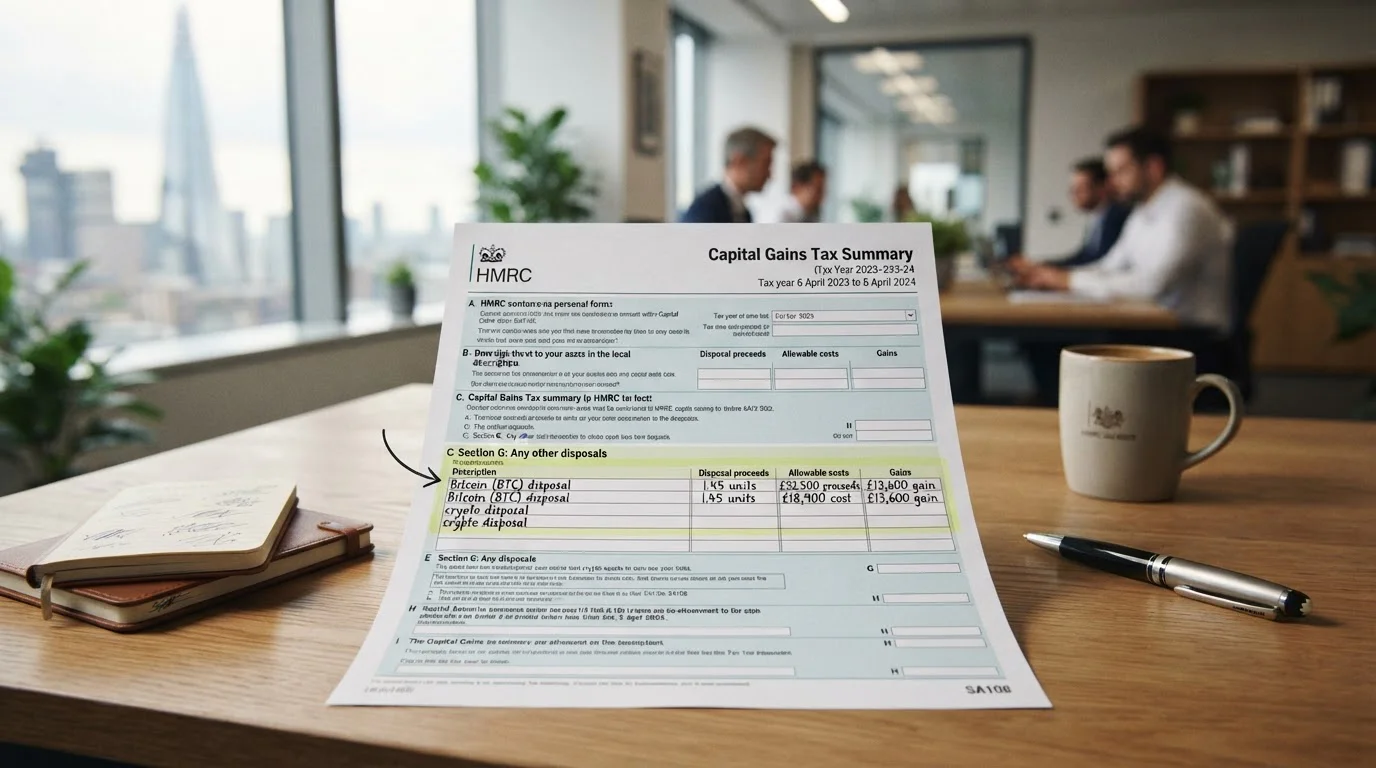
Offshore Solana casinos operate in a regulatory grey zone for UK players. Using one is not illegal—no UK statute criminalizes a resident gambling at a Curaçao or Anjouan-licensed site—but the protections you forfeit are real and the tax implications are often misunderstood.
Gambling Winnings Are Tax-Free, But Crypto Gains Aren’t
Gambling winnings are not taxable in the UK. If you deposit £100, win £500, and withdraw £600, HMRC does not tax the £500 profit. That applies to UKGC-licensed casinos and offshore casinos alike; the gambling outcome is tax-free regardless of where you played.
Cryptocurrency transactions are taxable. Depositing Solana at a casino is a disposal event for Capital Gains Tax purposes. Withdrawing Solana from a casino is another disposal event. If SOL appreciates between deposit and withdrawal, you owe CGT on that gain.
| Transaction | Taxable? | Detail |
|---|---|---|
| Gambling winnings | No | Tax-free in the UK, at UKGC or offshore sites |
| Depositing SOL at a casino | Yes — CGT disposal | Gain versus your SOL purchase price is taxable |
| Withdrawing SOL from a casino | Yes — CGT disposal | Another disposal event; applies even if you lost gambling |
| Using stablecoins (USDT/USDC) | Minimal | Near-zero CGT, since the USD peg barely moves |
Example: you buy 1 SOL at £100, deposit it at a casino (converted to $130 in-house balance), play for an hour, win $50, and withdraw $180 (converted back to 1.38 SOL at time of cashout). Your gambling profit is $50 (tax-free). But if SOL’s GBP price rose to £110 by the time you withdrew, your 1.38 SOL is now worth £151.80, and the £51.80 difference between your £100 purchase price and £151.80 disposal value is a capital gain. After the £3000 annual CGT allowance, gains are taxed at 18% (basic-rate taxpayers) or 24% (higher/additional-rate).
The tax applies even if you lose at the casino. If you deposit 1 SOL bought at £100, lose half your balance, and withdraw 0.5 SOL now worth £60 (because SOL price rose to £120 while you were playing), you have a £60 – £50 = £10 capital gain on the portion you withdrew, despite losing money gambling. The two taxes are separate: gambling losses are not deductible, but crypto gains are taxable.
Most offshore Solana casino guides omit this entirely. HMRC’s guidance on cryptoassets is clear: every disposal is a CGT event. Depositing crypto at a casino is a disposal (you are exchanging SOL for an in-house fiat balance). Withdrawing crypto from a casino is a disposal (you are exchanging an in-house balance for SOL). You must track the GBP value of your SOL at each transaction and report gains above the £3000 allowance on your Self Assessment return.
For short-session players, the CGT liability is usually small. For anyone holding SOL long-term and using casinos regularly, the tax admin becomes significant. Keep records: purchase date and price, deposit date and SOL/GBP rate, withdrawal date and rate. CoinTracker, Koinly, and similar crypto tax tools can automate this, but you are responsible for accurate reporting regardless of whether a casino issues a 1099 or transaction statement (most do not).
One way to sidestep this: use stablecoins (USDT, USDC) instead of SOL. Stablecoins peg 1:1 to the US dollar, so there is minimal appreciation or depreciation between deposit and withdrawal. A £100 USDT deposit converts to ~$130, you gamble, you withdraw $180 as £138 USDT, and the CGT liability is near-zero because USDT’s GBP value barely moved. You still forfeit offshore regulatory protections, but the tax picture is simpler. Not all Solana casinos support stablecoins, but Cloudbet, TrustDice, and Wild.io all accept USDT and USDC alongside SOL.
No GAMSTOP Coverage
GAMSTOP is the UK’s national self-exclusion scheme. If you register with GAMSTOP, every UKGC-licensed casino, sportsbook, and bingo site is legally required to block your account. The scheme covers the entire UK regulated gambling market in one registration.
Offshore Solana casinos sit outside GAMSTOP. A Curaçao or Anjouan-licensed operator has no legal obligation to honour a UK self-exclusion request, and in practice, none of them do. If you self-exclude via GAMSTOP and later try to register at BitStarz, Wild.io, or any other offshore casino, the platform will not cross-check your GAMSTOP status. Your account opens normally.
Some offshore casinos offer their own self-exclusion tools—account cooling-off periods, deposit limits, session timers—but these are voluntary and self-enforced. There is no central register tying them together. If you self-exclude from BitStarz and later open an account at TrustDice, TrustDice has no way to know. Each platform operates independently.
For problem gamblers, this is a critical gap. GAMSTOP works because it is comprehensive: one registration blocks access across the entire licensed market. Offshore casinos offer no equivalent. If you are using self-exclusion as a tool to control gambling harm, offshore Solana casinos undermine that tool. The trade-off for blockchain speed and crypto banking is a complete loss of coordinated self-exclusion coverage.
No UK Recourse If a Casino Refuses Payout
UKGC-licensed casinos are required to join an Alternative Dispute Resolution (ADR) service—typically IBAS, eCOGRA, or The Dispute Resolution Ombudsman. If you have a payout dispute with a licensed operator and cannot resolve it directly, you escalate to the ADR provider, who investigates and issues a binding decision. The process is free to the player and enforceable under UK law.
Offshore casinos carry no such obligation. If BitStarz, Wild.io, or any Curaçao or Anjouan-licensed operator refuses to pay out your winnings, you have no UK recourse. You can contact the casino’s own support, but they are under no legal compulsion to escalate beyond their internal team. You can file a complaint with the Curaçao Gaming Authority or Anjouan regulator, but enforcement is patchy and slow, and neither regulator has a track record of compelling operators to pay disputed claims in the player’s favour.
In practice, this means the casino’s internal decision is final. If they claim you breached bonus terms, opened a duplicate account, or engaged in irregular play, and you disagree, there is no neutral arbitrator with enforcement power. You can post on forums, leave reviews, or contact affiliates who referred you, but none of that forces the casino to pay. The only leverage you have is reputational—casinos with a pattern of non-payment lose traffic—but that is cold comfort if your withdrawal is sitting in limbo.
The risk is not hypothetical. Offshore crypto casinos have a higher rate of payout disputes than UKGC-licensed operators, and resolution rates are lower. Casino Guru, AskGamblers, and similar third-party complaint forums log hundreds of unresolved offshore casino disputes annually. Many involve bonus-term disputes, KYC requests at withdrawal (after deposits were accepted no-questions-asked), or accounts frozen for «security review» with no timeline for resolution.
This is the sharpest regulatory trade-off. UKGC-licensed casinos move slower, charge higher operating costs (which operators pass through as tighter game RTPs and stricter bonus terms), and will not touch cryptocurrency. Offshore casinos move faster, accept crypto, and offer looser KYC. But if something goes wrong, you have zero formal recourse. The UKGC’s consumer-protection framework is heavy-handed and expensive, but it exists. Offshore, you are on your own.
Mitigate the risk by testing small withdrawals first. Deposit £50, play through any wagering requirement, withdraw £50 or whatever balance remains, and verify it reaches your wallet. If that clears smoothly, deposit larger amounts. If the casino stalls, requests invasive KYC documents, or refuses payout on spurious grounds, you have lost £50, not £500. Never deposit four figures at an offshore casino without successfully withdrawing a test amount first.
Do I pay tax on Solana casino winnings in the UK?
Gambling winnings are tax-free in the UK, but cryptocurrency gains are not. If SOL appreciates between your deposit and withdrawal, that appreciation is a Capital Gains Tax disposal event. You owe CGT on the difference between your SOL purchase price and its value at withdrawal, minus the £3000 annual allowance. Gains above that threshold are taxed at 18% (basic rate) or 24% (higher/additional rate). The gambling profit itself is tax-free; the crypto price movement is taxable. Use stablecoins (USDT, USDC) instead of SOL to minimise CGT exposure, as stablecoin values barely move relative to GBP.
What happens if a Solana casino refuses to pay me out?
You have no UK recourse. Offshore casinos licensed in Curaçao or Anjouan are not required to join a UK Alternative Dispute Resolution service, and neither regulator has a strong track record of compelling payouts in disputed cases. The casino’s internal decision is effectively final. You can file a complaint with the licensing authority (Curaçao Gaming Authority or Anjouan regulator), post on third-party forums (Casino Guru, AskGamblers), or contact affiliates who referred you, but none of that forces the casino to pay. The only leverage is reputational. Mitigate this risk by testing a small withdrawal (£50) before depositing larger amounts. If the test clears smoothly, proceed; if it stalls or is refused, do not deposit more.
Bonuses at Solana Casinos — What the Numbers Mean
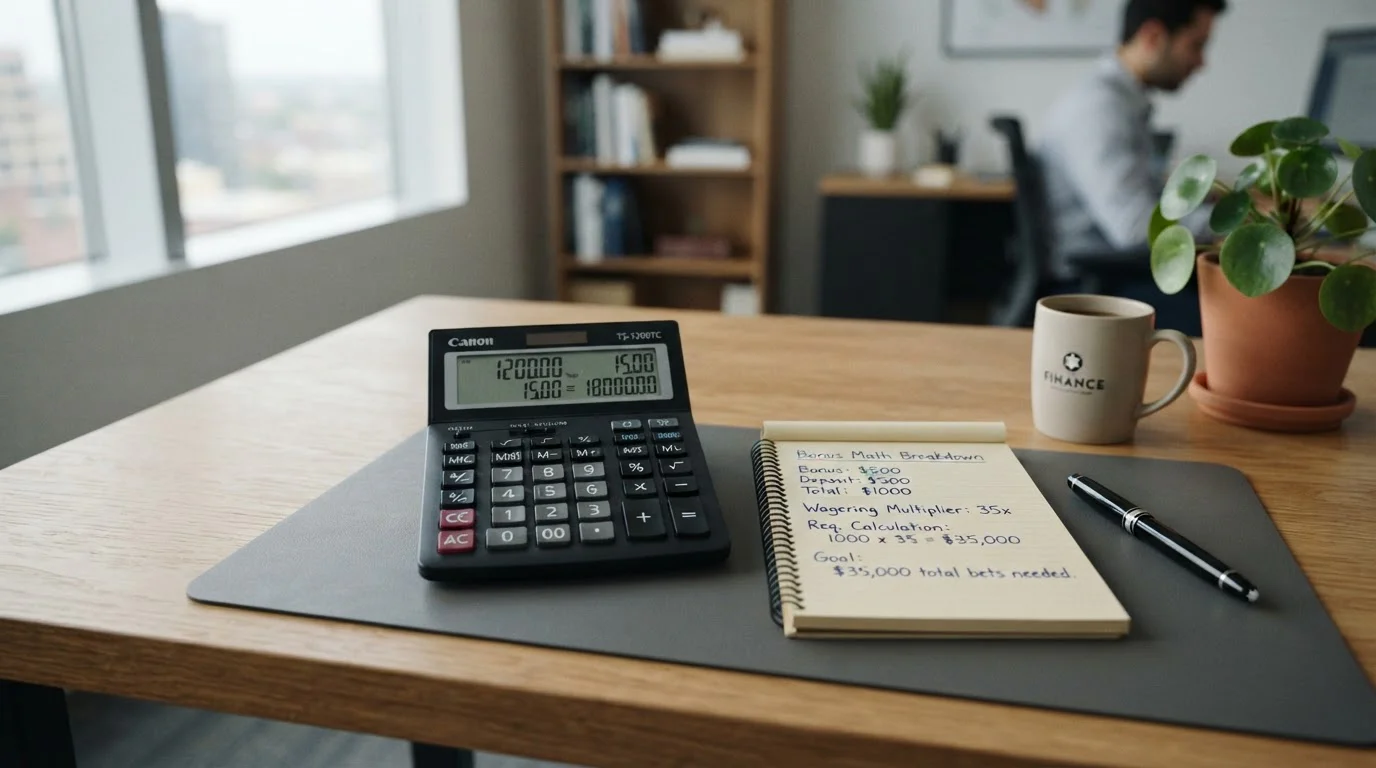
Offshore Solana casinos compete on bonus size because they cannot compete on regulatory credibility. A 350% deposit match sounds generous until you read the wagering requirement: 40× on bonus funds means you must turn over $4000 before withdrawing a cent, if you claimed a $100 bonus. That turnover happens in a house-edge environment; slots average 96% RTP, so every $100 wagered costs you $4 in expectation. Forty times through on a $100 bonus costs $160 in expected losses before withdrawal. You are paying $160 for a «free» $100 bonus.
Not all bonuses carry the same cost. Cloudbet’s zero-wagering rakeback model gives you a percentage of your stake back as cash with no turnover requirement. If you wager $1000 and the rakeback rate is 5%, you get $50 as withdrawable cash immediately. That model favours frequent players over one-time depositors, but it is honest: the return is what it says, with no hidden multiplier.
BitStarz, Wild.io, and TrustDice all use traditional deposit-match bonuses with 40× wagering on bonus funds. The key phrase is «bonus funds,» not «deposit + bonus.» If you deposit $100 and claim a 100% match ($100 bonus), you must wager $100 × 40 = $4000 to clear the bonus, not ($100 + $100) × 40 = $8000. That distinction matters; some casinos apply wagering to the combined total, which doubles the cost.
Check the maximum bet during wagering. Most offshore casinos cap bets at $5 or 10% of the bonus amount while a bonus is active. Breach that cap and the bonus is voided along with any winnings tied to it. If you are used to UKGC casinos, where max-bet rules are clearly signposted and breaches trigger warnings, offshore casinos are less forgiving. One $6 spin on a $5 max-bet clause can forfeit a £500 balance with no warning and no appeal.
Time limits apply. Many bonuses expire 30 days after activation, meaning you must complete the wagering requirement within a month or the bonus and associated winnings are voided. For high-wagering bonuses (40× on a large deposit), that is a tight window.
Game weightings vary. Slots usually contribute 100% toward wagering, live dealer games 10–20%, table games 5–10%. If you prefer blackjack or roulette, a 40× wagering requirement effectively becomes 200–400× because only a fraction of each bet counts. Offshore casinos bury these details in the bonus terms; UKGC operators are required to surface them prominently. Read the full T&Cs before claiming anything.
For casual players, the simplest approach is to decline the bonus. Deposit $100, play slots at your own pace, withdraw whenever. No wagering requirement, no max-bet cap, no game restrictions, no expiry timer. The trade-off is you forfeit the «free» money, but in most cases that money is not free—you are paying for it in expected losses during the turnover. Declining the bonus gives you a cleaner experience and faster withdrawals.
Rollbit’s 10% rakeback program sits between Cloudbet’s model and the traditional deposit match. You wager $1000, you get $100 back as cash, no turnover. That suits high-volume players. TrustDice’s TXT token staking adds another layer: hold TXT tokens, earn staking rewards, convert those rewards to free spins or bonus funds. That model only makes sense if you are holding TXT for reasons beyond the casino itself; buying TXT solely for staking rewards at a casino is speculative and exposes you to token price volatility unrelated to gambling outcomes.
Game Types at Solana Casinos — Slots, Live Dealer, Provably Fair
Offshore Solana casinos carry the same game providers as UKGC-licensed sites: Pragmatic Play, NetEnt, Evolution, Playtech, Play’n GO. The slots are identical; «Gates of Olympus» plays the same at BitStarz as it does at a UK-licensed casino, because Pragmatic Play licenses the same game build to both. RTP is set by the provider, not the casino, and regulated providers publish their RTP figures (typically 94–97% for slots). Offshore casinos sometimes offer «operator RTP» settings where the same game can run at 94% or 96% depending on the casino’s contract with the provider, but the variance is small.
Live dealer tables come from Evolution, Pragmatic Play Live, Ezugi, and others. Offshore casinos access the same studio feeds as licensed operators. The roulette wheel in Evolution’s London studio spins the same for a Wild.io player as for a Betway player. The difference is not the game; it is the regulatory oversight. A UKGC-licensed casino undergoes regular audits of its live-dealer integration; an offshore casino does not.
Provably Fair games are the distinguishing feature. These are in-house titles—Plinko, Crash, Mines, Dice—where the outcome is determined by a cryptographic hash published before the bet is placed. After the round completes, the player can verify the hash to confirm the result was not manipulated mid-game. Stake popularised this category; most offshore crypto casinos now run their own Provably Fair Originals.
The advantage is transparency. A slot’s RNG is a black box; you trust the provider’s certification, but you cannot verify each spin yourself. A Provably Fair game publishes the seed before the round and lets you check the math afterward. The disadvantage is house edge: Provably Fair games typically run at 1–3% house edge, while slots run at 3–6%. If you are chasing entertainment value rather than expected return, slots win. If you want the tightest edge and verifiable fairness, Provably Fair wins.
Sportsbook and esports coverage varies. Cloudbet and Rollbit offer deep esports markets; TrustDice covers 35+ sports; BitStarz is casino-focused with minimal sportsbook. If you want to bet on CS2 or League of Legends, check the platform’s sportsbook depth before depositing. If you only play slots, the sportsbook is irrelevant.
Table game selection is standard: blackjack, roulette, baccarat, poker variants. Offshore casinos do not innovate here; they license the same Evolution or Playtech tables as everyone else. The only variable is table limits. Offshore casinos sometimes offer higher limits than UKGC operators because they face no regulatory cap. If you are a high roller and UK casinos’ £10,000 max stake feels restrictive, offshore Solana casinos let you stake more—but the higher your stake, the more exposed you are to the «no recourse» risk outlined in the legal-risk section above.
What’s the difference between Solana and Bitcoin for online gambling?
Speed and cost. Bitcoin transactions take 10–60 minutes to confirm and cost $1–5 in network fees during peak periods. Solana transactions confirm in under a second and cost under $0.001. For casino deposits and withdrawals, Solana is meaningfully faster. Bitcoin is more widely supported—almost every crypto casino accepts BTC, while SOL support is newer and less universal. Bitcoin’s price volatility is similar to Solana’s, so both carry Capital Gains Tax exposure for UK players. If a casino accepts both, choose Solana for speed; choose Bitcoin if you already hold BTC and want to avoid an extra exchange step.
Mobile Play and Apps
Every offshore Solana casino in this list runs browser-based on mobile. Open Safari or Chrome on your phone, navigate to the casino’s URL, and the site adapts to mobile width. Games load, deposits work, withdrawals process—no app download required. That is standard for offshore crypto casinos; native iOS or Android apps are rare because app stores (Apple App Store, Google Play) ban real-money gambling apps from unlicensed operators.
Some casinos offer Progressive Web Apps (PWAs)—browser-based sites that can be added to your home screen and launch in a standalone window, mimicking an app without going through the App Store. Rollbit, TrustDice, and Wild.io all support PWA installation. The experience is smoother than a plain browser tab, but it is still a web app under the hood. No offline play, no push notifications, no app-store reviews.
Phantom wallet works natively on iOS and Android, so the Solana deposit flow is mobile-native even if the casino is browser-based. Open Phantom on your phone, navigate to the casino in a mobile browser, copy the casino’s SOL deposit address, switch to Phantom, paste, send. The entire loop stays on-device. Withdrawals work the same way: request payout in the casino’s mobile browser, the SOL arrives in your Phantom mobile wallet, you send it to Coinbase or Binance via the Phantom app, and convert back to GBP.
Game performance on mobile is uneven. Slots and Provably Fair games (Plinko, Dice) run smoothly on modern phones. Live dealer games struggle on smaller screens; Evolution’s multi-camera feeds and chat interface were designed for desktop and feel cramped on a 6-inch display. If you play live dealer regularly, use a laptop or tablet. If you stick to slots, mobile works fine.
Data usage is light. Solana deposits and withdrawals are sub-kilobyte transactions; game sessions consume more, but slots are typically 10–20 MB per hour. If you are on a limited mobile plan, playing offshore Solana casinos in a browser will not burn through your allowance the way video streaming would.
Battery drain is heavier than native apps. Browser-based gameplay keeps the screen on and the GPU engaged. Expect 4–6% battery per hour of active play, more if you are on older hardware or have poor signal strength. For long sessions, plug in or use a laptop.
No casino in this list blocks mobile deposits or withdrawals. Some UKGC-licensed operators restrict mobile withdrawals to the same payment method used for deposit, or cap mobile withdrawals at £500 per transaction, or require desktop login for large payouts. Offshore Solana casinos apply no such restrictions. If you can deposit £1000 via mobile browser, you can withdraw £1000 via mobile browser. The only friction is KYC: if a casino requests identity documents at withdrawal, uploading a passport photo via mobile is clunky. Have documents ready as PDFs or photos before you attempt a large mobile withdrawal.
Offshore Solana Casinos and GAMSTOP — Why They’re Not Covered
GAMSTOP is a UK-specific scheme. Offshore operators licensed in Curaçao or Anjouan are not UKGC licensees, so they have no legal obligation to integrate with GAMSTOP’s API or honour UK self-exclusion requests. In practice, none do.
If you register with GAMSTOP, every UKGC casino blocks your account within 24 hours. Offshore Solana casinos do not run that check. You can self-exclude via GAMSTOP today and open an account at BitStarz, Wild.io, or any other offshore casino tomorrow. The platform will not cross-reference your UK identity against the GAMSTOP database.
Some offshore casinos offer their own cooling-off periods—24-hour, 7-day, or 30-day self-exclusions triggered from the account settings page. These are voluntary and casino-specific. If you self-exclude from BitStarz, that block applies only to BitStarz. TrustDice, Wild.io, and every other offshore casino remain accessible. There is no cross-platform register tying them together.
For problem gamblers, this is a structural gap. GAMSTOP works because it is comprehensive: one registration blocks the entire UK regulated market. Offshore casinos offer no equivalent. If you rely on GAMSTOP to enforce a boundary, offshore Solana casinos undermine that boundary completely.
If you are using offshore casinos while self-excluded from UKGC operators, you are doing so in a regulatory gap. It is not illegal, but it defeats the purpose of GAMSTOP, which is to create a hard stop. Offshore casinos market themselves as «non-GAMSTOP» alternatives; that language is neutral on paper but targets self-excluded players in practice.
One technical workaround: some UK ISPs block offshore casino domains at UKGC request. If your ISP participates in these blocks, accessing a blocked domain requires a VPN or mirror site, which adds friction. That friction is not a substitute for GAMSTOP—it is a technical barrier, not a self-exclusion enforcement mechanism—but it creates a deliberate pause before access. If you find yourself reaching for a VPN to access an offshore casino, treat that as a red flag.
Responsible gambling tools at offshore casinos are lighter than UKGC requirements. UK operators must offer deposit limits, loss limits, session time limits, and reality checks as standard. Offshore casinos may offer deposit limits, but enforcement is inconsistent. If you set a £100 weekly deposit limit at an offshore casino and later decide to raise it, the platform may approve your request instantly with no cooling-off period. A UKGC casino would enforce a 24-hour delay before increasing a limit. Offshore, the friction is minimal.
Can I use GAMSTOP to self-exclude from Solana casinos?
No. GAMSTOP only blocks UKGC-licensed operators. Offshore Solana casinos licensed in Curaçao or Anjouan are not part of the GAMSTOP network and do not check UK self-exclusion status. If you register with GAMSTOP, every UKGC-licensed casino blocks your account, but offshore casinos remain accessible. Some offshore casinos offer their own self-exclusion tools (cooling-off periods, deposit limits), but these are voluntary, casino-specific, and not tied to any central register. If you rely on GAMSTOP to control gambling, offshore casinos bypass that control entirely.
How to Spot a Solana Casino Scam
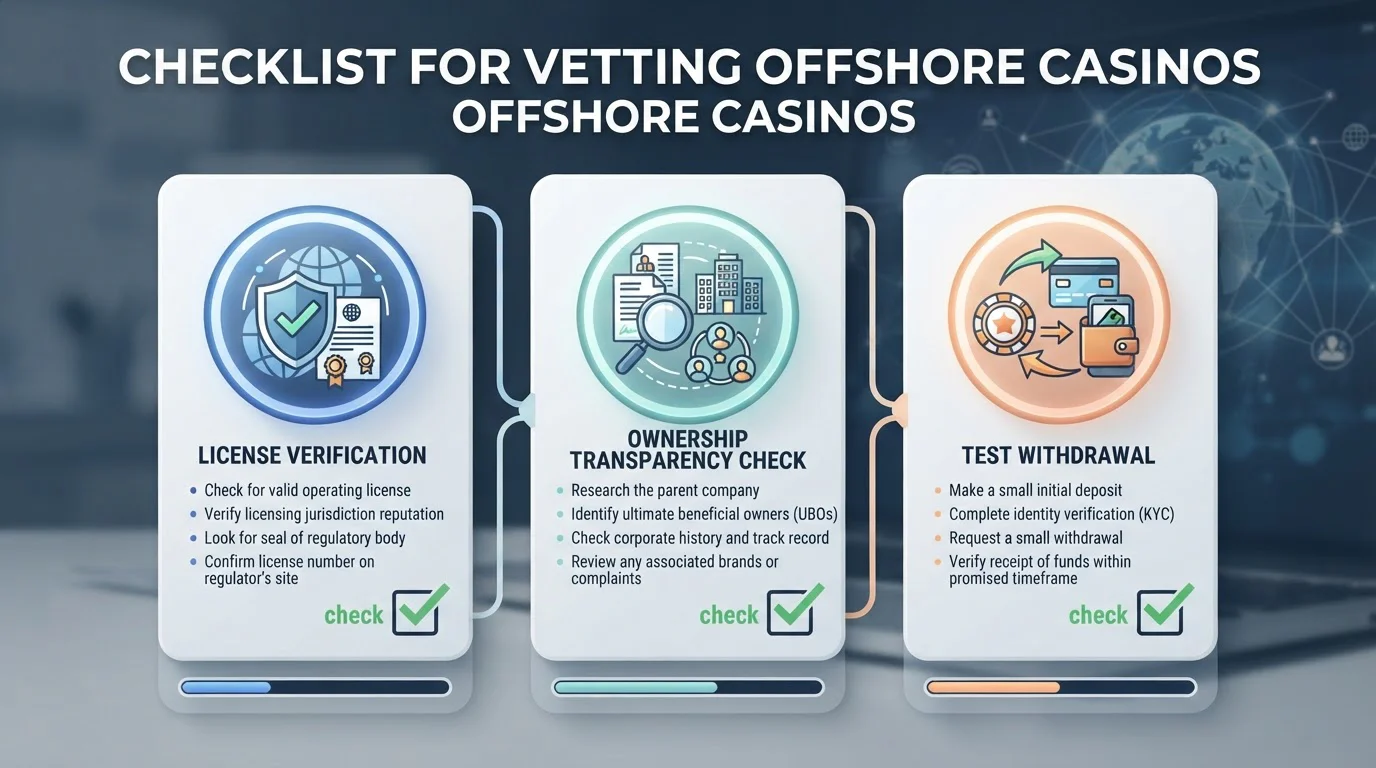
Offshore crypto casinos operate in lightly-regulated jurisdictions, and scams are not rare. The baseline assumption should be distrust until proven otherwise. Most offshore casinos are legitimate businesses—they pay out, honor terms, and operate for years without major incident—but enough exit-scam or selectively-refuse-payout to warrant caution.
Start with the license. Every casino in this guide lists a Curaçao Gaming Authority or Anjouan Offshore Financial Authority license number. Verify it. For Curaçao, the public register is accessible at the Curaçao Gaming Control Board website (search by license number or operator name). For Anjouan, the register is less accessible, but the license number format (e.g., ALSI-152406026-FI2) can be cross-checked against third-party databases like AskGamblers or Casino Guru, which track and verify licenses as part of their review process.
If a casino claims to hold a license but you cannot verify it on the regulator’s register or through a trusted third-party database, do not deposit. «Licensed by Curaçao» without a verifiable license number is a red flag.
Check ownership transparency. Legitimate offshore casinos name their operating entity (Gareton B.V. for BitStarz, Bull Gaming N.V. for Rollbit) and list it in their terms. Scam casinos hide behind shell companies with no traceable ownership or domain registration privacy. Run a WHOIS lookup on the casino’s domain; if the registrant is anonymised and the terms of service list no legal entity or business address, proceed with extreme caution.
Test a small withdrawal first. This is the single most effective scam-avoidance tactic. Deposit £50, play through any wagering requirement if you claimed a bonus (or decline the bonus and play in your deposited funds), and request a withdrawal of your remaining balance. If that clears within the stated timeframe (10–60 minutes for SOL), the casino is likely legitimate. If the withdrawal stalls, if KYC documents are requested mid-process after you deposited with no KYC, or if the casino invents a breach-of-terms excuse to void your balance, you have lost £50 rather than £500. Never deposit four figures at a new offshore casino without testing payout first.
Read third-party complaint forums before depositing. Casino Guru, AskGamblers, and Trustpilot host thousands of player reviews and unresolved-complaint threads. Search «[casino name] complaints» and read the last six months of unresolved disputes. If multiple users report non-payment, stalled withdrawals, or phantom bonus-term violations, stay away. If the complaint history is clean or disputes are resolved in the player’s favour, the casino is safer.
Avoid casinos that aggressively chase UK traffic without a license. Wildies Casino, for example, operates multiple .co.uk and .org.uk domains targeting UK players but holds no UKGC license. That is not inherently a scam—most offshore casinos target the UK without UK licensing—but heavy UK branding (GBP pricing, «UK players welcome» language, UK payment methods prominently listed) combined with offshore licensing suggests the operator is chasing a market they are not authorised to serve. Those operators are likelier to exit or selectively refuse payouts if UKGC enforcement tightens.
Watch for terms-of-service traps. Some offshore casinos bury clauses allowing them to void winnings for «irregular play,» defined so broadly that any winning session could qualify. If the terms say «the casino reserves the right to void bets and withhold winnings in cases of irregular betting patterns» without defining «irregular,» that is a red flag. Legitimate casinos define irregular play narrowly (e.g., «exploiting a software bug» or «collusion with other players»). Vague language gives the casino carte blanche to refuse payouts.
Check SSL encryption. Every casino in this list uses HTTPS with a valid certificate. If a casino’s URL shows «Not Secure» in the browser bar or serves pages over HTTP, do not deposit. That is baseline operational security; its absence indicates either incompetence or malicious intent.
Finally, trust your gut. If a casino’s marketing is too good (500% deposit match! No wagering! Instant millionaire payouts!), if the website design looks hastily assembled, if customer support responds in broken English or dodges direct questions, or if the casino’s social media presence is thin or non-existent, walk away. Legitimate offshore casinos invest in professional presentation, transparent terms, and responsive support. Scam casinos cut corners everywhere.
Are Solana casinos safe, or are they scams?
Legitimate offshore Solana casinos exist (Cloudbet, BitStarz, Wild.io, TrustDice all have multi-year operating histories and verifiable licenses), but scams are common enough to warrant caution. Verify the casino’s license on the Curaçao Gaming Authority or Anjouan regulator’s public register. Check third-party complaint forums (Casino Guru, AskGamblers) for unresolved payout disputes. Test a small withdrawal (£50) before depositing larger amounts. Avoid casinos with anonymised ownership, vague terms-of-service allowing them to void winnings for «irregular play,» or no verifiable license number. Offshore casinos carry no UK consumer protection, so the burden of due diligence sits entirely with you.
Minimum Deposits and Low-Stakes Play
Most offshore Solana casinos set minimum deposits at $10–$20 equivalent in SOL. Cloudbet and Wild.io both start at $20; TrustDice accepts $10. BitStarz’s minimum is €20 or 0.0005 BTC equivalent. Wildies Casino’s minimum varies by currency but typically sits around $15–$20. Rollbit (Curaçao site) starts at $20.
Those minimums are lower than many UKGC-licensed casinos, where £10 is standard and some operators push £20 or £50 for first deposits. Offshore crypto casinos compete on accessibility; a $10 entry point is part of that pitch.
Minimum withdrawals mirror deposit minimums. Most casinos set the withdrawal floor at $20 equivalent to cover blockchain fees and internal processing costs. Solana’s network fee is negligible (<$0.001), but casinos batch withdrawals for operational efficiency, and the batch processing introduces a fixed cost per transaction. A $20 minimum keeps that cost proportionate.
Low-stakes players can operate comfortably at these levels. Deposit $20, play $0.20 spins on slots, and you have 100 spins before the balance is exhausted (at 100% RTP; real-world RTP of 96% gives you ~83 spins on average). If you prefer $0.10 spins, double that. Offshore Solana casinos do not impose the stake caps or max-win restrictions some UKGC operators apply to low-stakes players.
Some casinos waive withdrawal fees on SOL; others charge a small fixed fee ($1–2) or pass through the blockchain network fee. Check the casino’s fee schedule before withdrawing. If the fee is $2 and you are withdrawing $20, that is a 10% haircut. If you are withdrawing $200, it is 1%. Batch your withdrawals to minimize fee impact.
No offshore casino in this list offers £5 deposits. That threshold is more common at UKGC-licensed casinos targeting casual players. Offshore crypto casinos assume a slightly higher entry point; the $10–$20 range reflects transaction costs and the crypto user profile (who tend to hold larger balances than fiat debit-card users).
Crypto Casinos and UK Players 2026 — Coins, Risks & Licensing
Content created by the «casinopay» team
